Mesoamerica · Volume 08, Pupusas, Gallo Pinto and the Pacific Volcanic Belt
Tamal pisque
El Salvador
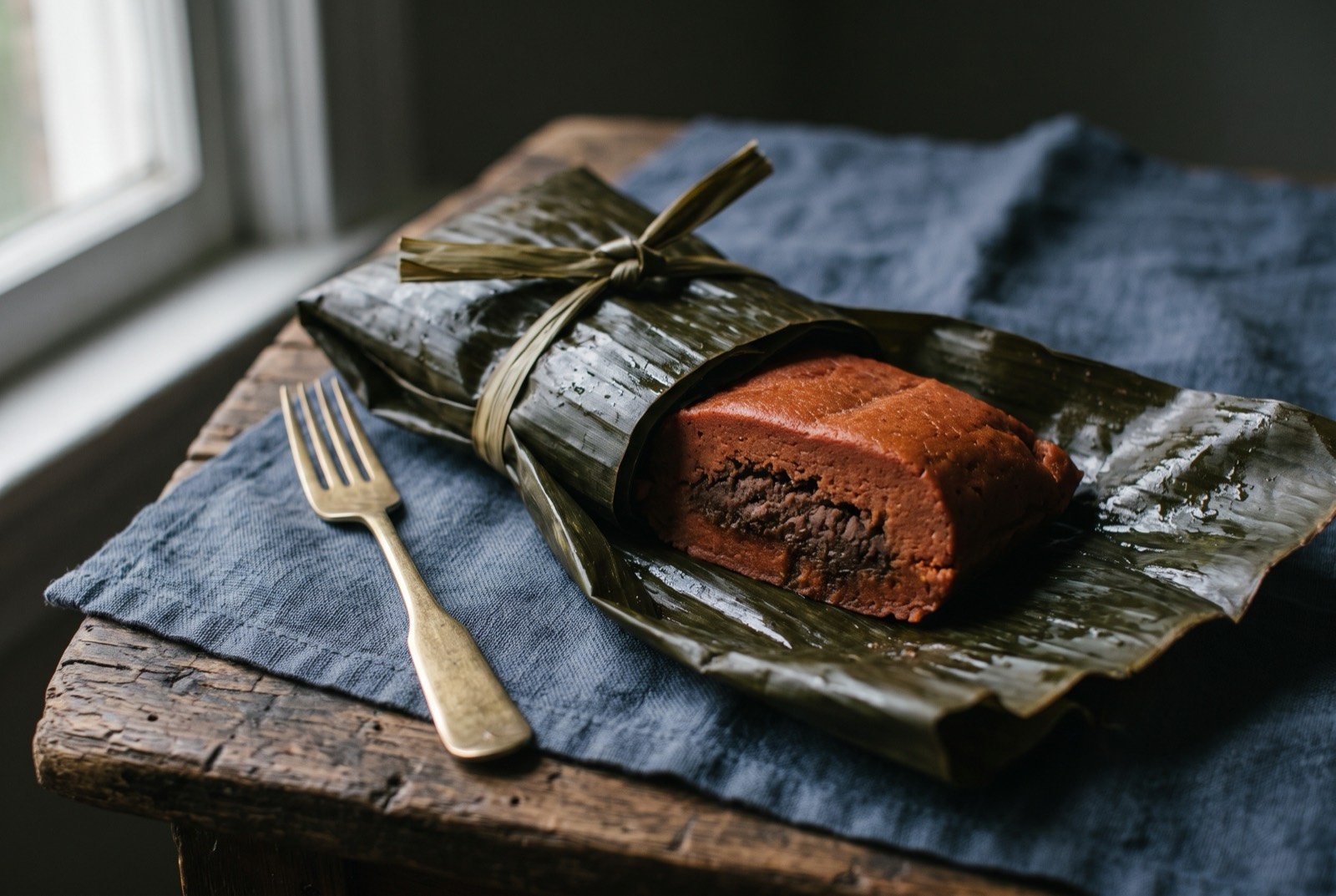
An illustration of the dish, not a photograph of it cooked.
- Time
- 1 hour 30
- Reviewed
- Not yet reviewed from inside the tradition
- Cooked
- Not yet cooked and reported
As tradition built it
Tamal pisque
Makes about 12. About 1 hour 30 minutes.
Ingredients
An outline, not yet a recipe: the tradition's method with its ingredients named but not weighed. Quantities are being added from sources inside the tradition, lead dishes first.
- 500g maize flour
- water
- 150ml lard, sometimes
- 500g, cooked beans, ground
- 1, diced onion
- 2, diced sweet pepper
- 2 cloves garlic
- 25cm squares banana-leaf squares, softened
Method
- Make a distinctive reddish masa from maize flour, water and sometimes lard.
- Season a filling of ground beans with onion, sweet pepper and garlic.
- Assemble on softened banana-leaf squares.
- Fold and steam.
Notes
No precise steaming time was found in any credible source, and this chapter states that gap plainly rather than inventing a plausible figure.
The name's connection to ash-based, rather than lime-based, nixtamalisation, nizquesado from ceniza, ash, is repeated across recipe sources but not confirmed against a linguistic authority, and is presented here as a plausible but unverified etymology.
What a modern chef changes
A stated extrapolation, not a guess dressed up
Method
- Dehydrate a portion of the cooked bean filling before regrinding and folding it back through the fresh purée, concentrating its flavour rather than diluting it into a wet mash.
- Toast and grind fresh achiote and sweet pepper flakes in a dedicated spice grinder for the reddish colour the masa is named for, rather than a commercial paste.
- Steam over a Big Green Egg run as an indirect oven with a water pan, checking doneness by feel at 45 minutes rather than trusting a fixed time no source actually gives.
Notes
This chapter offers its own reasonable extrapolation here rather than dressing up a guess as settled practice, since so little firm technique documentation exists for this specific dish.