The Caribbean · Volume 12, The Sofrito, the Libreta and the Ninety Miles to Miami
Ajiaco criollo
Cuba
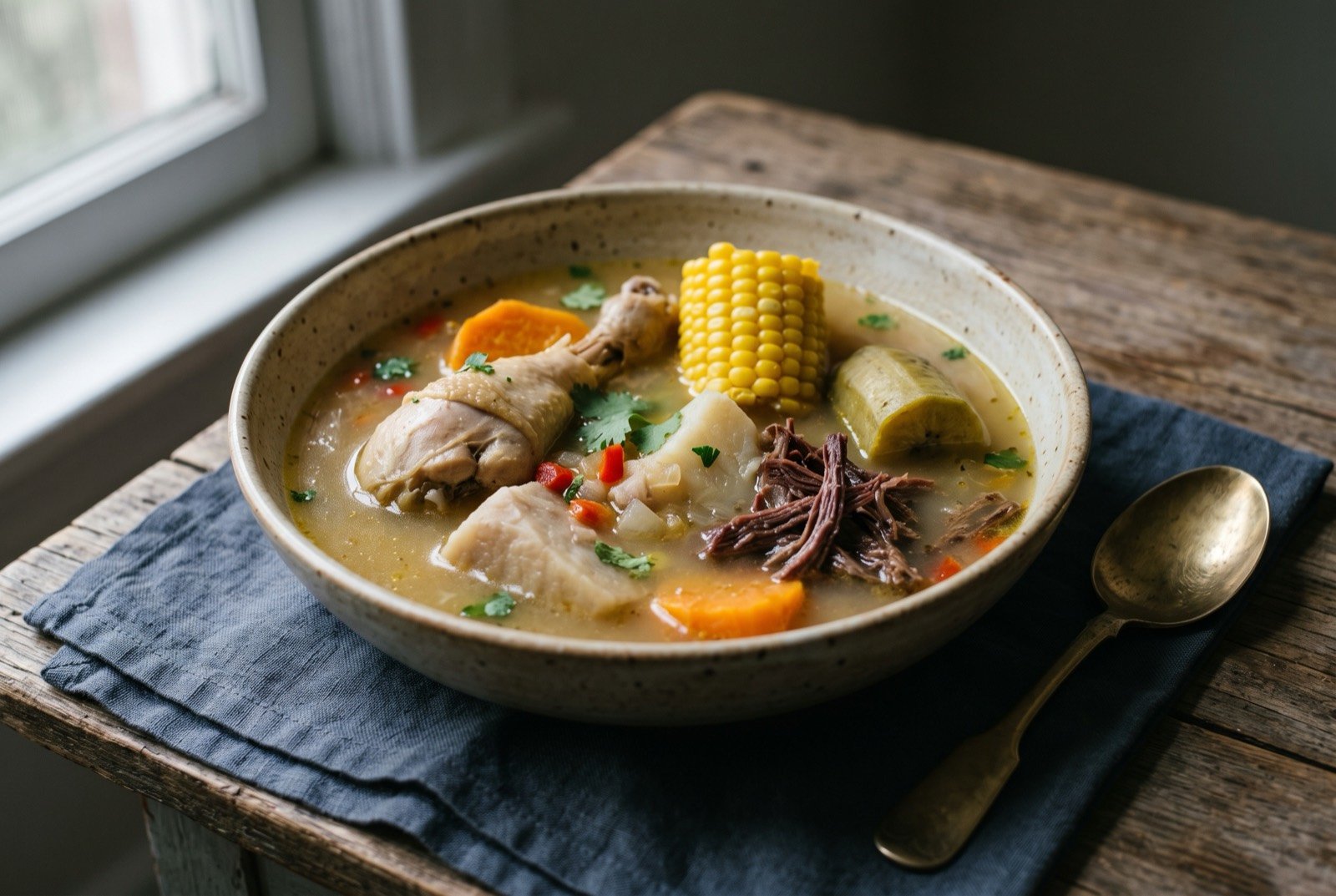
An illustration of the dish, not a photograph of it cooked.
- Time
- Hands on 2 hours · Waiting 8 hours
- Reviewed
- Not yet reviewed from inside the tradition
- Cooked
- Not yet cooked and reported
As tradition built it
Ajiaco criollo
About two hours simmered, plus overnight soaking for the tasajo.
Ingredients
- 250g tasajo, soaked overnight
- 1 small hen, halved
- 500g pork, in pieces
- 2 ears of tender corn
- 250g ñame
- 250g white malanga
- 250g yuca
- 250g boniato
- 250g calabaza
- 2 green plantains
- 2 ripe plantains
- 1 large onion
- 3 garlic cloves
- 1 large pepper
- 2 tbsp lard
- 1 cup tomato sauce
- 7 litres water
- juice of 2 limes
- to taste salt, to taste
- as available corn dumplings (bolas de maíz), optional
Method
- Soak the tasajo overnight.
- Boil the tasajo and hen together in the water, salted to taste, for one hour.
- Add the pork and continue simmering, skimming fat, for a further hour.
- Add the sofrito, onion, garlic, pepper and tomato sauce cooked down in the lard, then the root vegetables, yuca, boniato, calabaza, the corn and the plantains, green and ripe, in order of how long each takes to cook.
- Finish with lime juice to cut the richness, thickening the broth by mashing some of the malanga or ñame back into it.
- Add corn dumplings (bolas de maíz), if using, as a genuine optional addition.
Notes
Whether ajiaco existed before Spanish contact is unsettled: it rests on historians' opinion and the etymology of ají rather than direct evidence. The firmer data point is a documented late 16th-century reference from Santa María del Puerto Príncipe, modern Camagüey, to a collective ajiaco made for the feasts of San Juan and San Pedro.
What a modern chef changes
Sous vide proteins, blended roots, dehydrated boniato
Rung 03
Method
- Cook the tasajo and hen separately, sous vide, at temperatures that hold each properly tender rather than the greying result of boiling two different proteins in the same pot for the same length of time, then combine only at the point of assembly.
- Blend a portion of the malanga and ñame in a high-power blender and pass it through a chinois into the broth for a silkier, genuinely thickened body rather than a mash stirred in by hand.
- Dehydrate a portion of the boniato before it goes in, rehydrating it briefly in the finished broth, for a concentrated sweetness the fresh root alone does not carry.
- Fresh-grind the sofrito's black pepper in the spice grinder rather than using pre-ground.