The Caribbean · Volume 14, The First Free Kitchen in the Americas
Bouyon
Haiti
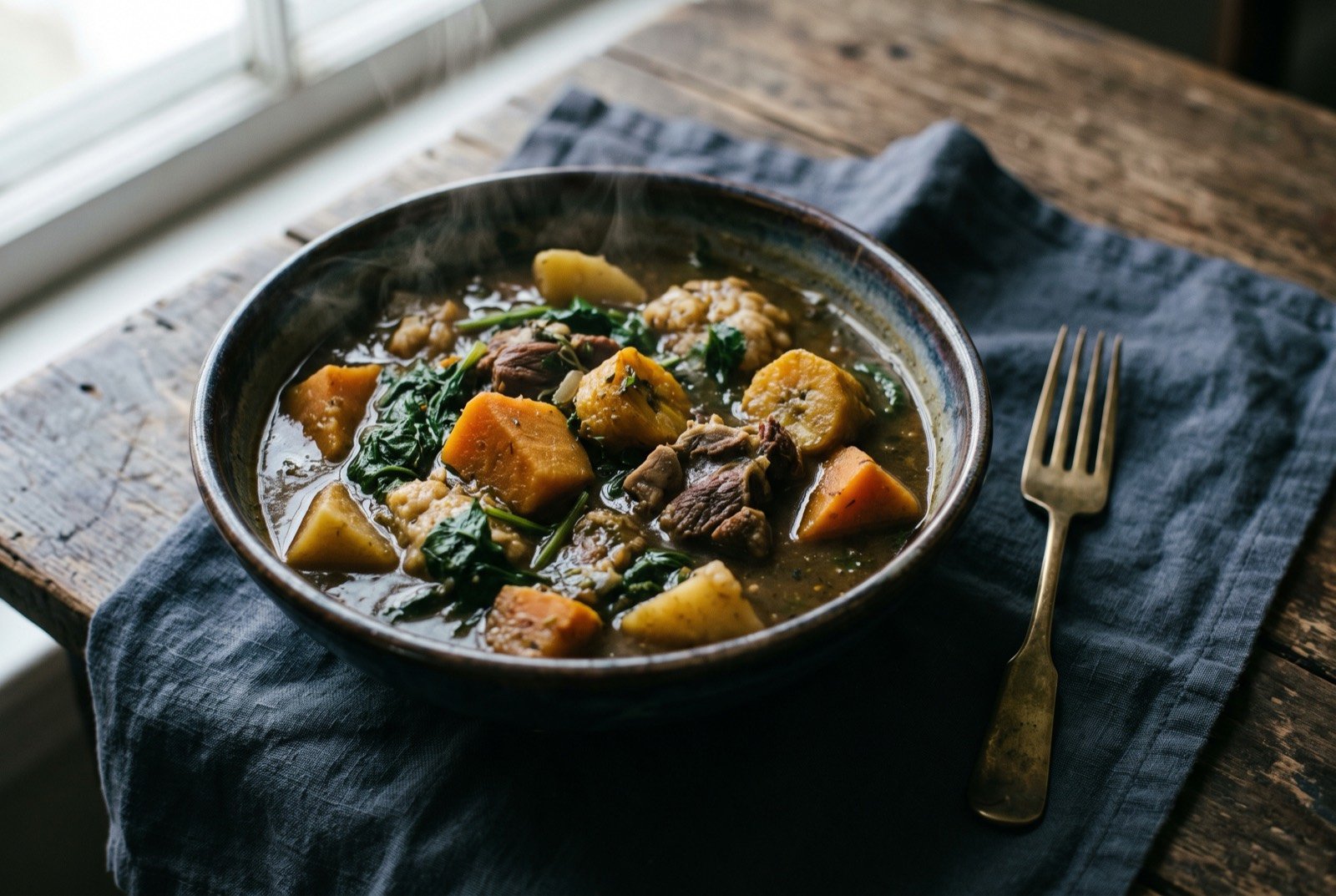
An illustration of the dish, not a photograph of it cooked.
- Time
- 3 hours 15
- Reviewed
- Not yet reviewed from inside the tradition
- Cooked
- Not yet cooked and reported
No source consulted gave exact quantities or timings for this dish, unlike griot and pikliz; the ingredient list and method below are documented, the ratios are not.
As tradition built it
Bouyon
About 2 hours 45 minutes, plus a minimum 30 minutes marinating the meat (or overnight).
Ingredients
An outline, not yet a recipe: the tradition's method with its ingredients named but not weighed. Quantities are being added from sources inside the tradition, lead dishes first.
- 1kg (2.17lb beef chuck), cubed beef or goat
- 3 large, peeled and cut into pieces potatoes
- plantain
- yam
- 3, peeled and cut into pieces malanga
- watercress
- 227g spinach (1 bag/8oz), chopped fresh spinach or cabbage
- celery
- as available cassava (sometimes)
- 4 large, cut into chunks carrots (sometimes)
- 400ml (1⅔ cups) epis, for seasoning
Method
- Season the beef or goat, potatoes, plantain, yam, malanga, watercress, spinach or cabbage and celery, and, in some households, cassava and carrots, with epis.
- Build the stew in layers: meat first, then the harder root vegetables, then the leafier and softer vegetables added later so nothing overcooks.
- Simmer until everything is tender and the pot has thickened into a genuine stew rather than a clear broth.
Notes
A named variant, bouyon ak dumboys, adds small flour dumplings to the pot.
A named occasion variant, bouyon tèt kabrit, is made with goat's head and offal.
What a modern chef changes
Deliberate Layering, Timed to Each Vegetable
Rung 6
Method
- Cook the meat sous vide separately to full tenderness, as in Rung 6, then add it to the finished vegetable stew at the end rather than simmering it the full length of the pot's cooking time.
- Stage the vegetables by actual cook time rather than the traditional rough layering, adding the hardest roots first and the leafiest greens only in the final minutes, so every element reaches doneness together rather than the softest vegetables overcooking while the hardest ones catch up.