The Caribbean · Volume 14, The First Free Kitchen in the Americas
Diri ak pwa (Diri kolé)
Haiti
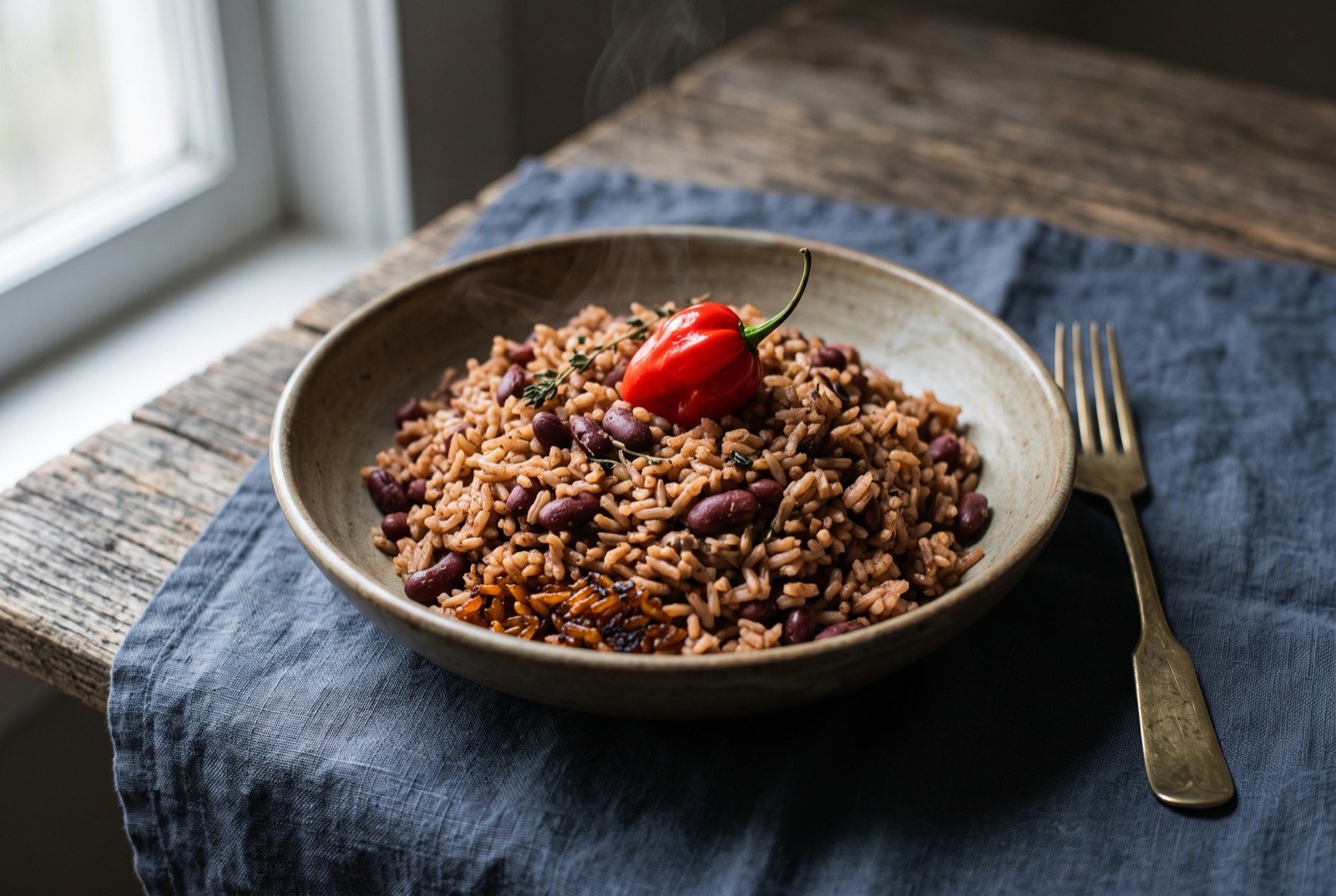
An illustration of the dish, not a photograph of it cooked.
- Time
- 30 minutes
- Reviewed
- Not yet reviewed from inside the tradition
- Cooked
- Not yet cooked and reported
As tradition built it
Diri ak pwa (Diri kolé)
Serves 4 to 6. About 30 minutes.
Ingredients
- 3 cups long-grain rice
- 400g tinned, or 250g dried beans (red, black, white or pwa kongo/pigeon pea, by household preference)
- 4 to 5 cups water or bean cooking liquor
- 3 tbsp epis
- 2 tbsp oil or butter
- 3 whole cloves, plus fresh thyme (quantity not given by the source) whole cloves, thyme
- 1 whole Scotch bonnet
Method
- Cook the epis, oil and beans together briefly to build a base.
- Add the rice, liquid, cloves, thyme and the whole Scotch bonnet, left intact rather than burst, for aroma without overwhelming the dish.
- Bring to a simmer, cover, and cook for roughly 20 minutes without lifting the lid, the still, undisturbed cooking being exactly what lets the gratin form at the bottom of the pot, described as the most contested part of the dish at a Haitian table and a real marker of a cook's control of heat.
What a modern chef changes
Gratin Engineered Deliberately
Rung 5
Method
- Cook the rice in a heavy, flat-bottomed pan on a genuinely stable, moderate heat, holding the same undisturbed-lid principle the tradition already uses, but on a controlled surface rather than a variable domestic hob, for a more reliably even gratin across the whole base rather than one that catches unevenly at the edges.
- Finish a portion of the gratin under a hot grill or blowtorch once the rice is cooked, for a deliberately deepened, genuinely crisp crust to serve alongside the softer rice, rather than leaving the whole result to whatever the stovetop happened to produce.