Mesoamerica · Volume 06, The Maya Highland Corn World
Kak'ik
Cobán, Alta Verapaz, Guatemala
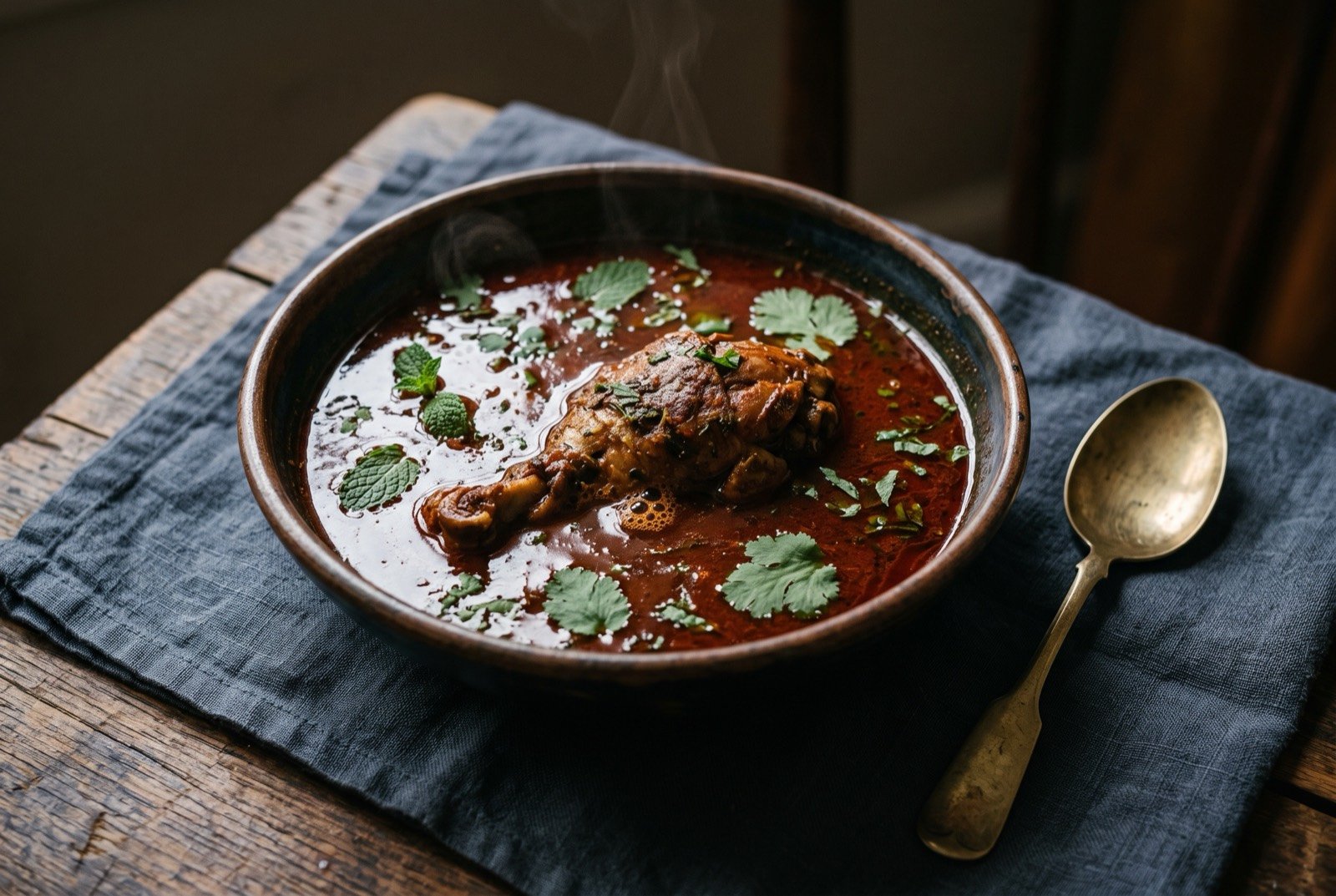
An illustration of the dish, not a photograph of it cooked.
- Time
- Not statedNo source states a time and the atlas has too few comparable dishes to estimate one.
- Reviewed
- Not yet reviewed from inside the tradition
- Cooked
- Not yet cooked and reported
As tradition built it
Kak'ik
Cobán, Alta Verapaz; Q'eqchi' Maya; ICH of the Nation, 2007
Ingredients
- 2 lb turkey, in large pieces
- 0.5 lb tomato
- 4 oz miltomate
- 2 chile guaque, large
- 1 chile pasa, large
- 1 red bell pepper, large
- 6 garlic cloves, large
- 1 onion, medium
- 4 sprigs cilantro
- 10 sprigs mint
- 4 oz cilantro seed
- 4 pimienta gorda (allspice) grains
- 4 to 5 black pepper grains
- 0.5 oz sesame
- 1 oz pepitoria
- to taste achiote and chile cobanero powder
Method
- Simmer the turkey with garlic, cilantro and mint for roughly forty five minutes until tender.
- Char-roast the tomato, miltomate, onion, peppers and garlic.
- Deseed the guaque, pasa and cobanero chiles, toast briefly, then soften in hot broth.
- Blend everything roasted and toasted, including the cilantro seed, pimienta gorda, black pepper, sesame and pepitoria, with the achiote and reserved broth.
- Strain into the pot and simmer ten minutes.
- Finish with salt, achiote and more chile cobanero.
Notes
It is consistently and specifically a Cobán, Alta Verapaz dish, and Q'eqchi' Maya, not K'iche' or Kaqchikel; it sits here as a named neighbour rather than this chapter's own territory.
What a modern chef changes
High heat, sharp chile, clarified broth
Rung 04
Method
- Sear the char-roasted vegetables under a Big Green Egg run very hot and direct, closer to the real intensity of the traditional roasting than a domestic grill gives.
- Toast the guaque, pasa and cobanero chiles in the spice grinder before softening them, sharpening the smoked cobanero's own character rather than letting it dilute into the broth undefined.
- Cook the turkey sous vide to a precise, moist finish, then reduce its poaching liquid down hard as the base for the final broth rather than relying on a single long simmer to do both jobs.
- Pass the finished broth through a chinois for real clarity, a genuinely different presentation from the rustic, thicker broth of the traditional pot while keeping every named flavour intact.