Mesoamerica · Volume 06, The Maya Highland Corn World
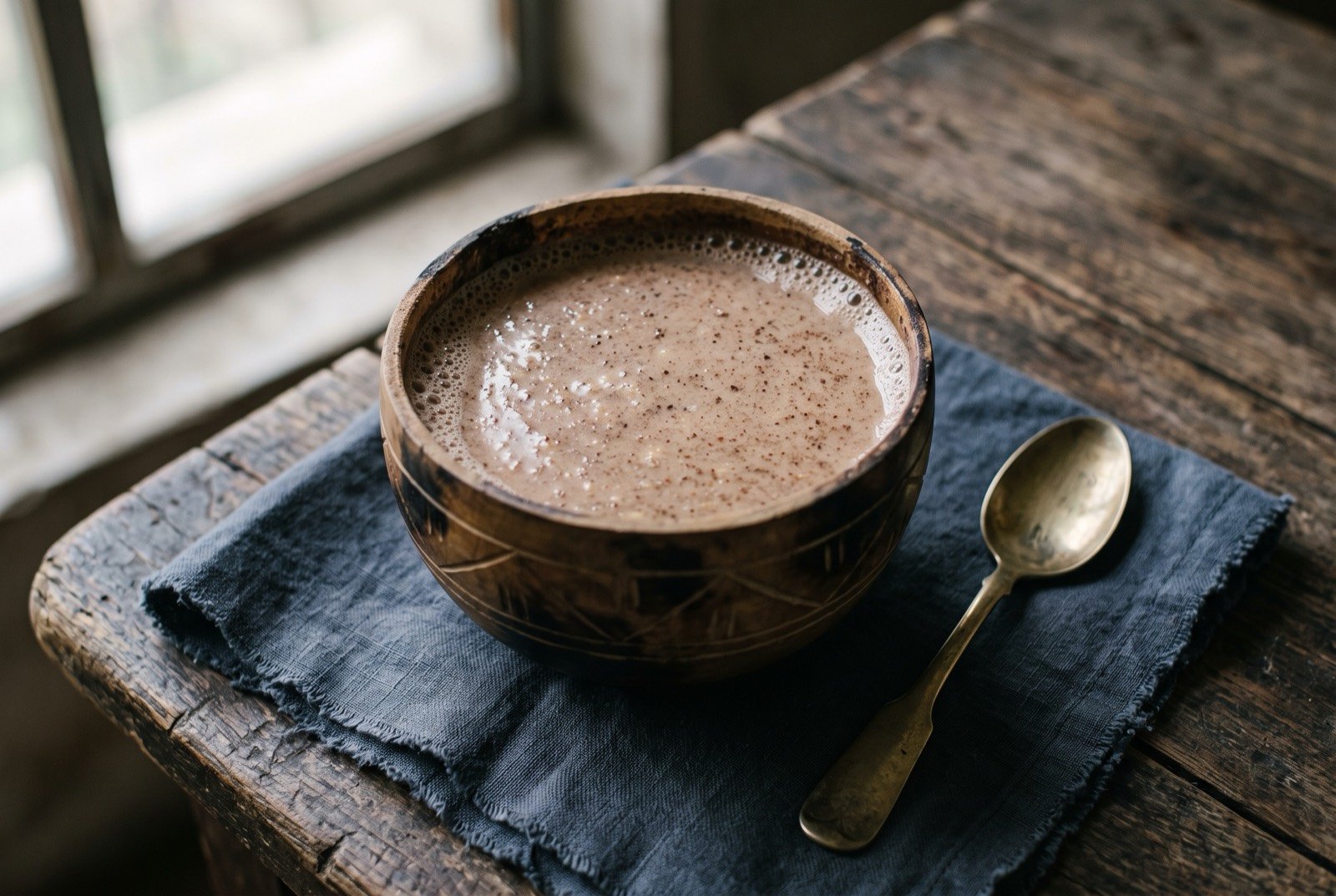
Pozol de cacao
San Fernando (Zoque carnival), Chiapas, Mexico
Illustration
- Researched
- Researched from 29 sources in the brief
As tradition built it
Pozol de cacao
Zoque carnival of San Fernando, Chiapas (peer-reviewed ratios)
Ingredients
- 500g nixtamalised maize
- 190g toasted cacao
- 12g cinnamon, hand-broken
- to consistency water, to beat to a drinkable consistency
Method
- Nixtamalise the white maize: soak in lime, cook, wash, then rest overnight.
- Grind with the toasted cacao and hand-broken cinnamon, at a ratio of roughly forty two parts maize to sixteen parts cacao to one part cinnamon by weight, five hundred grams maize to one hundred and ninety grams cacao to twelve grams cinnamon for a home batch.
- Hand-beat the wet drinking version with water for roughly ninety minutes to a drinkable consistency, roughly two hundred millilitres a serving.
- For sour pozol, ferment at ambient temperature, from twenty four hours for a mild version up to two weeks for a fully sour agrio, wrapped traditionally in tó leaf.
Notes
Pozol is offered first to the saint's image at festival time, then distributed in strict hierarchical order, prepared by women called Nana pozoleras, whose own stated ethic is "estamos para servir y no servirnos," we are here to serve, not to serve ourselves.
What a modern chef changes
Controlled ferment, ninety minutes replaced
Rung 02, 03
Method
- Ferment in a temperature-controlled chamber rather than at genuinely uncontrolled ambient temperature, holding the window a Chiapas kitchen never actually had reliable access to, and dial the fermentation to a specific, repeatable sourness rather than the variable result ambient fermentation gives.
- Toast the cacao and cinnamon together in the spice grinder immediately before grinding into the maize, for a fresher, more defined toasted note than pre-ground versions of either ingredient.
- Beat the finished masa in a high-power blender on a low, controlled setting for a fraction of the traditional ninety minutes, then pass through a chinois for a texture cleaner than the traditional hand-beaten version, understanding plainly that this trades one kind of authenticity, the communal, physical labour of the beating itself, for another, consistency and speed.