The Horn · Volume 12, The Nile Foodways
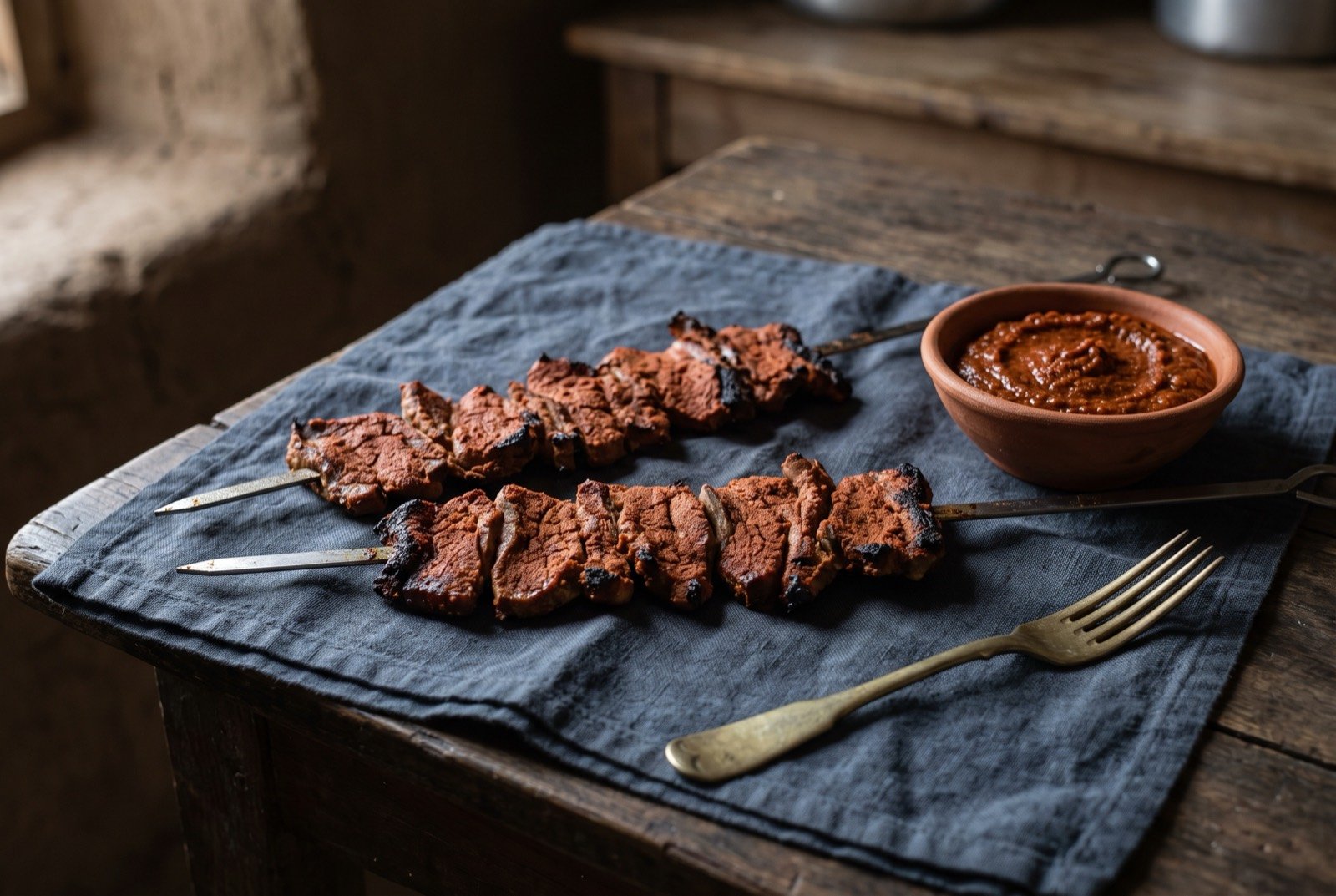
Agashe with shata dakwa
Khartoum, and the Sudanese answer to suya
Illustration
- Time
- 30 minutes
- Researched
- Researched from 124 sources in the brief
- Reviewed
- Awaiting a reader from inside the tradition
- Cooked
- Awaiting a cook report
The great Sudanese street dish, and the most restaurant-ready thing in the volume. The build below is Monzir Hamdin's and the fire technique is the Khartoum street method. The blend is dry-roasted peanuts ground fine as the base, plus chilli powder, paprika, black pepper, coriander, cumin, ground ginger, allspice, garlic and onion powder and cinnamon, often with clove, nutmeg and cardamom. The one caution from Khartoum vendors is not to increase the proportion of ginger.
As tradition built it
Serves 4. 30 minutes, plus the fire.
Ingredients
- 8 lamb cutlets, or 600 g leg, thinly sliced and butterflied
- 120 g agashe blend
- 1 tbsp each extra ground coriander and cumin
- 2 tbsp groundnut or sesame oil
- 1 tbsp garlic paste
- 1 lime
- to taste salt, black pepper
Method
- Slice the lamb cutlets thin and butterfly them before they go near a skewer. Thin and opened out is the whole geometry of the dish.
- Oil the meat with the groundnut or sesame oil, work in the garlic paste, lime, salt and pepper, then press it into the dry agashe blend with the extra ground coriander and cumin. Five minutes only. This is a crust, not a marinade, and a long soak turns the nut base to paste.
- Chargrill over hardwood charcoal on medium high, five minutes a side.
- Lay the skewers side by side with the edges slightly overlapping, and flip them individually while keeping the overlap. The overlapping edges shield each other, so the exposed edges do not burn before the middles cook. That is the transferable trick and it is free.
- Rest ten minutes.
Notes
Shata dakwa, the sauce, is red and green chillies pounded with salt, then worked with peanut butter, lime juice, garlic and olive oil to a paste.
What a modern chef changes
Defat the nut, pound rather than blend, and keep the peanut butter off the meat
Rungs 3 and 2
Method
- Defat the peanut for the crust. Dry-roast, grind fine, then press the ground nut between paper to draw off free oil, which otherwise burns before the meat is cooked and slumps the crust off the skewer. This is why the West African equivalent uses kuli-kuli, the defatted cake left after oil pressing, and it is the one thing agashe and suya solve identically.
- Peanut butter goes in the sauce, never on the meat. Hamdin makes that call and he is right: the sauce is an emulsion that wants free oil, and the crust is a dry coating that cannot tolerate it.
- Pound the shata, do not blend it. Chillies against stone with the salt first, so the salt abrades the cell walls and draws water before any fat goes in. A blender shears and emulsifies without rupturing and gives a duller sauce from the same ingredients.
- A quarter teaspoon of kawal in the blend. Rung 2. A Bacillus ferment's free amino acids under all that pyrazine is the move a Japanese kitchen makes with dried koji, except that here the ingredient is Kordofani and has been in the country for centuries.