The Horn · Volume 12, The Nile Foodways
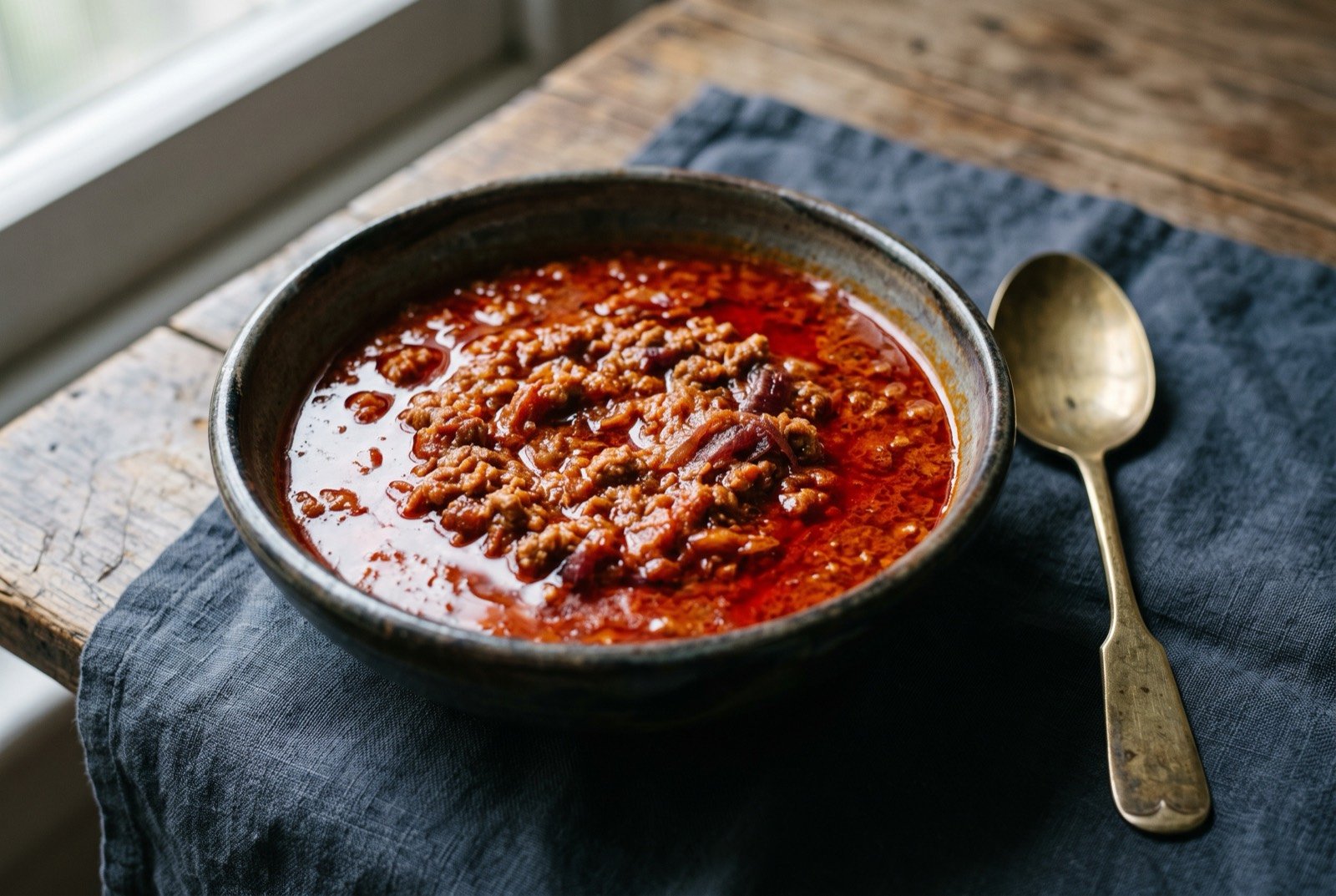
Mullah ahmar, the red mullah, also called tagalia
Central clay plains, and Chad too
Illustration
- Time
- 1 hour
- Researched
- Researched from 124 sources in the brief
- Reviewed
- Awaiting a reader from inside the tradition
- Cooked
- Awaiting a cook report
The everyday mullah, and the best introduction to the architecture because both of its structural moves are visible from across the kitchen.
As tradition built it
Serves 4. About 1 hour.
Ingredients
- 400 g lamb or beef mince
- 4 red onions, sliced
- 250 ml vegetable or sesame oil
- 1/2 red pepper, chopped
- 3 garlic cloves, minced, plus 3 more crushed
- 2 tbsp tomato concentrate
- 400 g fresh tomatoes, blended
- 1 tsp weika (dried ground okra)
- 1 tsp sugar
- 600 ml water, plus more as it goes
- to taste salt, black pepper, cumin
Method
- Cook the red onions in the vegetable or sesame oil until they reach a deep burgundy colour. The sources give the colour and not a time, and this chapter is not going to invent one: work to the colour, and expect it to take longer than you want.
- Mash them lightly to a rough semi-paste. Not smooth. That mash is the body of the finished sauce.
- Add the lamb or beef mince and break it up, then the minced garlic cloves, tomato concentrate, blended fresh tomatoes, red pepper, cumin, salt, black pepper, and the sugar, which is there to cut the tomato's acidity.
- Cook until al wish, "the face": the oil rises and breaks the surface.
- Add the water and simmer.
- Add the weika (dried ground okra) gradually, then more water to bring it back to a mullah's proper wateriness.
- The crushed garlic goes in last, off the boil.
Notes
After Eltigani, cross-checked against a diaspora cook's weighed quantities.
Serve with gurasa, kisra, aseeda or bread.
What a modern chef changes
Base and thickener built apart, weika hydrated cold, and a real gadha at the end
Rungs 3 and 2
Method
- Build the tagalia with no water in the pan at all. Onions, oil, tomato concentrate and spice, taken to al wish over a long dry hot stretch. Maillard needs low water activity and high temperature, and the moment liquid or hydrocolloid goes in, both stop.
- Build the stock separately and sieve it, to the mullah base spec in Rung 3. That liquid, not tap water, is what goes into the tagalia.
- Cold-hydrate the weika. A teaspoon in 50 ml of cold water for 10 minutes, whisked in off the boil. Same dose, entirely different texture: a nappe rather than a rope, and still a nappe an hour later.
- Finish with a proper gadha, and a pinch of kawal. Crushed garlic and a teaspoon of coriander seed browned in oil, slaked with a ladle of the hot liquid, poured back off the heat: most home versions skip the tradition's own last aromatic step. Then a quarter teaspoon of kawal grated in, Rung 2, late addition, for an alkaline lift over all that tomato. It is the one genuinely new idea on the plate and it is still a Sudanese one.