The Horn · Volume 12, The Nile Foodways
Ful medames, Sudanese
The Egypt hinge
Illustration
- Time
- 15 minutes
- Researched
- Researched from 124 sources in the brief
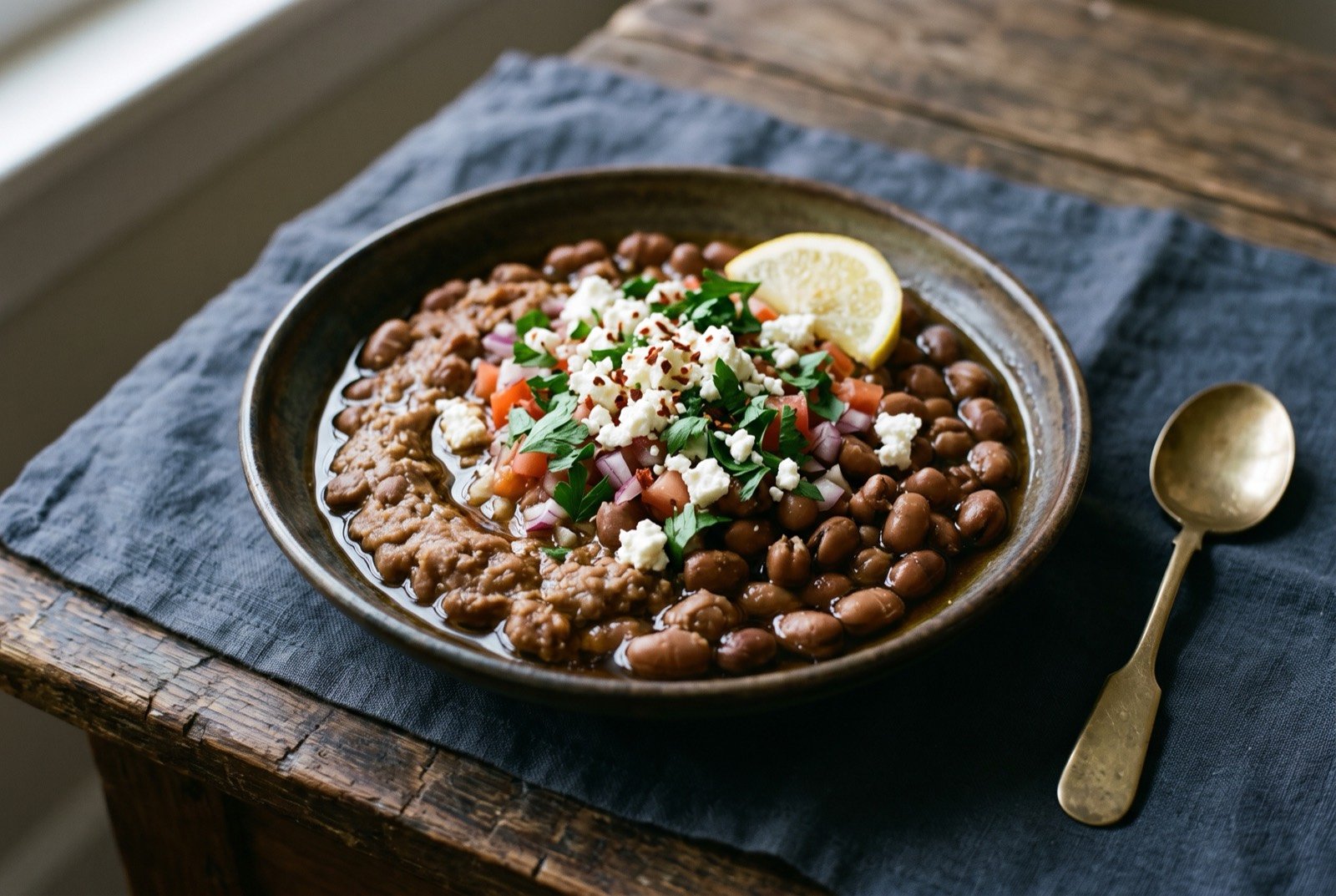
Two things make a Sudanese ful Sudanese, and both come from inside the tradition. The sesame oil, sirij, which is not a drizzle and not a stand-in for olive oil. And the timing: in Sudan ful is an iftar dish, not a suhoor one. As Dallia Abdelmoneim puts it, the table is not complete unless the dish of ful is in the middle of it, surrounded by the supporting cast.
As tradition built it
Serves 2 to 3. 15 minutes from a tin.
Ingredients
- 1 tin (400 g) plain ful medames
- 80 ml water
- 1 medium tomato, chopped
- 1 medium red onion, chopped
- a fistful a fistful of parsley, chopped
- 50 g feta
- 60 ml sesame oil (sirij)
- 1 to 2 limes
- to taste salt, black pepper, cumin, shata
Method
- Heat the plain ful medames with the water, salt, pepper, cumin and the juice of the limes until bubbling.
- Transfer to the serving dish with half the sesame oil (sirij), and mash a little.
- Fold in the raw medium tomato and medium red onion gently.
- Drizzle over the rest of the oil, crumble the feta on top, and finish with a fistful of parsley. Crumbled tamiya and a spoon of tahini are both accepted additions.
Notes
After Dallia Abdelmoneim, writing for Al Jazeera.
What a modern chef changes
From dried beans, with an alkaline soak, salted water, and the acid held to the end
Rung 4
Method
- Buy by date, not by brand. The hard-to-cook defect is irreversible, so buy small brown Egyptian fava, ful hammam, from a grocer with visible turnover, and look at the date before anything else.
- Soak with a measured alkali, then rinse. About a quarter teaspoon of bicarbonate of soda per pound of dried beans, no more, because too much runs the walls past softening into collapse. Rinse thoroughly or they taste soapy.
- Salt the cooking water, and use soft or corrected water. Sodium ions exchange with the calcium and magnesium bridging the pectin. The old advice not to salt beans is simply wrong, and in London or the South East hard water is why your ful stays chalky at the core.
- No acid until they are tender, neither lime nor tomato, because early acid leaves the beans permanently gritty. Lime goes in at the table.
- Mash a proportion, not all of it, so the plate carries creamy and whole at once. Then fat, then acid, then salt, in that order. A pressure cooker solves the timing without giving up any control.