The Horn · Volume 12, The Nile Foodways
Mullah kawal
Kordofan, Darfur and the Nuba Mountains
Illustration
- Time
- 45 minutes
- Researched
- Researched from 124 sources in the brief
- Reviewed
- Awaiting a reader from inside the tradition
- Cooked
- Awaiting a cook report
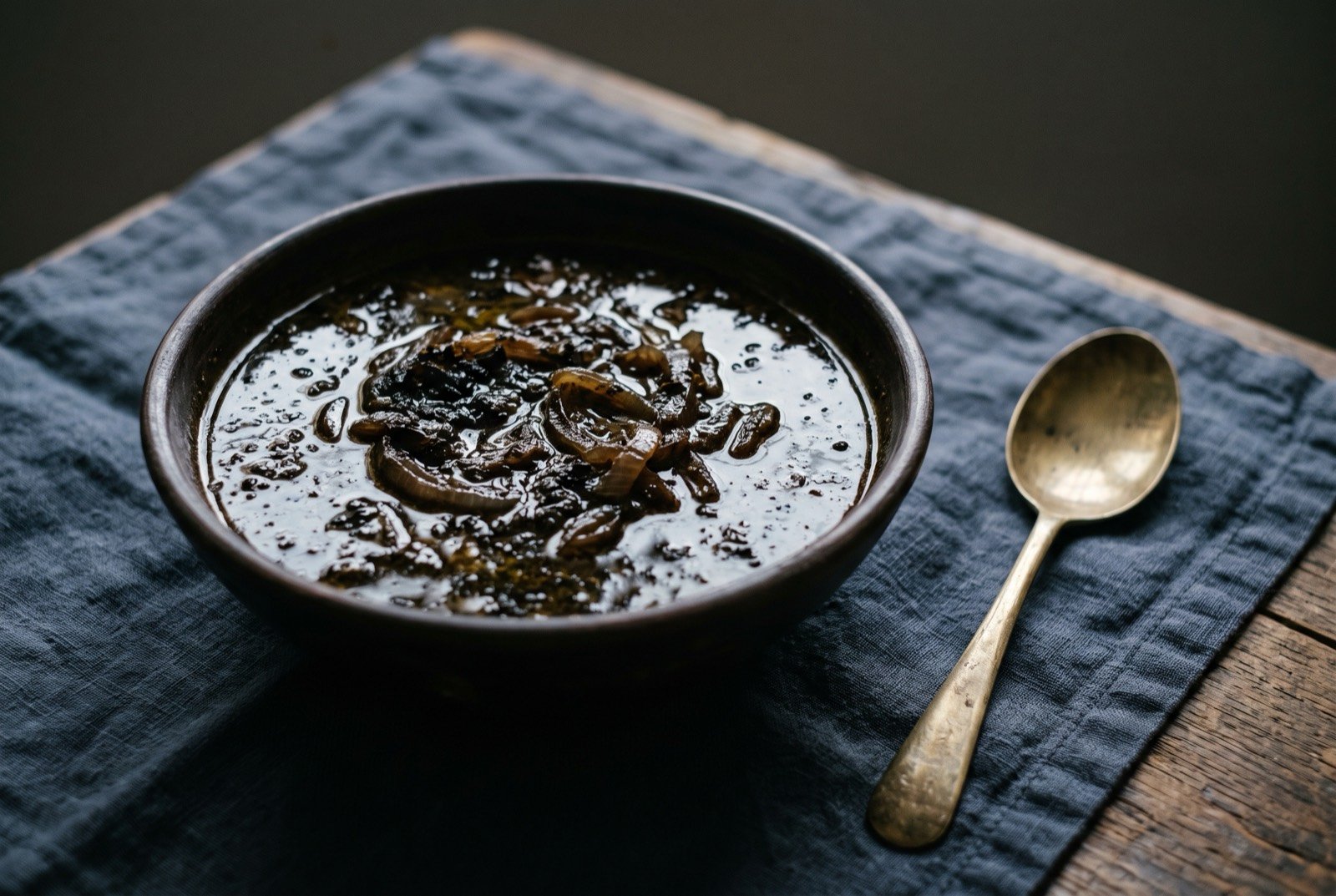
The flagship of the volume, and almost unknown outside Sudan. Cassia obtusifolia, sicklepod, is a wild legume that comes up on the seasonal watercourses during the rains. Its leaves are pounded to a paste, buried in a sealed earthenware jar for a fortnight, and dried into black balls that keep indefinitely. What comes out is roughly 20 per cent protein on a dry-matter basis and rich in sulphur amino acids, which is precisely what a diet of sorghum and groundnut is short of. So the dish is a stew of onions, oil, dried okra, salt and pepper in which a fermented leaf does the job dried meat does in dish four, and the literature is explicit that kawal substitutes for powdered sharmout. The Nuba make it as a soup with bone broth, and the Darfuri court cooked it and credited it with detoxifying properties.
As tradition built it
Serves 4. About 45 minutes.
Ingredients
- 60 g kawal balls, crumbled
- 12 g weika
- 3 onions, sliced
- 100 ml sesame or groundnut oil
- 1.2 L water, or bone broth
- to taste salt, black pepper, chilli
Method
- Fry the onions slowly in the sesame or groundnut oil until soft and dark.
- Crumble in the kawal balls and let it fry with the onions for a minute or two.
- Add the weika, then the water or broth, stirring.
- Simmer until it comes together as a mullah, and season with the salt, black pepper and chilli.
Notes
Built from the documented use and dosed at the sharmout ratio, weika at one fifth the weight of the dried protein, exactly as in dish four.
Serve with aseeda or kisra.
What a modern chef changes
Split the dose, early and late, and give it the acid partner it needs
Rungs 2, 6 and 3
Method
- Split the kawal in two. Half at step two, cooked in from the start, so the simmer drives the ammonia off and leaves the free amino acids: depth without the top note. Half grated in off the heat at the end, so the alkaline ammoniacal lift survives to the table. This is the most interesting variable in the chapter and it costs nothing.
- Give it an acid partner, or the top note reads as sharp. A spoonful of rob stirred in below simmer, or lime off the heat, not both. Rung 6: at low pH casein is near its isoelectric point and breaks into grains in a bubbling pot.
- Use bone broth, as the Nuba do. Kawal is a free glutamate source and bone broth an inosinate source, and the two multiply rather than add. Not a modernist import: the Nuba version of the dish.
- Grate it to order, like bottarga. The dried ball is not a storage compromise, it is a service format. Ferment in bulk, dry, grate at the pass. The tradition invented that workflow.