Southern Africa · Volume 21, The Most Layered Plate
Boerewors
Afrikaner
Illustration
- Time
- 1 hour
- Researched
- Researched from 166 sources in the brief
Boerewors is one of very few dishes in the world with a statutory composition. South African regulations are cited as requiring at least 90 per cent meat or fat from beef, pork, lamb or goat, of which not more than 30 per cent of the meat content may be fat, with no offal permitted except the casing and no mechanically separated meat. The 90 per cent figure could not be verified against the regulation itself and is flagged in the final section, but the fat ceiling is what governs the cooking.
As tradition built it
Makes about 3 kg. 1 hour, plus resting.
Ingredients
- 3 kg coarse ground beef, with lamb or pork fat to about 25 per cent of the total
- 45 ml coriander seed, toasted and ground
- 15 ml black pepper, freshly ground
- 10 ml ground allspice
- 10 ml brown sugar
- 5 ml cloves, ground
- 2 ml nutmeg, grated
- 125 ml red wine or dark vinegar
- 90 g soaked natural casings
- 54 g salt at 1.8 per cent of the meat weight
Method
- Toast the coriander until it smells nutty, then grind it. It is the dominant note and it should be the freshest thing in the mix.
- Mix the black pepper, allspice, cloves and nutmeg, sugar and salt through the cold coarse ground meat and fat.
- Add the wine or vinegar and mix until it just binds. Do not work it into a paste. The grind should stay visibly coarse with separate cubes of fat.
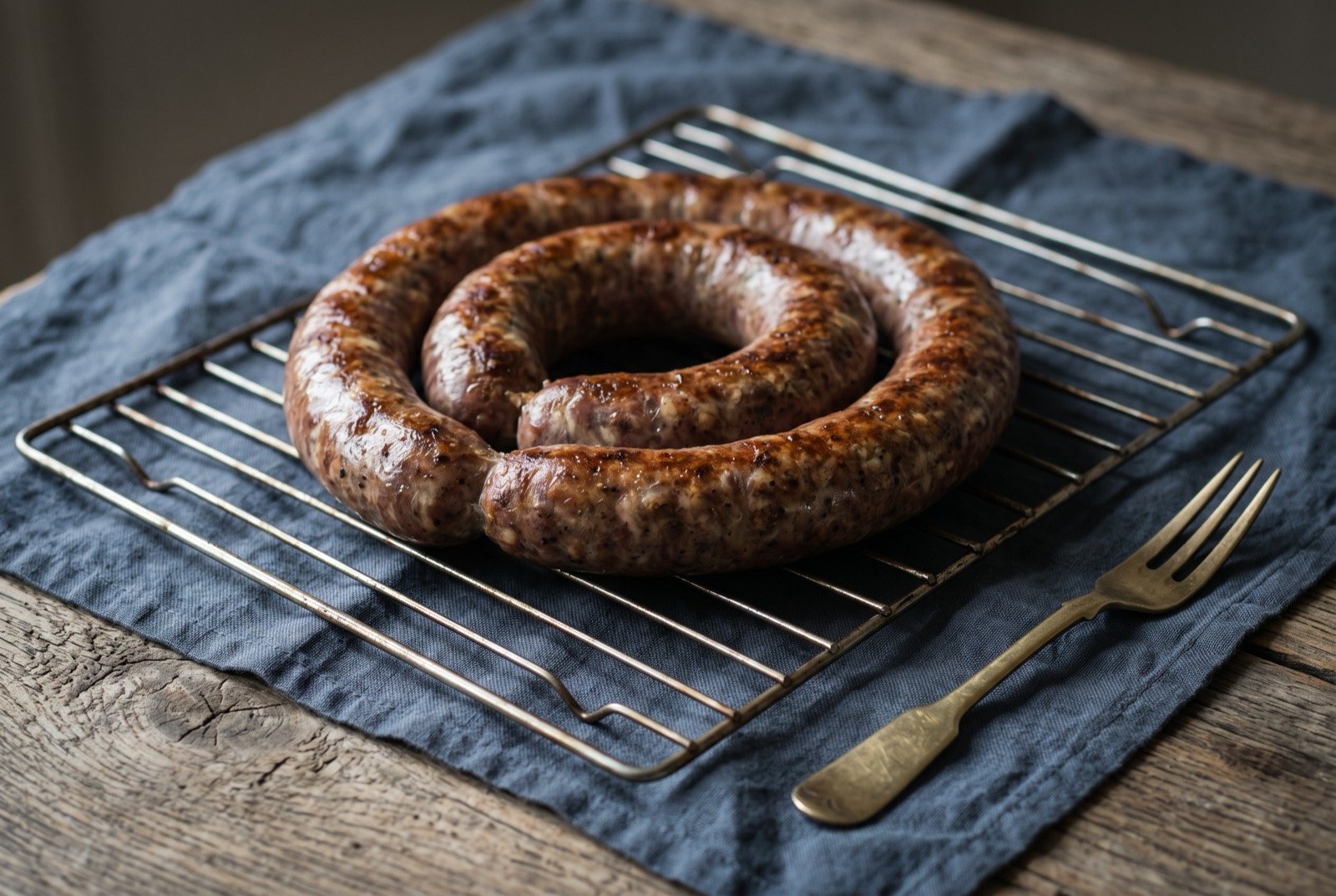
- Stuff into natural casings and form one continuous spiral. Not links.
- Rest overnight in the fridge before cooking.
Notes
Why coriander at that dose. 45 ml per 3 kg is roughly ten times the coriander in a typical European sausage and it is doing structural work rather than seasoning: toasted coriander contributes linalool and a set of citrus-terpene aromatics that read as brightness, and it is the counterweight to a sausage that can be up to 30 per cent fat. The vinegar at 125 ml per 3 kg acidifies slightly, which helps myosin extract and bind, and keeps the fat tasting clean.
The braai consequence, which is the whole reason British boerewors fails. A sausage at up to 30 per cent fat cannot be cooked hard and fast without splitting. It goes on the cooler side of the grid, is turned as a whole coil, and is never pricked.
What a modern chef changes
A grind you control, a coriander you roast, and a fire zoned for it
Rungs 5, 2 and 6
Method
- Grind it yourself at 8 mm and keep everything below 4°C. The defining texture is a coarse, visibly grainy grind with clearly separate cubes of fat, and it is the first thing lost when the meat warms and the fat smears. Freeze the grinder parts.
- Toast and grind the coriander the same day. Coriander's citrus terpenes are the most volatile thing in the recipe, and pre-ground coriander that has sat in a jar for six months is contributing bulk, not aroma. This one change is worth more than any other on this list.
- Cook on the medium zone, over coals, never over flame. Over flame the casing bursts, the fat renders into the fire, and you get a dry, split, sooty tube from a sausage that was fine. This single mistake accounts for most bad boerewors in Britain.
- Turn part of the mix into droëwors and dry it by weight. Rung 6: the same mix in a narrow sheep casing, dried at 24°C and 55 per cent relative humidity to 55 to 65 per cent weight loss. It gets there far faster than biltong because of surface to volume ratio.