Southern Africa · Volume 21, The Most Layered Plate
Biltong
A Khoikhoi technique with a European overlay
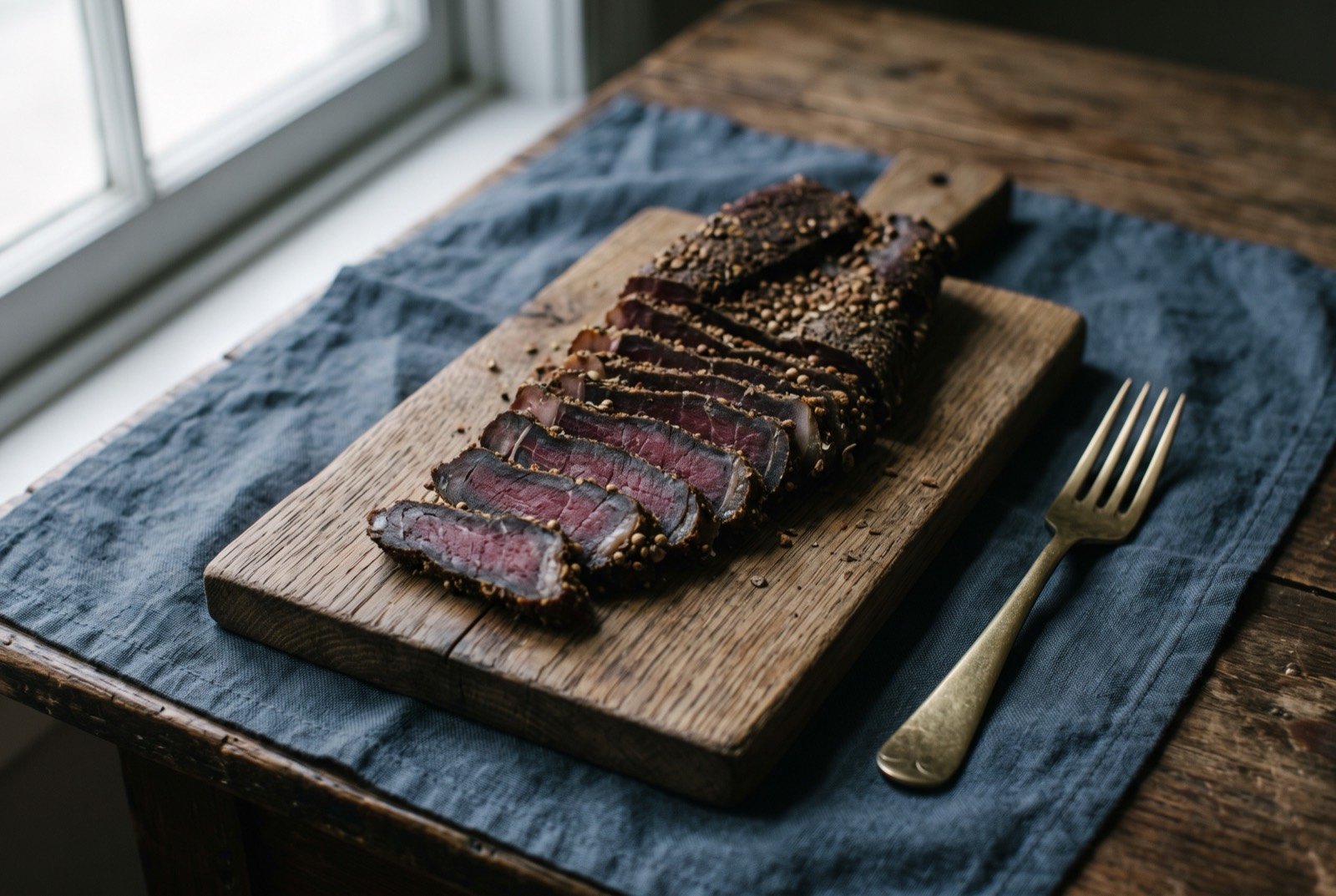
An illustration of the dish, not a photograph of it cooked.
- Time
- 24 hours
- Reviewed
- Not yet reviewed from inside the tradition
- Cooked
- Not yet cooked and reported
Air drying salted meat in strips predates the Dutch at the Cape, and the siSwati umncweba is the same product without vinegar and very likely the ancestral form. The vinegar and the coriander are the European contribution. The drying is not.
As tradition built it
Makes about 1 kg. About a fortnight to dry, plus 12 to 24 hours curing.
Ingredients
An outline, not yet a recipe: the tradition's method with its ingredients named but not weighed. Quantities are being added from sources inside the tradition, lead dishes first.
- 2 kg beef silverside or topside, cut along the grain in strips about 25 mm thick
- 250 ml brown or malt vinegar
- equal parts by volume: rock salt, lightly roasted whole coriander seed, coarse black pepper, brown sugar
Method
- Cut the beef silverside or topside with the grain, not across it, at about 25 mm. Much thicker than jerky, and that is the whole point.
- Cure, by either route. Short: soak in vinegar a few hours, drain, coat in the rock salt, coriander seed, black pepper and brown sugar, rest overnight. Long: 12 to 24 hours in vinegar, rock salt, coriander seed, black pepper and brown sugar together.
- Hang in moving, cool, dry air for about a fortnight. Traditionally made in winter, when the cold slowed bacterial and fungal growth.
- Never apply heat. Jerky is taken to at least 71°C; biltong is not, and that raw, deep red interior is what it buys.
Notes
Roughly 200 g of beef yields 100 g of biltong. Three hurdles stack, none sufficient alone: vinegar drops surface pH, salt lowers water activity before drying begins, and coriander, pepper and clove all carry documented antimicrobial activity. Air drying then takes water activity below the point at which anything grows, slowly enough that the surface never case hardens.
And the salt is under active revision in South Africa, which tells you how much of the preservation is doing salt's work: a 2025 University of the Free State group is publishing on sodium reduction in biltong without impairing safety, and a Stellenbosch group has studied oxidative stability in game droëwors using rooibos extract as the antioxidant, which is a genuinely South African answer to a South African problem.
What a modern chef changes
Doneness by weight, humidity by number, and the finished product used as a seasoning
Rung 6, four times over
Method
- Weigh every strip before and after, and label them. Doneness is a weight loss percentage, not a look. 55 to 65 per cent gives something shelf stable below 0.78 to 0.81 water activity; 50 per cent gives a wetter, better tasting product above 0.81 that lives in the fridge and gets eaten within days. Decide which you are making before you start.
- Hold 24°C at 55 per cent relative humidity with airflow. An odd combination: low heat, high air movement, moderate humidity. A dehydrator on its lowest setting with the door propped works; a biltong box with a low wattage bulb and a fan works better. A dehydrator run hot is a trap, because it gives you dried meat in a day and not biltong: a fortnight of slow drying allows the enzymatic and microbial ageing that produces most of the character.
- Do not skip the vinegar and do not rely on it. It takes surface pH to about 4.91, which delays Gram-negative growth through the first 48 hours. It does not control yeasts and moulds, and the Stellenbosch data is explicit. The water activity is what saves you.
- Cure a heart and shave it over the animal it came from. This is what Mmabatho Molefe does with beef heart biltong over braised beef heart and pap, and what Johannes Richter does with cured eland heart over mushrooms. A whole beef or venison heart, trimmed, cured in the same mix, dried to 60 per cent weight loss and shaved paper thin, is the most impressive thing in this chapter.
Notes
Part Four