Southern Africa · Volume 21, The Most Layered Plate
Koesister
Cape Muslim, Cape Town
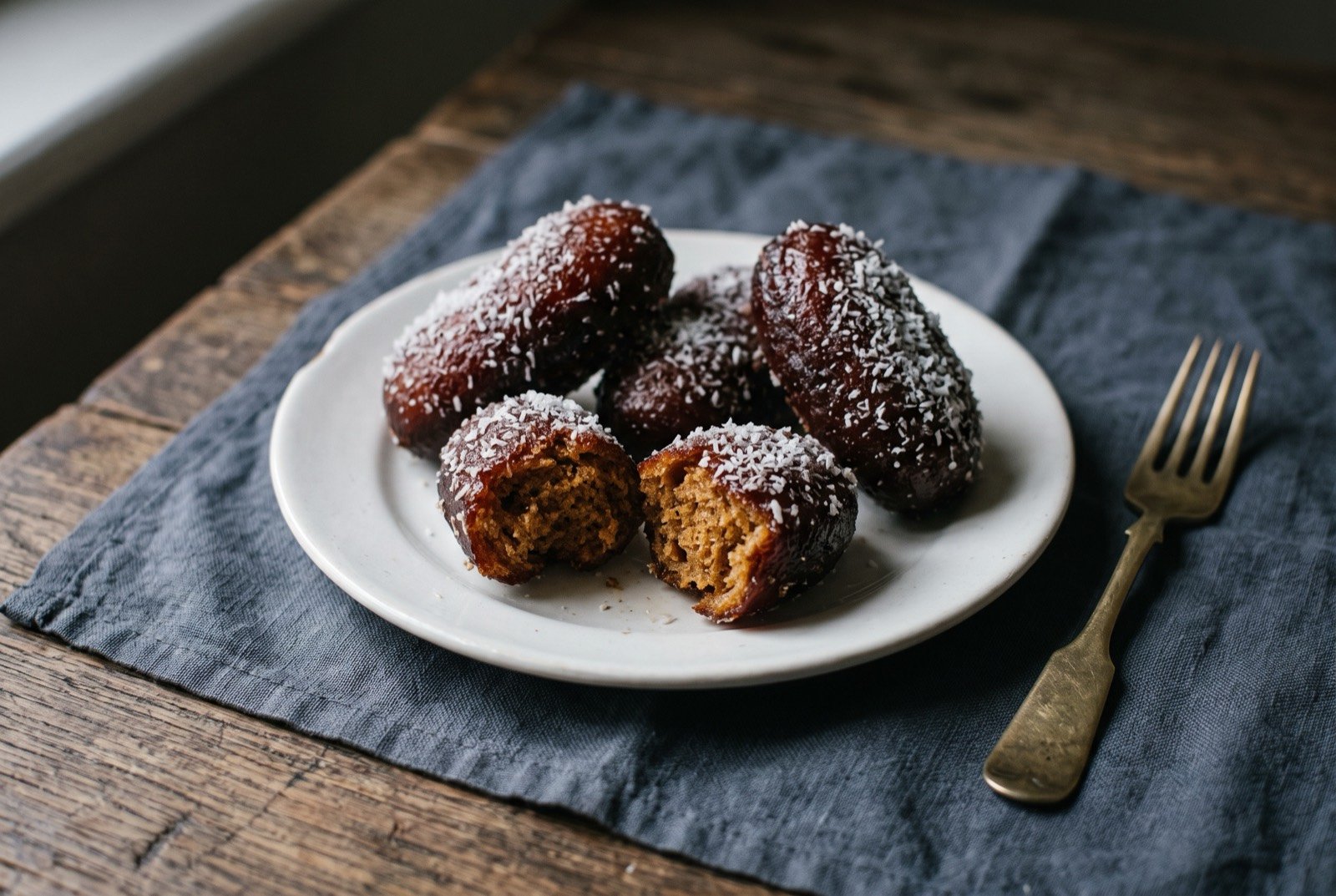
An illustration of the dish, not a photograph of it cooked.
- Time
- 2 hours 15
- Reviewed
- Not yet reviewed from inside the tradition
- Cooked
- Not yet cooked and reported
Fatima Sydow's own recipe, the reference version. Her framing is the one to keep: koesisters are Sunday mornings in Cape Town, her mother arriving with warm tea and a warm koesister and a warm loving smile. This is a domestic, ritual, weekly food and it should be cooked as one.
As tradition built it
Makes about 24. About 2 hours 15, mostly proving.
Ingredients
- 4.5 cups cake flour
- 1 tsp baking powder
- 10 g instant yeast
- 1 tbsp caster sugar
- 3 tbsp butter, melted
- 1 tsp salt
- 1 cup soft mashed potato
- 1.5 cups lukewarm water
- 1 large egg
- 3 tsp naartjie peel powder or zest
- 1.5 tbsp fresh ginger, grated
- 1 tsp mixed spice
- 2 tbsp aniseed
- 2 tsp fine cinnamon
- 1/2 tsp ground cardamom seed
- 3 cups sugar, 3 cups water, 5 sticks cinnamon syrup, for dipping
- for garnish desiccated coconut, to finish
Method
- Mix the flour, baking powder, yeast, caster sugar, butter, salt, mashed potato, lukewarm water, egg, naartjie peel, ginger, mixed spice, aniseed, cinnamon and cardamom for the dough, then knead 10 minutes, adding no extra flour however sticky it gets.
- Prove 90 minutes in a warm place.
- Shape into oblongs and deep fry at medium high until browned on both sides.
- Boil the syrup until bubbling. Immerse the fried koesisters for one minute, hot into hot.
- Roll immediately in desiccated coconut.
Notes
The two things a British cook will get wrong. The mashed potato is not a stretcher, it is a technical device: potato starch granules gelatinise fully during boiling and then hold water in a way flour starch in a lean dough does not, giving a softer, moister, longer keeping crumb that soaks syrup without collapsing. Generalist koesister recipes routinely omit it, and that is why theirs come out like doughnuts. And kneading a sticky dough without adding flour: Sydow says this explicitly, because the hydration is the point.
The sequence is the argument with the other pastry. A hot syrup on a hot fritter soaks in and gives a soft, saturated, cake-like interior. The Afrikaner koeksister plunges a plaited dough into ice cold syrup for a crisp shatter and a glassy surface. Same operation, opposite goals.
What a modern chef changes
The starch job done twice, the syrup measured, and the spice protected
Rungs 3 and 5
Method
- Scald part of the flour as well as using the potato. A cross-check version of this pastry scalds flour by combining 300 ml boiling water with 250 ml cold milk; Sydow's potato does the same job by another route, and doing both gives a dough that carries more syrup without going heavy. Take 1 cup of the flour, scald, cool, add with the rest. Rung 3: deliberate starch gelatinisation, the lever the pap rung turns.
- Fry at 170°C and check it. A dough this wet needs enough time for the centre to cook and not so much that the outside sets before it has expanded. About 3 minutes a side on a 60 g piece.
- Take the syrup to 105°C, not just to bubbling. A 1 to 1 syrup at a rolling boil keeps concentrating, and a few degrees decides whether it soaks in or lacquers the outside. 105°C soaks; past 110°C it sets on the surface, which is the koeksister's goal and not this one's.
- Use the aniseed as roasted whole seed, cracked, not as powder. Two tablespoons is a serious dose, and ground aniseed loses its top notes across a 90 minute prove and a deep fry. Toasted and cracked coarsely, it survives both.