Southern Africa · Volume 21, The Most Layered Plate
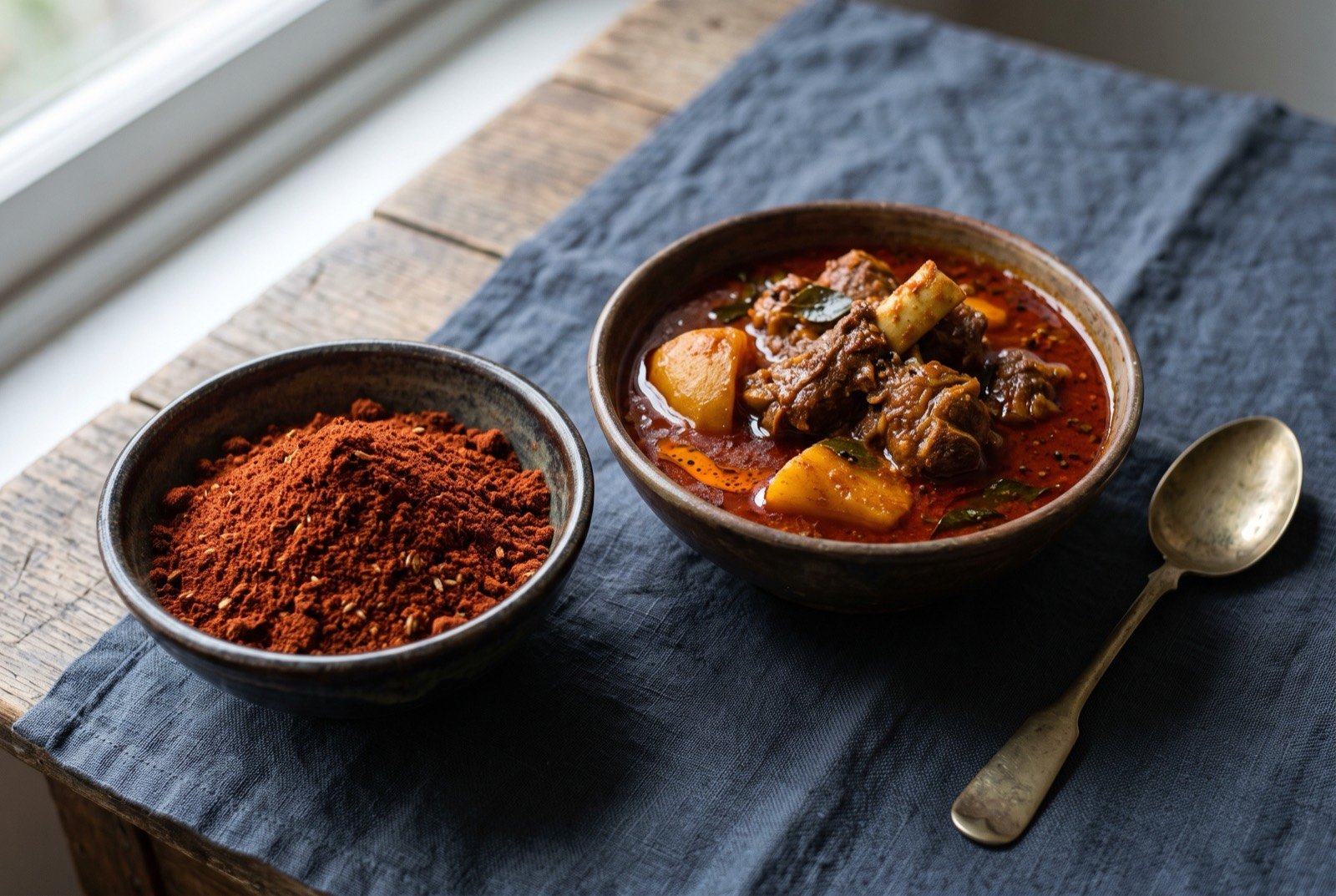
Durban masala, and the mutton curry it exists for
Durban Indian
Illustration
- Time
- 40 minutes
- Researched
- Researched from 166 sources in the brief
The single most useful number in this volume, from a Durban Indian home cook publishing in her own name.
As tradition built it
Makes about 600 g. 40 minutes.
Ingredients
- 500 g chilli powder
- 25 g ground cumin
- 25 g ground coriander
- 2 tbsp garam masala
- 2 tbsp ground fennel (soomph)
- 2 tbsp turmeric
- 1 tsp ground cardamom
- 1 tsp ground cinnamon
Method
- Roast the cumin, coriander, fennel, cardamom and cinnamon, each whole seed separately. They reach their point at different times, and roasting them together means some are raw and some are burnt.
- Grind each separately, then combine with the chilli powder, turmeric and garam masala.
- Store airtight. One month at cool room temperature, six months frozen.
Notes
The masala.
Read the ratio. Chilli is well over 80 per cent of the blend by weight; cumin and coriander together are about 8 per cent. In a north Indian garam masala those proportions are close to reversed. Durban masala is not a curry powder with extra chilli; it is a chilli powder with a supporting aromatic frame, which is why it is dosed by the tablespoon into oil at the start, why it needs fat and time or it tastes raw and dusty, and why it will scorch in seconds if the pan is too hot.
The curry, and an honest gap. No weighed in-tradition Durban mutton curry reached this chapter, so none is printed. What the Durban sources supply is the variable list, and it is short. Manilal Patel: the oil, fresh masala, and how you cook your onions and garlic. Salma Patel: fresh curry leaves. Bone-in mutton, cooked long. Potato added partway to soak up the gravy. And the doneness marker, which is visual: the oil separates and stands clear on the surface. Build it that way, and dose the masala at 1 to 2 tablespoons per kilo of meat, adjusting upward once you know what you are dealing with.
What a modern chef changes
Roasting done properly, blooming done at a temperature, and the oil slick treated as the measurement it is
Rungs 5 and 1
Method
- Roast the four seeds separately to smell rather than to colour, at 130 to 160°C. Coriander, cumin, fennel and fenugreek all get there at different rates. This is where the pyrazines come from, and it is the difference between a masala that smells of roasted seed and one that smells of chilli dust.
- Bloom at 120 to 140°C for 30 to 60 seconds and watch it. A blend that is 80 per cent chilli has almost no seed oil to buffer it and goes from bloomed to burnt in about ten seconds. Take the pan off the heat before the masala goes in, count, and return it.
- Treat the oil slick as a diagnostic, not a fault. If the oil has not separated and risen, the spice is still locked in the solids and the curry is not finished. This is the same logic as frying a West African groundnut sauce until the oil breaks, arrived at independently on the other side of the continent.
- Finish the curry leaves in hot oil separately and pour them over at the pass. A tarka of curry leaf and mustard seed at service preserves terpenes an hour of simmering destroys, and it puts the single ingredient that distinguishes Durban from everywhere else at the top of the plate rather than the bottom of the pot.