Mesoamerica · Volume 07, Belize, Honduras and the Mosquito Shore
Ereba
Garifuna coast, Belize, Honduras, Guatemala
Illustration
As tradition built it
Ereba
Communal preparation, kept up to a year stored airtight
Ingredients
- 1 pound bitter cassava root
Method
- Uproot, wash and peel the bitter cassava.
- Grate it on an egi, a stone-studded wooden board, into a wet mash called sibiba.
- Pack the mash into a ruguma, a long woven press known as wowla in Belizean Kriol, and leave a full day: as the tube is stretched and weighted it constricts, squeezing out the toxic, cyanogenic liquid, called yare in Honduran sources.
- Leave the pressed, tube-shaped cassava to dry outdoors overnight, a step that also allows a slight fermentation to begin.
- Sift the dried cassava through a woven híbise into flour.
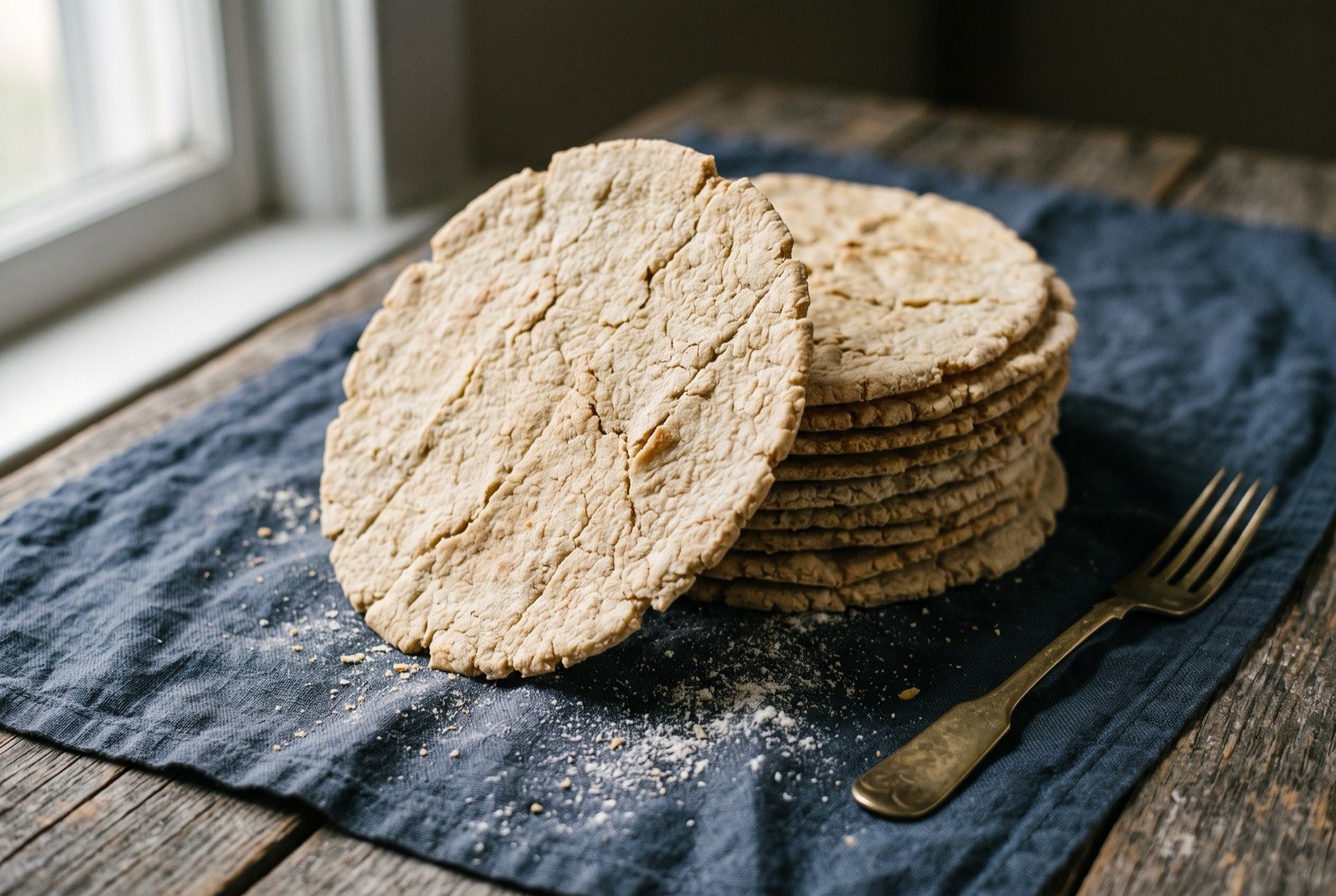
- Cook the flour on a hot comal over a hearth called a régigi, flattened with a wooden press, fanned with a palm-leaf beísawa, and flipped like a crepe.
- Score the finished bread and stack it to cool.
Notes
The grating itself is traditionally a communal task, done with song, and is described in the sources behind this chapter as a genuine moment of intergenerational knowledge transfer, not simply a chore.
What a modern chef changes
An honest adaptation, not a reproduction
Rung 01
Method
- Build the bread from sweet cassava, which needs no toxin-leaching, or from a good commercial cassava flour, since real bitter cassava root cannot currently be bought in Britain.
- Approximate the ruguma's constricting squeeze with a muslin cloth twisted progressively tighter by hand, reasonable for sweet cassava's comparatively small liquid content.
- For a closer analogue of the pressure a ruguma applies, run a dehydrator at a low, steady heat after an initial hand-press, replicating the slow, even moisture loss of the original overnight dry far better than a quick pan-dry.
- Toast the finished flour lightly in a dry pan, then grind it in a dedicated spice grinder's bowl, a small addition with no traditional precedent, for a rounder, nuttier flavour the mild sweet-cassava flour otherwise lacks against the real thing's fuller, faintly fermented character.
- State plainly on the plate that this is an adaptation of ereba, not a reproduction of it: true ereba is, for now, not cookable in a British kitchen.