East Africa and the Islands · Volume 17, The Great Lakes
Katogo
Uganda
Illustration
- Time
- 1 hour
- Researched
- Researched from 213 sources in the brief
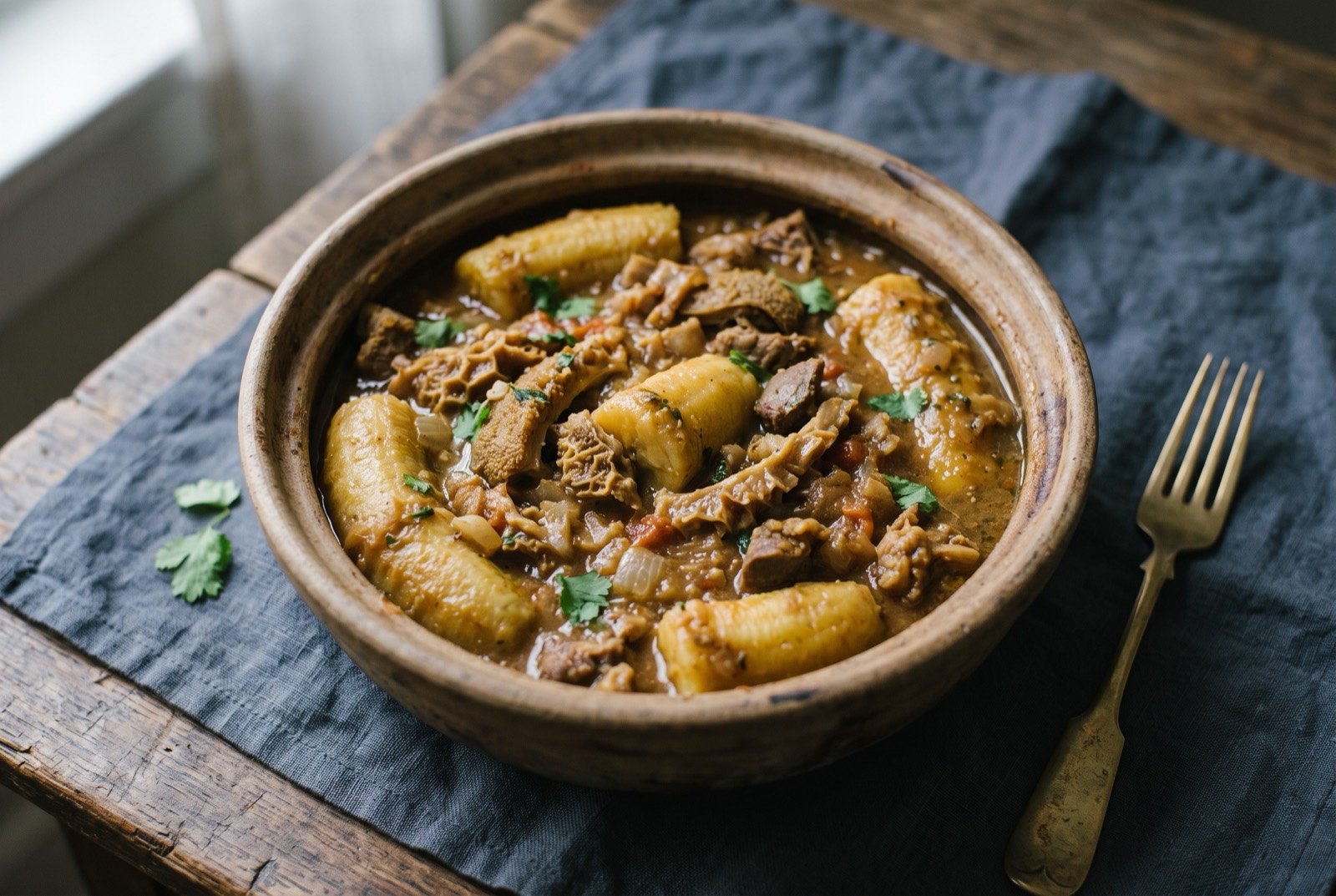
Katogo is the dish where the starch and the sauce are never separated, and the word describes the technique rather than a recipe. Its history is legible and it is a class history. Originally it was diced cassava mixed with beans. Matooke replaced the cassava as an upmarket move. Then offal was added. The canonical version is peeled matooke cooked together with byenda, offal, meaning tripe, sweetbreads and organ meats, in one pot. Variants use beans, groundnut, greens or beef, or substitute Irish potato, cassava or sweet potato for the matooke. Rwanda has the cognate: agatogo, green banana cooked together with meat, vegetables and groundnut paste. Same root, same idea, and worth noticing, because it is one of the few clear pieces of evidence that the Ugandan and Rwandan kitchens are one grammar and not two. And there is a technical point buried in it. The Bukoba variant of matooke in northwestern Tanzania cooks ebitooke together with meat or smoked catfish and beans or groundnuts, and does not mash them. So the mashed-mound-plus-separate-sauce form that Western write-ups treat as the definition of matooke is one option among at least three: mashed with a sauce beside it, cooked with the sauce and mashed, or cooked with the sauce and left whole.
As tradition built it
Serves 4. About 1 hour.
Ingredients
- 600 g beef offal, tripe and sweetbreads, cleaned and cut into pieces
- 6 matooke fingers, peeled and cut into large chunks
- 2 onions, sliced
- 3 tomatoes, chopped
- 4 garlic cloves
- 20 g ginger
- 1 tsp curry powder, which is a South Asian residue and entirely normal here
- to taste salt
- to barely cover water to barely cover
Method
- Boil the cleaned offal in salted water until it begins to soften, about 30 minutes, and keep the liquor.
- Sweat the onion, then add the garlic, ginger, tomato and curry powder and cook to a thick base.
- Add the offal and its liquor, then the matooke chunks. The liquid should barely cover.
- Cover and cook 20 to 25 minutes, until the banana is tender and has begun to break down into the sauce and thicken it.
- Stir once, roughly, so that some pieces hold and some collapse. The texture is the point: this is neither a mash nor a stew.
What a modern chef changes
Two textures on purpose, the offal treated properly, and the liquor built rather than borrowed
Rungs 2, 3 and 1
Method
- Cook the offal separately and properly, then bring the two together late. Tripe wants two hours and matooke wants twenty minutes, and cooking them together for the same time guarantees that one of them is wrong. Braise the offal in a sealed parcel or a tight casserole until genuinely tender, hold it, and add the banana to the finished liquor.
- Split the banana, exactly as in dish one. Rung 2. Two thirds go in to break down and thicken the sauce, using the very high breakdown of this starch as a deliberate thickening tool. The last third goes in ten minutes from the end so it holds its shape. You are using breakdown as an ingredient rather than fighting it.
- Build the liquor from dried fish and not from a cube. Rung 3. Steep 30 g of dried silver cyprinid in 500 ml of water at 70°C for 30 minutes, strain through muslin and defat. That is your cooking liquid, and it puts the inosinate axis back into a dish that in Britain is almost always built on Royco.
- Line the pot with a smoked banana leaf. Rung 1. Katogo is a covered pot cook, so a lining leaf gives you aroma transfer for the price of one leaf and no extra time. It is the cheapest improvement in this chapter.