East Africa and the Islands · Volume 17, The Great Lakes
Matooke
Buganda, Uganda
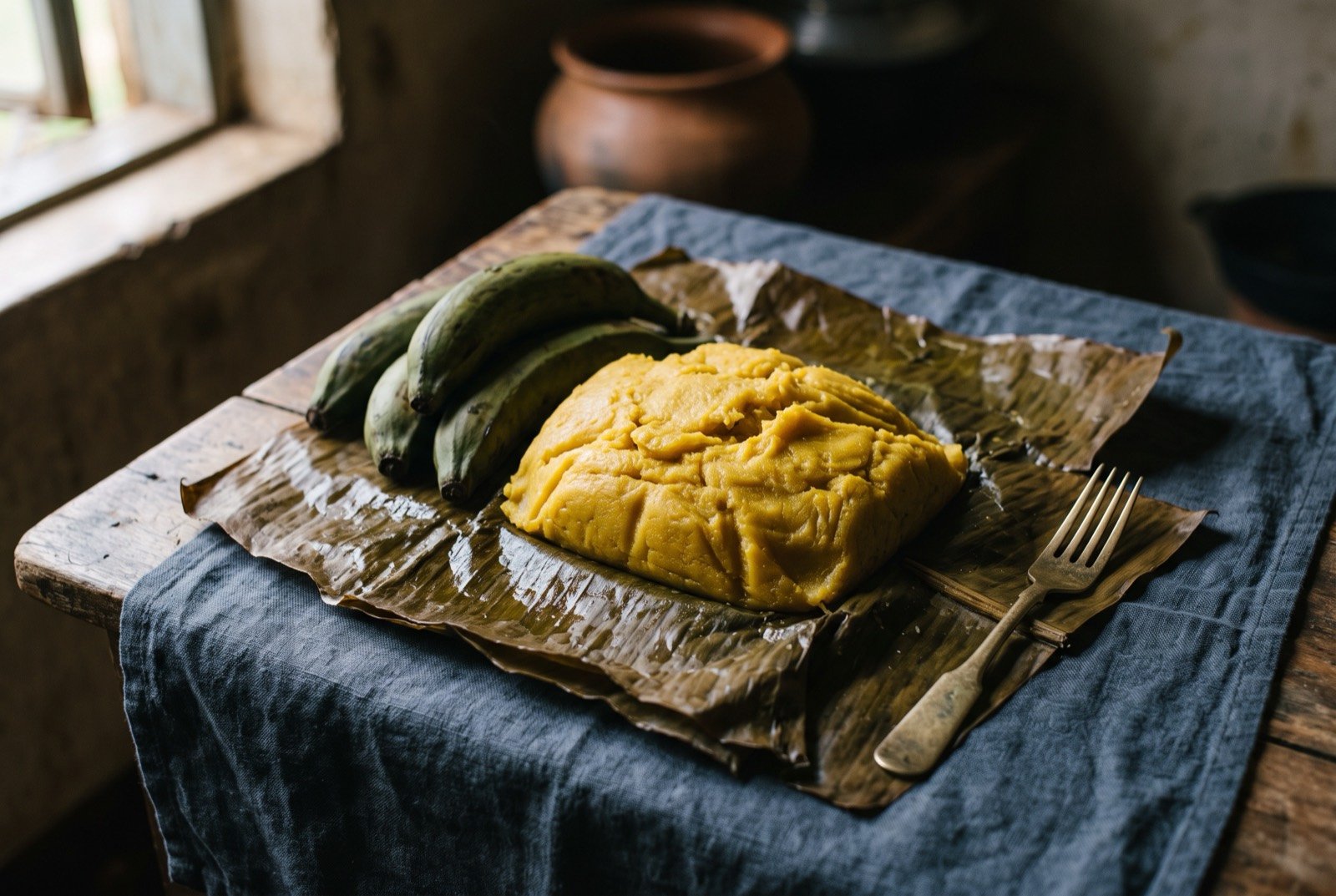
An illustration of the dish, not a photograph of it cooked.
- Time
- 1 hour 45
- Reviewed
- Not yet reviewed from inside the tradition
- Cooked
- Not yet cooked and reported
The staple, and the plant that made the population densities of this region possible. East African Highland banana, Musa AAA-EA, Mutika/Lujugira subgroup, which exists nowhere else on earth. Ugandan per capita banana consumption is the highest in the world and is put at 220 to 400 kg per person per year in a Ugandan authored sector review. The service ritual is worth printing because it tells you what the dish is. Matooke is portioned with two steamed tender banana leaves, obubezo, one in each hand: the right cuts and portions, the left scoops and distributes, and the server kneels. That is documented in Buganda's own magazine, Entanda Ya Buganda, and it is not a tourist performance. It is how food is put on a plate in a Baganda household.
As tradition built it
Serves 4. About 1 hour 45.
Ingredients
- 3 kg matooke, unpeeled weight, giving about 1.5 kg peeled
- enough to line the pot and wrap the parcel fresh or thawed banana leaves, midribs stripped
- enough for a trivet banana pseudostem or bunch stem for the trivet, or a steamer plate
- 1 tsp fine salt
- 1 tbsp ghee, optional, and not traditional in every household
Method
- Peel by cutting off the tips at each end and then running the knife down the ridges. Oil your hands and the blade first. The latex is a polyphenol-rich sap and it oxidises to a black stain on skin, knives and worktops within minutes. Peeled fingers go straight into water. Assume 50 per cent loss to peel: 6 kg unpeeled gives about 3 kg peeled.
- Wilt the leaves over a flame until they go glossy and limp. Lay the trivet in the bottom of a tall pot, add water to just below it, and line the pot with leaves.
- Wrap the peeled fingers in leaves, tie the bundle, and set it on the trivet. The parcel must not touch the water. More leaves over the top, then the lid.
- Steam at 100°C for about 1 hour 15 minutes, topping up the water two or three times through the cook without disturbing the parcel.
- Take the pot off the heat. Mash inside the leaf, working in the salt, by squeezing the wrapped bundle with your hands, for 2 minutes. The parcel is extremely hot: the laboratory protocol specifies heatproof gloves and village cooks use the leaf itself and speed.
- Retie and return it to the pot, with the ghee if using, for a further period so the mash tightens and deepens in colour. Raw matooke is white and hard. Properly cooked it is soft and yellow.
Notes
The weighed and timed procedure below is the CGIAR RTBfoods standard operating procedure written for Uganda, which is the only place I found matooke measured rather than described. Household practice runs longer and is discussed at the end of this chapter.
What a modern chef changes
Mashed at peak viscosity, finished off the heat, and given texture back with empogola
Rungs 2, 1 and 5
Method
- Mash at peak, in short passes, and then stop. Peak viscosity for this starch is 488 to 559 RVU and breakdown is 235 to 312, which means it thickens fast and then shear-thins fast. Use a heavy flat wooden paddle, four or five short folding passes, and put it down. A ricer or a stand mixer over-shears and gives you glue. This is the single most common failure and it is invisible until the mash cools.
- Finish covered, off the flame, for ten minutes. Residual steam completes the gelatinisation without any further shear. Fold a spoonful of ghee through at the start of that rest, not before.
- Hold back a quarter of the fingers and steam them whole in the skin. That is empogola, the lesser-known counterpart to matooke: the peel is the moisture and oxygen barrier, so the flesh stays firmer and less waterlogged. Dice it and fold it through the mash at the end. You get texture contrast without a thickener, which is the honest answer to the plating problem in the half rung above.
- Fold in a tablespoon of soured milk off the heat. Rung 5. Lactic acid is non-volatile and buffered, so it gives the mash a savoury length rather than the spike lemon would give it. Nobody in Buganda does this and everybody in Rwanda would recognise it, which is precisely why it belongs in a book that treats the three countries as one region.