The Gulf and Arabia · Volume 07, The Pit, the Port and the Pilgrim’s Table
Areeka
Mecca
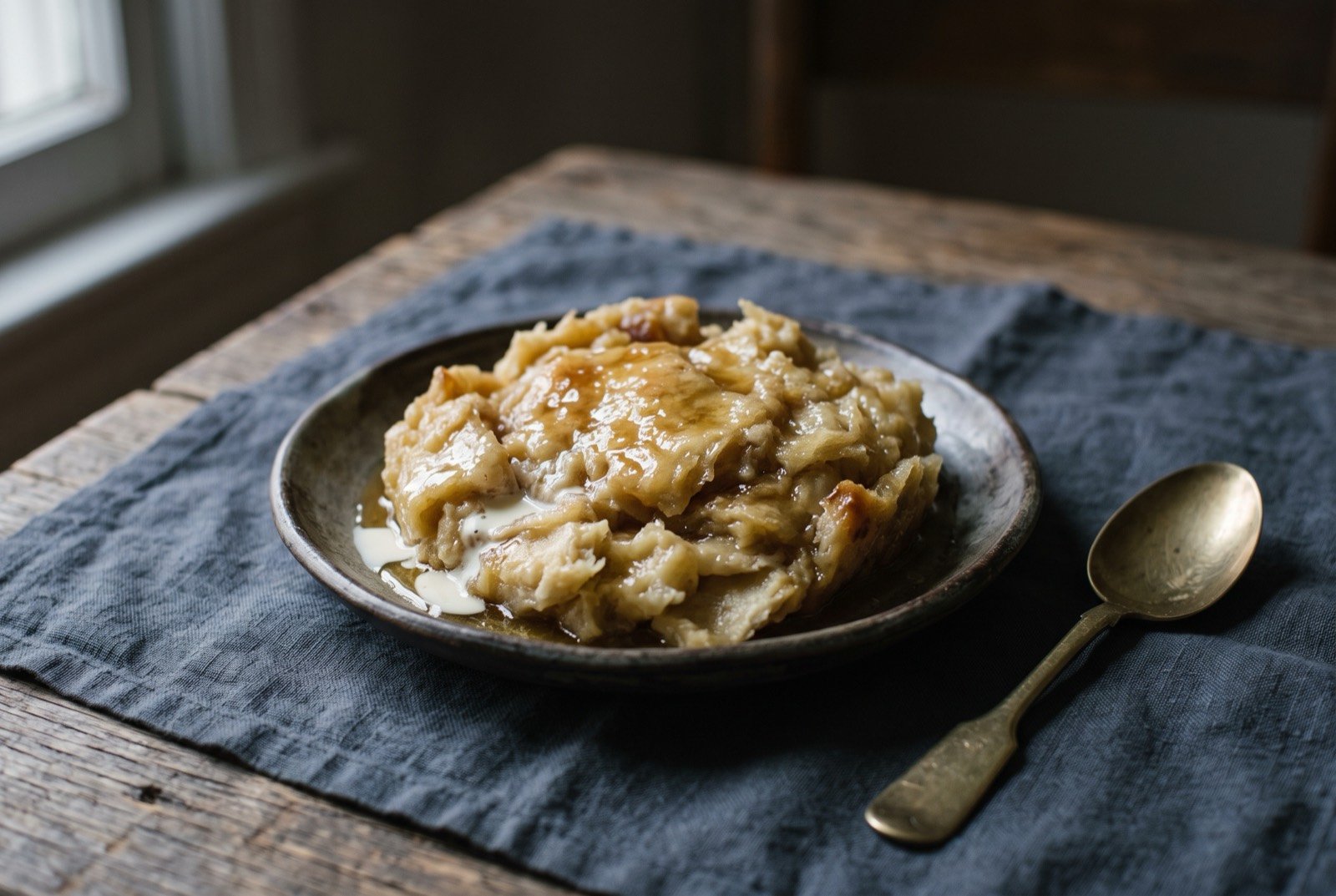
An illustration of the dish, not a photograph of it cooked.
- Time
- 20 minutes
- Reviewed
- Not yet reviewed from inside the tradition
- Cooked
- Not yet cooked and reported
Thin bread worked by hand with mashed banana, sugar, honey and ghee until it holds together like a soft, dense bread pudding, areeka is served at everyday Meccan gatherings and most often during Ramadan. Sourcing for this dish sits at commercial and home-recipe level rather than heritage-authority level, real but not academically documented.
As tradition built it
Serves 4. About 20 minutes.
Ingredients
- 4 sheets thin sheets of flatbread or a light pastry, torn into pieces
- 2 ripe bananas, well mashed
- 2 tbsp sugar
- 2 tbsp honey
- 2 tbsp ghee, melted
- 2 tbsp fresh cream, optional
Method
- Work the torn thin sheets of flatbread or a light pastry by hand with the mashed ripe bananas, sugar, honey and melted ghee, until the bread has absorbed the liquid and the whole mixture holds together like a soft, dense bread pudding.
- Work a spoonful of fresh cream through at the end for extra richness, if using.
- Serve at room temperature.
Notes
Sourcing for this dish sits at commercial and home-recipe level rather than heritage-authority level, real but not academically documented; treat the method as broadly correct rather than definitively fixed.
What a modern chef changes
Layered textures and a properly browned ghee
Method
- Dehydrate thin sheets of the bread separately until properly crisp, then layer them deliberately with a quenelle of banana and honey cream rather than mashing everything together into one texture, an active choice to keep crunch and softness distinct on the plate rather than letting the traditional method's soaking blur them.
- Brown the ghee properly, cooked until the milk solids toast to a nutty brown, before it goes anywhere near the bananas: the single easiest, most transferable elevation in this whole chapter, burnt-butter aromatics that traditional areeka, made quickly at home, rarely bothers to develop.