Asia · Volume 07
Hejaz
The Pit, the Port and the Pilgrim’s Table
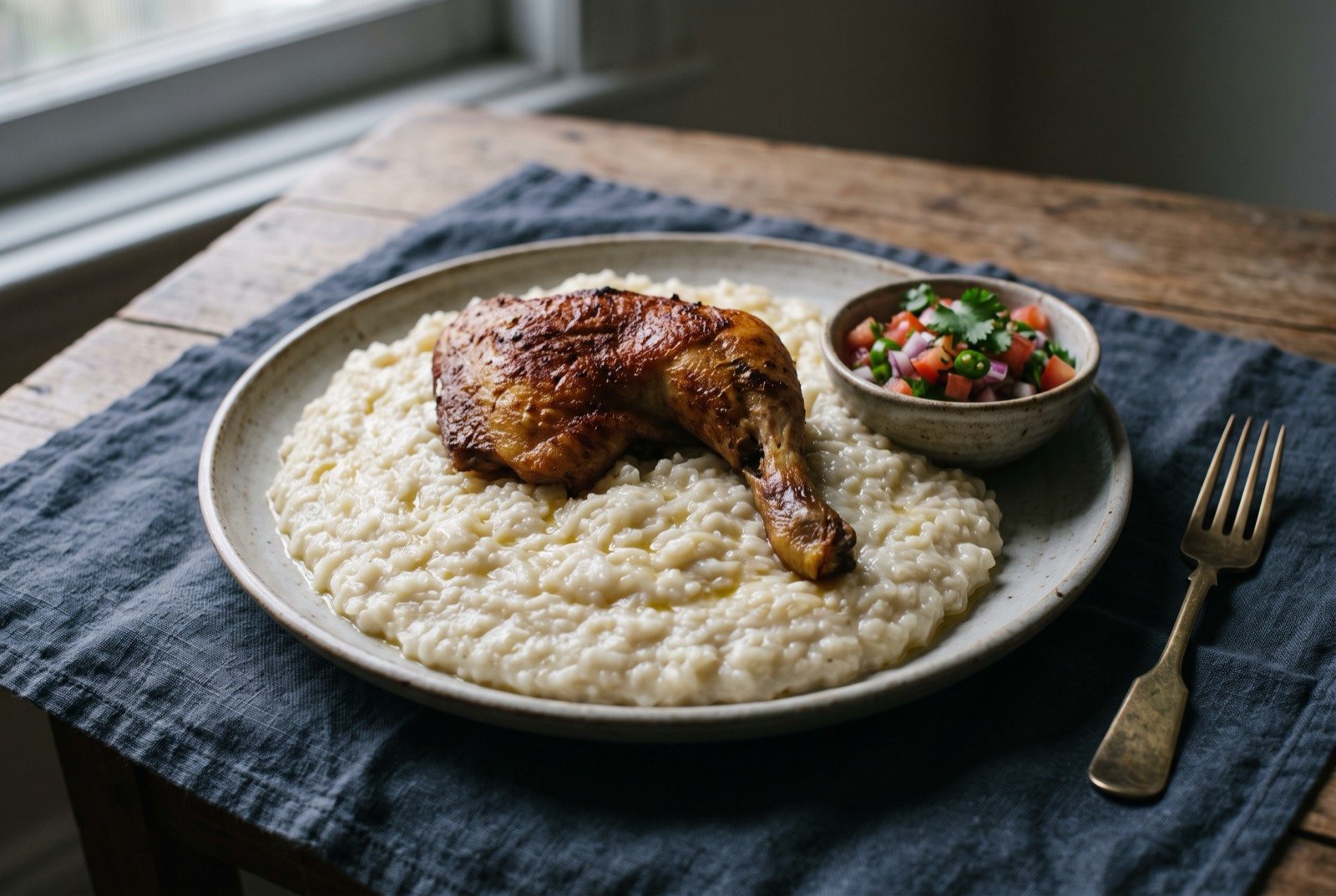
No other kitchen in this atlas was built quite the way the Hejaz's was. Every culinary region so far has been shaped by ecology first and everything else after: what grows, what the fat is, what the staple starch is. The Hejaz has an ecology too, a dry coastal plain giving way fast to a cooler mountain spine, but it is not what shaped this food. What shaped it is that for fourteen centuries, several million people a year have walked, sailed and now flown to two specific cities to perform a religious obligation, and a meaningful number of them, in every generation, never left. Javanese and Malay families settled a quarter of Mecca still called Jawa. Bukhari families from Central Asia settled a lane near Ajyad and brought a rice tradition that still carries their name in Medina's kitchens. Hadhrami traders from Yemen built Jeddah's oldest souk alongside Indian cloth merchants, and their descendants still argue, not always kindly, about who is a “real” Jeddawi and who is “turshat al-bahr,” thrown up by the sea. Mecca and Medina do not have a cuisine in the way Ghana or Georgia has a cuisine, one people cooking one ecology's produce. They have a table that several dozen peoples built together, one Hajj season at a time, and that is the actual subject of this chapter. It is also a chapter that has to correct itself twice before it can begin properly. Mandi, the dish most people outside Saudi Arabia now associate with this whole country, turns out on real inspection to have no distinctly Hejazi form at all: it is Hadhrami, full stop, carried here by Yemeni cooks and now cooked everywhere from Riyadh to London exactly as it always was. And saleeg, widely written up in English as “Medina's rice,” is Taif's, a mountain town with a named founder and a 1936 opening date; Medina's own officially designated dish is a different, quieter thing entirely, simply called Al-Madina rice. Getting this right matters more than getting to keep a familiar story, and it is a better story once corrected: not one dish standing for a holy city, but three cities each keeping a food history nobody outside the Hejaz has bothered to check. Every dish as tradition built it, then what a modern chef would change.
Sources and review · What this chapter does not assert · How we research · Spotted something wrong?
A Sense of Place
Geographically the Hejaz is one long escarpment: a narrow, hot coastal plain called the Tihama running along the Red Sea, climbing sharply within a few dozen kilometres into a mountain spine that reaches nearly 1,900 metres at Taif. Mecca sits inland in a valley among these mountains; Medina sits further north on a basalt-ringed oasis plain; Jeddah sits directly on the coast, at the point where the Mecca road meets the sea. This geography explains almost none of what this chapter is actually about. What explains it is that Uthman ibn Affan, the third caliph, designated Jeddah the official seaport for pilgrims arriving by sea in 647 CE, and from that year on, this stretch of coast and mountain has functioned less like a homeland and more like a permanent, self-renewing arrivals hall.
The three cities kept genuinely different roles inside that arrangement, and their food still shows it. Mecca is where the largest number of pilgrims actually needed housing, guiding through unfamiliar rites, and feeding, which built a hospitality profession, the tawwafa, and with it a coffee-and-dates welcoming ritual sturdy enough to have outlasted every other change to the city around it. Medina is where the Prophet's Mosque gave permanent communities, Bukhari, Indian, West African, a reason to settle close by for generations rather than to pass through, which is why Medina's food reads less like hospitality and more like inheritance: named rice traditions, a Bukhari quarter, dishes with a specific street and a specific family attached. Jeddah is neither host nor inheritor but broker: a trading port whose oldest quarters are named for the goods and the merchants that moved through them, Khan al-Hunud for its Indian cloth traders, Harat al-Yemen for its Hadhrami community, and whose defining local motto, "Jeddah Ghair," Jeddah is different, is a claim about cosmopolitanism made by the city about itself.
The defining logic, by thread
| Element | Mecca | Medina | Jeddah |
|---|---|---|---|
| Structural role in the pilgrimage | Host: hospitality, guiding, feeding arriving pilgrims (the tawwafa profession) | Inheritor: permanent settlement by pilgrim communities across centuries | Broker: the sea gateway, the merchant and trading class |
| Defining rice tradition | Saleeg, properly Taif's dish, adopted into Mecca's own table | Al-Madina rice (formerly "Arabi rice"), the city's own officially designated dish, and kabli rice, the Bukhari community's Central Asian import | No single rice tradition of its own; a coastal fried-fish table instead |
| Carried-in communities, named | Jawa (Javanese and Malay), Takarna (West African), Bengali/Indian/Sindhi, Turkish and Algerian quarters | The Bukhari quarter specifically, and its manti, yaghmesh and kabli rice | Hadhrami and Yemeni traders (Harat al-Yemen), Indian cloth merchants (Khan al-Hunud), Bukhari oven-and-furnishing traders |
| Everyday fat | Samn (clarified butter) and olive oil brought in by trade | Samn, ghee-enriched rice | Samn and, on the coast, the oil the fish itself is fried in |
| Defining sweet | Debyaza, an Eid al-Fitr dish, once a wealth marker built on imported dried fruit and nuts | Areeka-adjacent sweets and the tatema table's spread of preserves | A cosmopolitan restaurant sweet table rather than one native pastry |
| Everyday protein | Chicken and lamb for feast cooking; fava beans (foul) for everyday breakfast | Chicken and lamb, the same broad pattern | Fried Red Sea fish: hamour, najil, shaur, kashar, safi |
The History in Layers
A caliph's decision, and a fishing village that stopped being one
Before 647 CE, Jeddah is described in the sources available as a minor fishing settlement. Caliph Uthman ibn Affan's decision to make it the official seaport for pilgrims arriving from Egypt, the Levant, East Africa and, via the Indian Ocean monsoon routes, from India and beyond, converted it within a generation into the hinge the whole region still turns on. The Mecca to Jeddah road became, in the words of Saudi heritage reporting, "a vital commercial axis," and for roughly a century a building called Al-Bunt was the first structure a pilgrim arriving by sea would enter, its rooms built around processing luggage rather than welcoming guests, which tells you plainly what kind of arrival this always was: organised, high-volume, and old.
Who settled, and what they brought: Mecca and Medina's named quarters
Mecca's historic neighbourhood map is, more than almost anything else in this chapter, direct evidence of the argument the whole volume is making. The Jawa quarter housed Javanese, Malay and Siamese communities, called collectively "Jawa" by Meccans; Arabic-language sourcing dates a significant influx from the first half of the nineteenth century, driven by flight from Portuguese colonial pressure in the Malay world and by a plain desire to live near the holy sites, and credits this community with introducing fried rice, satay, rendang and laksa into wider Saudi cooking, a claim repeated often enough in Saudi sourcing to be treated as more than folklore, though this chapter has not independently verified it against a food-specific academic study. A separate Bengali, Indian and Sindhi quarter, a West African quarter known collectively as Takarna, naming Hausa, Fulani and Bornu communities specifically, a Hadhrami, Yemeni and Levantine quarter, and a Turkish and Algerian quarter round out the map. Medina kept its own version of this, most durably in a Bukhari quarter near Ajyad, home to Central Asian Uzbek and Uyghur-descended families who arrived, some of them, fleeing Tsarist and then Soviet Russia, and who are the reason Medina's kitchens still cook a rice dish carrying their name.
The mechanism that turned a religious obligation into a settled population, over and over, for centuries, was the tawwafa profession: pilgrim guides, an honour historically reserved for Meccan and Medinan scholars and jurists, who hosted delegations from across the Islamic world and whose families frequently formed lasting personal and marital ties with the pilgrim families they guided, repeated across generations until guide and guest were the same family. Coffee, dates and cold water offered at a Meccan household's door to an arriving pilgrim is not incidental hospitality theatre; it is this profession's oldest working custom, still recognisable in how a Saudi household receives a guest today.
Jeddah's merchants, and the epithet that tells you what the city actually is
Ulrike Freitag's academic history of Jeddah, built on fifteen years of archival research, records that the city's old merchant families "have roots all over the world: in India, Egypt, Iran, Morocco and other regions," and that this cosmopolitanism produced the local motto "Jeddah Ghair," Jeddah is different, deployed specifically against Najd and Riyadh's more settled, Bedouin-descended self-image. It also produced something less flattering: rival communities used the epithets "turshat al-bahr," thrown up by the sea, and "baqayat al-hajj," leftovers of the hajj, to cast Jeddawis as rootless newcomers rather than settled Arabs, which is precisely why so many old Jeddawi trading families, the sources note, work hard to assert deep Arab genealogical roots alongside their trading history. Named among them: the Al-Zainal family, who trace descent to the Quraysh tribe of Suhm, reportedly held Saudi Arabia's Commercial Registration No. 1, and traded specifically in "tijarat al-arzaq," the foodstuffs and provisions trade; Muhammad Abu Bakr al-Zara'a, an Indian-cloth trader in Souq al-Alawi appointed the market's chief in roughly 1873; and the Hadhrami merchant community whose modest shops in their own quarter, per Al-Eqtisadiah's reporting, produced "many of Jeddah's most famous and wealthiest traders" once they expanded beyond it. This is a trading history first and a cooking history only by consequence, but it is the consequence that matters here: a port where cloth, spice, coffee and the pilgrim traffic itself moved through the same few khans, Khan al-Hunud for Indian goods, Khan al-Attarin for perfumers and spice merchants, for a thousand years, does not produce one coherent local cuisine. It produces exactly what Jeddah has: a fried-fish street food tradition of its own, a historic coffeehouse culture with a literal "Yemen Lane" still specialising in Yemeni beans, and, in the twenty-first century, one of the most cosmopolitan restaurant scenes in the Gulf.
A dish that arrived and never became Hejazi, told honestly
Mandi deserves a clear, separate accounting, because getting this wrong would misrepresent the whole region. It is Hadhrami, from Hadramawt in eastern Yemen, full stop, according to every source this chapter's research could find, Saudi and otherwise, including a flat Arabic-language rebuttal of the very idea of a "Saudi mandi": "there is no such thing as Saudi mandi," one commentator put it, attributing what restaurants market under that name to Yemeni cooks working across the Kingdom. No Saudi heritage body, food historian or press source makes an affirmative counter-claim: no distinct Hejazi spice mix, no distinct rice variety, no distinct sealing method for the roasting pit. Contrast this with saleeg and Al-Madina rice below, where the state's own Culinary Arts Commission has formally and specifically claimed a dish for a named province; no equivalent claim has ever been made for mandi. It is, today, the single most eaten festive rice-and-meat dish in Mecca, Medina and Jeddah, carried here originally by Hadhrami traders and pilgrims and then, far more recently, by a Kingdom-wide restaurant boom built on Yemeni kitchens. That popularity is real and worth naming plainly. But naming it honestly means saying where it is actually from, and giving it the full tradition-and-elevation treatment this chapter gives its own dishes would claim more than the evidence supports. Its proper home, with real ratios, real pit-roasting timings and a real modernist reworking, waits for Yemen's own Hadhramaut, not yet written into this atlas.
Kabsa, and the line the checklist for this volume nearly missed
The wider Gulf's rice-and-meat staple, kabsa, is not homogeneous even within Saudi Arabia, and the difference maps directly onto this chapter's own East/West divide. Najdi kabsa, per Saudi Arabic-language food journalism, is shaped by "the simplicity imposed by the nature of the place," the desert, using fewer spices; Hejazi kabsa, by contrast, is "more elaborate and refined, prepared in large copper pots," typically served with a hot tomato-and-chilli relish called daqous and pickled vegetables to cut the richness, and the same reporting attributes the difference directly to the pilgrim routes that carried spice from Java and from Kerala into Hejazi kitchens over centuries. This is exactly the kind of claim the atlas wants: not a dispute to adjudicate, simply a documented regional distinction, with the mechanism, trade carried by pilgrims, stated plainly. Najdi kabsa's own fuller treatment, alongside harees, jareesh and the wider pearling-coast table, belongs to AS-06, not yet written.
The feast calendar: Ramadan and Eid in the two holy cities
Mecca and Medina keep genuinely different iftar tables, and the difference is worth naming rather than flattening into one generic "Ramadan in Saudi Arabia." Mecca's iftar centres on a crushed fava bean and meat broth soup, plus sambosa in meat, cheese and vegetable versions, with muhalabieh, kunafa, basbousa and qatayef to follow and sobia, tamarind and qamar al-din to drink. Medina's centres instead on a grain soup called "al-Habb," fried sambusa, furni and mutabbaq, with kunafa and ashta, jubniyah and luqaimat for dessert. Both cities keep coffee, sambosa and sobia as constants either way. Eid al-Adha runs on a formal, state-coordinated meat economy, "the Kingdom's Project for Utilisation of Hady and Sacrificial Meat," run with the Islamic Development Bank, which slaughters, processes and distributes sacrificial meat to pilgrims, to the poor of the Haram, and via charity networks well beyond Saudi Arabia's own borders, the institutional descendant, in a real sense, of centuries of Hajj provisioning obligation.
The modern moment: Michelin arrives, and the honest question about who it is for
Saudi Arabia's inaugural Michelin Guide, published across three waves in late 2025, gave Jeddah fourteen entries, part of a genuine, government-supported restaurant boom tied to Vision 2030. It is worth stating plainly what that list actually contains, because the honest picture cuts against the easy story: of Jeddah's fourteen Michelin-recognised restaurants, exactly one, Samia's Dish, is a Hejazi-cooking restaurant rather than an international or fusion kitchen borrowing Hejazi motifs, and it won the guide's value-focused Bib Gourmand distinction rather than a star. The rest of the list runs to Nikkei, French-Asian fusion, Japanese and Indian fine dining, a genuinely cosmopolitan restaurant city, which is its own kind of continuity with Jeddah's trading history, but not, on its own, evidence of a deep Hejazi elevation movement. An independent Gulf-focused outlet, Saudi Times, put the sharper version of this question directly: "the question of who can afford to participate in this new culinary landscape is not always asked, but it lingers," and "the everyday food culture of most Saudis... remains under the radar." This chapter takes that scepticism seriously rather than writing around it.
The Flavour Arsenal
Seeds, pods and the Hejazi spice line
| Name | What it is | How it differs from Najd's version |
|---|---|---|
| Baharat, Hejazi style | The everyday warm spice blend: allspice, black pepper, cinnamon, cloves, cardamom, cumin, coriander | Leans more cumin and black pepper forward, less sweet-spice heavy than the Levantine-style baharat sold in most UK shops |
| Cardamom (hayl) | Green pods, whole, cracked at point of use | The defining aromatic of saleeg and Al-Madina rice both; used far more heavily than in Najdi cooking |
| Saffron | The colouring and aromatic top note in Al-Madina rice, ldu and several Ramadan sweets | Iranian saffron is what Hejazi and wider Gulf kitchens actually reach for, not the Spanish saffron most UK shops default to |
| Cumin | Ground and whole; whole for the salt-cumin brine used on fried Red Sea fish, ground through baharat and daqous | The brine-dip technique for whole fried fish is distinctly a Red Sea coastal practice, not shared with the interior |
Ferments and preserved dairy
| Name | What it is | Where it appears |
|---|---|---|
| Samn (also samn baladi) | Clarified butter, sometimes fermented slightly before clarifying for a deeper, faintly funky flavour | The everyday cooking fat across the Hejaz, poured over rice at the table as much as used in the pan |
| Hijazi mish | A fermented dairy product named specifically in Jeddah's tatema spread | Documented as part of the tatema table rather than as a stand-alone recipe; genuinely a fermentation technique worth a home cook's attention |
Starches and staples
| Name | What it is | Where it appears |
|---|---|---|
| Extra-long-grain basmati (1121-type) | The rice Gulf kitchens actually specify for pilau and pit-roast cooking, prized for holding its shape and length through long, liquid-heavy cooking | Al-Madina rice, kabli rice, saleeg (with short or medium grain preferred there specifically for creaminess) |
| Dates, ajwa (Medina) | A soft, dark, wrinkle-skinned date grown around Medina, carrying real religious and cultural significance | The everyday hospitality food alongside coffee, and an ingredient in its own right in several sweets |
| Qamar al-din | Dried apricot leather, rehydrated into a thick paste | The base of debyaza, and a Ramadan drink in its own right |
| Wheat flour | The base of every pastry in this chapter | Sambosa and mutabbaq's wrappers, areeka's bread base |
The Technique Ladder
Rung 1. Milk-finished rice (saleeg's method)
Rice is cooked first in plain water or light broth until nearly tender, then finished with milk, butter and warmed aromatics stirred through over low heat until the surface starch and the milk's fat emulsify into something closer to a savoury rice pudding than a pilau. This works for the same reason a risotto's final mantecatura works, released starch plus fat plus gentle, constant movement builds body without adding cream itself; the milk supplies both the fat and enough sugar to round out the dish's savoury edge.
Rung 2. Broth-built pilau layering (Al-Madina rice's method)
The meat is browned separately from the rice, in its own pan, with tomato and saffron; a spiced broth is built from the meat's own bones and trimmings; the rice is then cooked in that broth in stages rather than all at once, so it absorbs the meat's flavour before the meat itself is returned to the dish. The technique is patience rather than complexity: building flavour in sequence rather than throwing every ingredient into one pot at once.
Rung 3. Central Asian pilaf spicing (kabli rice's method)
Onion is caramelised hard in fat before anything else goes into the pot, the base every Bukhari-descended pilaf tradition, from Uzbek plov onward, is built on; whole spices are bloomed in that same fat; sweetness (raisins) and vegetable body (carrot) are added early enough to soften and partially caramelise alongside the meat, rather than as a late garnish. The result reads sweeter and more heavily spiced than either saleeg or Al-Madina rice, evidence, cooked rather than argued, of exactly which community carried this dish here.
Rung 4. Hand-stretched dough for mutabbaq and sambosa
The defining, and most commonly skipped, step: dough rolled and stretched by hand until close to transparent, thin enough that a fold traps almost no air and the filling steams inside its own moisture as the outside crisps. A pre-made spring roll or filo wrapper, thicker and drier, produces a smaller, less integrated parcel; this is not a matter of taste but of physics, a thicker wrapper cannot transfer heat into the filling and crisp its own surface at the same rate.
Rung 5. Sealed-heat, suspended-fat roasting (the mandi and madfoona family, named here, not elevated)
A pit or sealed vessel retains heat far longer than open flame, and meat suspended above rather than resting in the fat drippings bastes itself continuously as it renders, while the rice or bread beneath catches everything that falls. This is the mechanism behind mandi, madfoona and the wider Gulf's pit-roasting tradition generally; it belongs, with its full recipe, to the future Yemen volume, but the principle is worth naming here since a home cook's Big Green Egg, sealed and run indirect, is a genuinely close analogue to it.
Rung 6. Osmotic concentration and rehydration (debyaza's method)
Dried apricot leather, already concentrated by drying, is rehydrated into a thick paste and then combined with more dried fruit and toasted nuts rather than fresh ones, doubling down on concentrated sweetness rather than diluting it, a dessert built entirely from what could survive months in a merchant household's store before refrigeration existed.
Ferment or Preserve Bench
1. Samn baladi
Clarified butter allowed to ferment slightly before or during the clarifying process, is the working fat behind nearly every dish in this chapter, poured generously at the table as much as used in the pan; a home version is simply unsalted butter, melted slowly and simmered until the milk solids brown lightly and separate, then strained, given a day or two at room temperature before use if a more pronounced, faintly funky flavour is wanted.
2. Hijazi mish
A fermented dairy product named specifically as part of Jeddah's tatema spread alongside labneh, olives and pickles, is documented here only as a named component of that tradition rather than with a full recipe; a UK cook wanting to approximate it is best served experimenting from a labneh base, straining yoghurt hard and salting it, then letting it ferment further at room temperature for a day or two under oil, watching carefully for spoilage rather than following a fixed timing, since no published recipe for the genuine article was found in this research.
3. Qamar al-din
Dried apricot leather, the base of debyaza above, keeps for months once properly dried and is worth making in batches with a dehydrator whenever good apricots are cheap, exactly the kind of pantry-building discipline this chapter's Ramadan and Eid calendar depends on.
Sourcing in Britain
The hard cases
- Genuine Medina ajwa dates. Small specialist importers carry them with a real, verifiable Medina-origin claim, none of them large national retailers: Ajwa Dates UK (500g £15.99, 1kg £29.99, live stock confirmed, marketed as Grade A+ Jumbo and explicitly grown in "Madina Tayyiba"), Sunnah Foods and Muslim Charity (£9.99/500g), and The Finest Exotics. Genuine ajwa is dark brown to near-black with slightly wrinkled skin and fine white surface lines, tasting of rich caramel with a subtle smoky depth rather than simple sugar-sweetness; a flat or chemical smell, and a price noticeably below this range, are the clearest signs of a relabelled cheaper variety, commonly Safawi, sold as ajwa. Buy from a seller who states the Medina growing region explicitly.
- A dedicated mandi oven. This research could not find one on sale from any UK retailer, catering-equipment specialist or otherwise, a genuine absence rather than an oversight. The honest substitute is a home clay tandoor, available from three verified UK-trading suppliers (Puritan Doors, Tandoor Store, Baba Clay Oven, £290 to £803), or, more practically for a reader who already owns one, a Big Green Egg run sealed and indirect, with meat suspended over a rice-filled pot beneath a closed lid.
- Genuine samn baladi. KTC Pure Butter Ghee is the confidently available, mainstream British option, and a competent one, but it is cleaner and less funky than real samn baladi, which remains a physical-shop or specialist-importer proposition in the UK rather than a reliable online purchase.
- Genuine hamour. This Red Sea and Arabian Gulf grouper is not caught in UK waters and is not sold fresh anywhere this research could verify. Grouper of any species (roughly £22.90/kg, Adam Seafood, verified live) is the closer substitute for hamour's dense, firm, faintly sweet flesh; red snapper (£22.00/kg, several UK fishmongers) is more consistently available but noticeably flakier. Both are realistic, orderable purchases; genuine hamour is not, and should not be presented as one.
Well served
- Rice. Extra-long-grain 1121-type basmati, the variety Gulf kitchens actually specify, is sold in the UK as Daawat 1121 (5 to 10kg, via Lakshmi Stores) and White Pearl 1121 (2 to 10kg, via SaveCo Bradford). Everyday Tilda basmati is a perfectly good substitute, just not the authentic grain length.
- Spices. Spice Mountain stocks baharat, cardamom pods and Iranian saffron, all verified live in stock; buy Iranian saffron specifically rather than the Spanish saffron most UK shops default to. Steenbergs sells a dried lime (loomi) powder, though whole dried limes, sourced through a specialist like Melbury & Appleton, hold their aroma far longer than pre-ground.
- Pastry. Spring roll wrappers, not filo, are the right base for mutabbaq and sambosa, closer in thickness and crisping behaviour to hand-stretched Hejazi dough. The TYJ (Tee Yih Jia) brand is sold via Oriental Mart UK and Asian Grocery UK, in the freezer aisle of an East or Southeast Asian supermarket rather than a Middle Eastern one, a genuinely useful and slightly counterintuitive piece of buying guidance.
Worth seeking out
A genuinely Saudi-branded mandi spice kit, Al Ameer Mandi Masala (300g), is sold in the UK via Oasis Market and eBay, but it is a shortcut rather than a necessity; buying baharat, dried lime, cardamom and saffron separately and building the blend at home gets closer to the real thing.
Physical shops
Green Valley, Edgware Road and Marylebone, London, trading since 1986, London's largest Lebanese and Middle Eastern food hall, with its own bakery and deli counter. Damas Gate, Uxbridge Road, Shepherd's Bush, a Syrian-focused independent supermarket. Oasis Market, online with UK-wide delivery, a genuinely large halal and Middle Eastern grocer with a dedicated Saudi grocery section. In Birmingham, Sparkhill's Stratford Road carries named halal butchers Subhan Halal Meat Centre and S.A.R Halal Meats, trading since 1990. Manchester's Rusholme ("Curry Mile") carries a growing Middle Eastern presence alongside its South Asian core, though this is the weakest-verified of these listings.
Kit
Beyond the Big Green Egg, sous vide, dehydrator, high-power blender, chinois and spice grinder already assumed, a heavy cast-iron casserole does everything saleeg's milk-finishing stage needs; no specialist pot exists as a named UK product for it, and none should be invented to fill that slot.
Voices and Sources
From inside the tradition
- Ahmad al-Sibai (1905 to 1984), Meccan-born journalist and educator, called "dean of historians" by Al Riyadh newspaper, author of Tarikh Makkah (History of Mecca) and a dedicated volume on Hejazi popular proverbs; a social historian rather than a food writer, but the primary in-tradition source a fuller future draft of this chapter should try to mine directly.
- Zubaida Mosalli, with Safiya Al-Suleiman and Samsa Al-Harakan, co-authored من فن الطبخ السعودي (From the Art of Saudi Cooking, 1990), archived on the Internet Archive, a genuine named-author Saudi cookbook from before the digital era, its full contents not read for this research and worth pursuing directly.
- Ulrike Freitag, A History of Jeddah: The Gate to Mecca in the Nineteenth and Twentieth Centuries (Cambridge University Press), the deepest documented academic source on Jeddah's merchant cosmopolitanism found in this research.
- Saudi Arabia's Culinary Arts Commission, the Ministry of Culture body whose 2023 to 2024 "Regional and National Dishes Narratives" initiative is the authoritative modern statement on which dish belongs to which province, and the source that resolved this chapter's saleeg and Medina rice question.
Cooking it today
- Chef Hind Albahkali of Samia's Dish, Jeddah's only genuinely Hejazi restaurant on the inaugural Michelin list.
- Chef Hakim Baqbas of Yaza, whose murtabak croissant and jareesh risotto are a real, working statement of what elevating this repertoire can look like.
- Chef Eddie Castro of Kuuru, on Red Sea seafood, "we keep the preparation very minimal to let the product speak for itself," a philosophy this chapter has taken seriously even where the restaurant itself cooks Japanese-Peruvian food rather than Hejazi.
- Chef Hatun Madani of Najabat in Dubai, whose own stated ambition, to "preserve the taste and authenticity of the dish, but present it Michelin star-style," is close to this whole chapter's argument in one sentence.
Eating it in Britain
For a reader in Britain wanting to eat this cuisine before cooking it: Hijazi Corner, Edgware Road, London, opened by Ayman Al-Zubaidi after he began selling maqlouba, sambousa and mutabbaq to homesick friends over Snapchat, billed as London's first Hejazi restaurant.
Things this chapter has deliberately not asserted
- That mandi has any distinct Hejazi technique, spice mix or rice variety separate from its Hadhrami original. The evidence found argues the opposite, and its full recipe treatment is left to a future Yemen volume.
- That saleeg is Medina's dish, a widespread claim in English-language food writing that does not survive contact with Saudi Arabia's own Culinary Arts Commission, which names it Mecca province's (specifically Taif's) dish, and names Al-Madina rice as Medina's own.
- That shafoot is a Hejazi dish. Every source found, Saudi or otherwise, treats it as specifically and exclusively Yemeni.
- That sayadieh is a genuinely Jeddawi dish. It is Tabuk's officially designated regional dish, and every recipe-level source found locates its lineage in Lebanese, Syrian, Egyptian or Jordanian coastal cooking; it appears on Jeddah restaurant menus today as a widely available pan-Arab dish, not evidence of local origin.
- A single origin for mutabbaq. Sources from the Hejaz, Yemen, India and Southeast Asia each claim it for their own tradition, and this chapter attributes rather than adjudicates.
- That the sweet banana-and-cheese mutabbaq filling, or the tamees-and-samn-baladi foul breakfast pairing, are documented Hejazi institutions in the way saleeg or debyaza are. Both rest on restaurant and social-media level sourcing rather than a heritage authority.
- Madfoona, mabshoor, farmooza and ldu as settled fact. Each rests on a single lifestyle-article source, named here as real leads worth further verification rather than confirmed heritage dishes.
- Any named, sourced critique of hotel buffet or tourist mandi against a properly pit-cooked version. No such critique was found from an in-tradition voice; the technical case made in this chapter's Technique Ladder is inferred from the documented pit-roasting method, not a quoted criticism.
- A settled origin for debyaza. Mecca is the primary attribution across sources, but real scholarly disagreement exists, with Ottoman and Egyptian influence both named.
Milk-finished rice (saleeg's method)
Rice is cooked first in plain water or light broth until nearly tender, then finished with milk, butter and warmed aromatics stirred through over low heat...
Broth-built pilau layering (Al-Madina rice's method)
The meat is browned separately from the rice, in its own pan, with tomato and saffron; a spiced broth is built from the meat's own bones and trimmings; the...
Central Asian pilaf spicing (kabli rice's method)
Onion is caramelised hard in fat before anything else goes into the pot, the base every Bukhari-descended pilaf tradition, from Uzbek plov onward, is built on...
Hand-stretched dough for mutabbaq and sambosa
The defining, and most commonly skipped, step: dough rolled and stretched by hand until close to transparent, thin enough that a fold traps almost no air and...
Sealed-heat, suspended-fat roasting (the mandi and madfoona family, named here, not elevated)
A pit or sealed vessel retains heat far longer than open flame, and meat suspended above rather than resting in the fat drippings bastes itself continuously as...
Osmotic concentration and rehydration (debyaza's method)
Dried apricot leather, already concentrated by drying, is rehydrated into a thick paste and then combined with more dried fruit and toasted nuts rather than...
The dishes
- Saleeg Taif (Mecca province)
- Al-Madina rice Medina
- Kabli rice Medina (Bukhari quarter)
- Mutabbaq Mecca and Medina
- Sambosa Mecca and Medina
- Debyaza Mecca (primary attribution)
- Areeka Mecca
- Bileela Jeddah (Al-Balad district)
Sources and review
- Reviewed
- Not yet reviewed from inside the tradition
- Cooked
- Not yet cooked and reported
Where this volume comes from
3 research briefs on file for this volume, researched to the rules on How we research. Published 3 September 2026. Last changed 8 September 2026.
The brief's own account of its sources
Mecca and Medina section. Roughly 45 distinct sources cited or consulted across roughly 50 to 70 search and fetch operations. Estimated 60 to 65 per cent Saudi/Hejazi/in-tradition (Saudipedia, Saudi Press Agency, Al Riyadh, Okaz, Al-Madina newspaper, Sabq, the Culinary Arts Commission's own materials, Arabic Wikipedia articles substantially built from Saudi/Arab sourcing, named Saudi chefs and historians), roughly 20 per cent pan-Arab but non-Saudi (Sayidaty, Al Khaleej, Yemen Monitor, Cookpad's regional pages, Al Ain), roughly 15 to 20 per cent Western or English-language secondary (English