The Gulf and Arabia · Volume 07, The Pit, the Port and the Pilgrim’s Table
Kabli rice
Medina (Bukhari quarter)
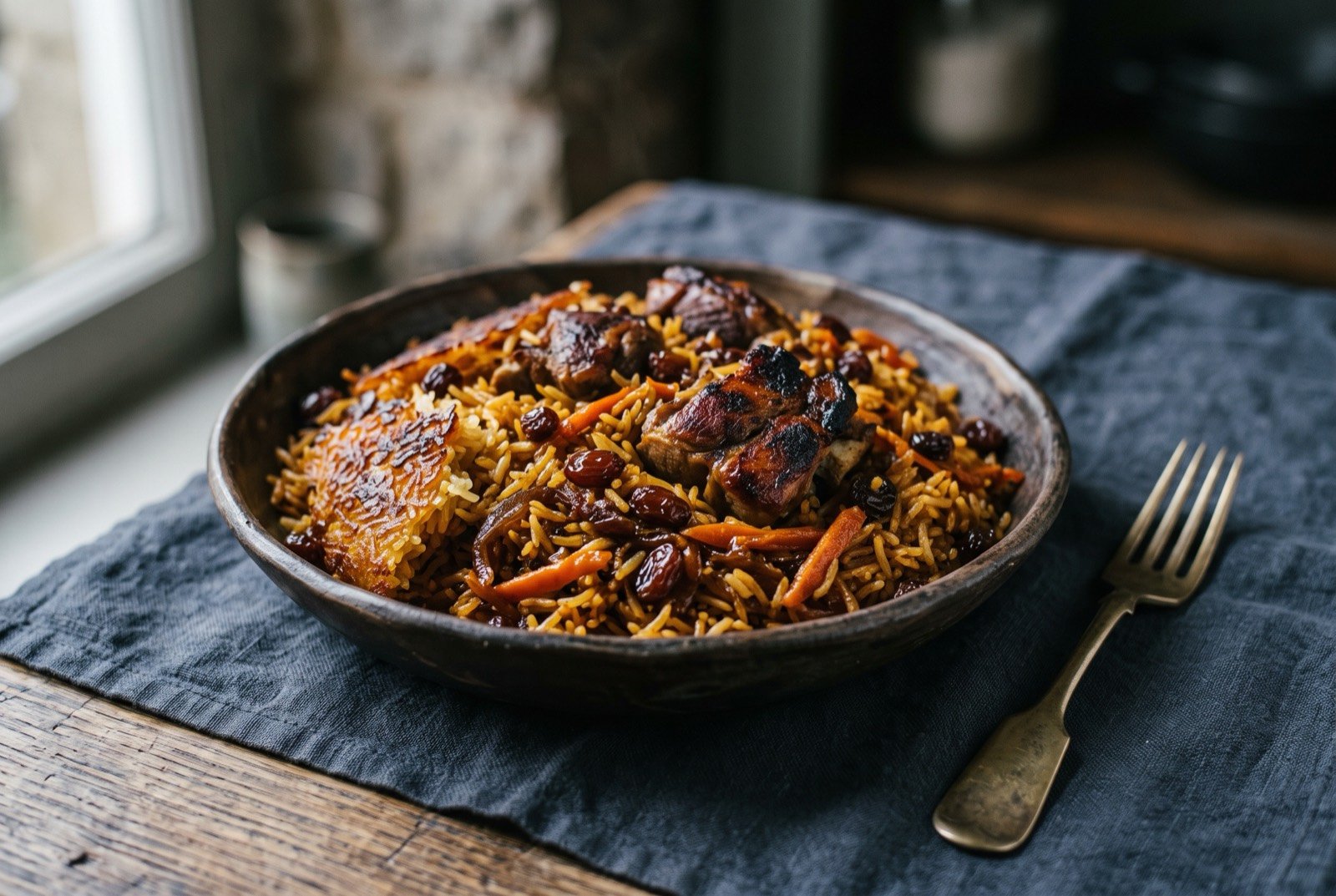
An illustration of the dish, not a photograph of it cooked.
- Time
- Hands on 45 minutes · Waiting 10 minutes
- Reviewed
- Not yet reviewed from inside the tradition
- Cooked
- Not yet cooked and reported
Carried by the Bukhari community, Central Asian families of Uzbek and Uyghur descent settled near Ajyad, kabli rice runs the same hard-caramelised-onion, bloomed-whole-spice base every Bukhari-descended pilaf, from Uzbek plov onward, is built on, reading sweeter and more heavily spiced than either saleeg or Al-Madina rice.
As tradition built it
Serves 4 to 6. About 45 minutes, plus 10 minutes resting.
Ingredients
- 1 generous onion, sliced
- 3 tbsp samn or oil
- 500g lamb, diced
- 1 carrot, grated
- a handful raisins
- 1 tsp whole cumin
- 4 pods whole cardamom
- 1 cinnamon stick
- 400g (2 cups) rice, rinsed
- 3 to 3.5 cups water or light stock
Method
- Caramelise the sliced onion hard and dark in samn or oil, well past pale gold.
- Brown the diced lamb in the same fat.
- Add the grated carrot and raisins and cook down for several minutes until the carrot softens and the raisins plump.
- Bloom the whole cumin, whole cardamom and cinnamon stick briefly in the fat.
- Add the rinsed rice and 3 to 3.5 cups water or light stock. Cover and simmer on low heat until the liquid is absorbed and the rice tender, roughly 20 to 25 minutes.
- Rest off the heat for 10 minutes before serving.
Notes
This method is built from Medina's own home-cook sourcing, the dish is described there as carrying “its own distinct Medina flavour” within the wider Bukhari-Central-Asian family, rather than from a single fully quantified named recipe, and the figures above should be read as a credible working version in that same tradition rather than a verified original.
What a modern chef changes
Slow oven-caramelised onion and a tahdig crust
Rung 3
Method
- Cook the onions in a low oven (140°C, an hour or more) rather than on the stovetop, which caramelises them far more evenly and without the risk of scorching that hard stovetop caramelisation for a dark colour invites.
- Blend a portion of these deeply caramelised onions into the cooking liquid itself rather than leaving them all as visible pieces, building sweetness through the whole dish rather than only where a piece of onion happens to land.
- Finish with a proper tahdig-style crust: press the last of the rice into a thin layer at the base of a well-oiled hot pan for the final ten minutes of cooking, then invert to serve, borrowing the crisped-rice-base logic of the wider Persian and Central Asian pilaf family this dish's Bukhari ancestry actually belongs to.