The Gulf and Arabia · Volume 07, The Pit, the Port and the Pilgrim’s Table
Debyaza
Mecca (primary attribution)
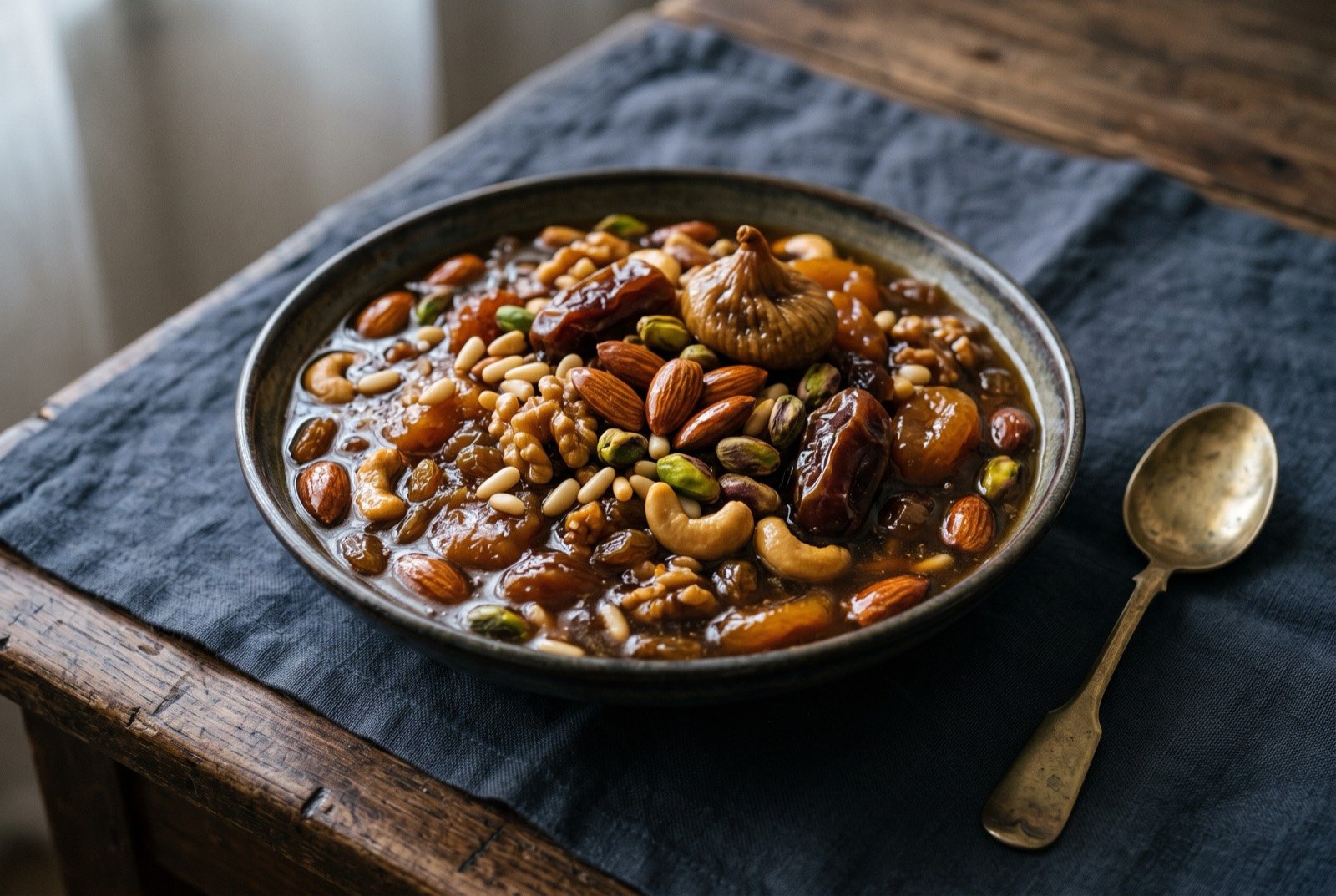
An illustration of the dish, not a photograph of it cooked.
- Time
- 30 minutes
- Reviewed
- Not yet reviewed from inside the tradition
- Cooked
- Not yet cooked and reported
Built from dried apricot leather (qamar al-din) rehydrated into a paste and combined with dried fruit and nuts, debyaza was historically a wealth marker, the sheer quantity of imported nuts a rich household's Eid dish before it democratised into the version eaten widely today. Mecca is the primary attribution, though real scholarly disagreement exists, with Ottoman and Egyptian influence, and a comparison to Egypt's own khoshaf, both proposed.
As tradition built it
Serves 6 to 8. About 30 minutes, plus cooling.
Ingredients
For the paste
- 200g dried apricot leather (qamar al-din), torn into pieces
- to cover warm water, to soak
- 2 tbsp sugar
- 1 tbsp ghee
For the fruit and nuts
- a generous handful each dates, dried figs, raisins, almonds, cashews, pistachios, pine nuts and hazelnuts, some toasted first
- 1/2 tsp ground cardamom
- 1/2 tsp ground cinnamon
Method
- Soak the torn dried apricot leather (qamar al-din) in warm water until soft, then simmer gently with the sugar and ghee until it collapses into a thick, glossy paste, roughly 15 minutes.
- Stir through the dates, dried figs, raisins, almonds, cashews, pistachios, pine nuts and hazelnuts, some toasted first, along with the ground cardamom and ground cinnamon.
- Leave to cool and set before serving, traditionally on the Eid al-Fitr breakfast table alongside khubz al-shareek bread or eaten straight by the spoon.
Notes
Arabic Wikipedia's account notes real scholarly disagreement about the dish's exact origin point, Mecca is the primary attribution, with some sources suggesting Ottoman or Egyptian influence and drawing a comparison to Egypt's own khoshaf; this chapter attributes rather than adjudicates that dispute.
What a modern chef changes
A set paste layer and a tempered praline
Rung 6
Method
- Set the apricot paste with a little gelatine or agar into a thin, defined layer rather than leaving it loose.
- Build the dried fruit and nuts as a structured, toasted-and-tempered praline layer on top, giving the dessert clean, plateable structure instead of the traditional communal-spoon presentation.
- A dehydrator, run overnight at a low setting, can make a genuinely superior qamar al-din from fresh apricot puree at home, thinner and less sugared than most commercially bought leather, and worth doing once purely to taste the difference laminating heat and drying speed makes to the finished paste's flavour.