Central Asia and the steppe · Volume 58, The Silk Road Oases
Oshi Muzaffar
Tajikistan
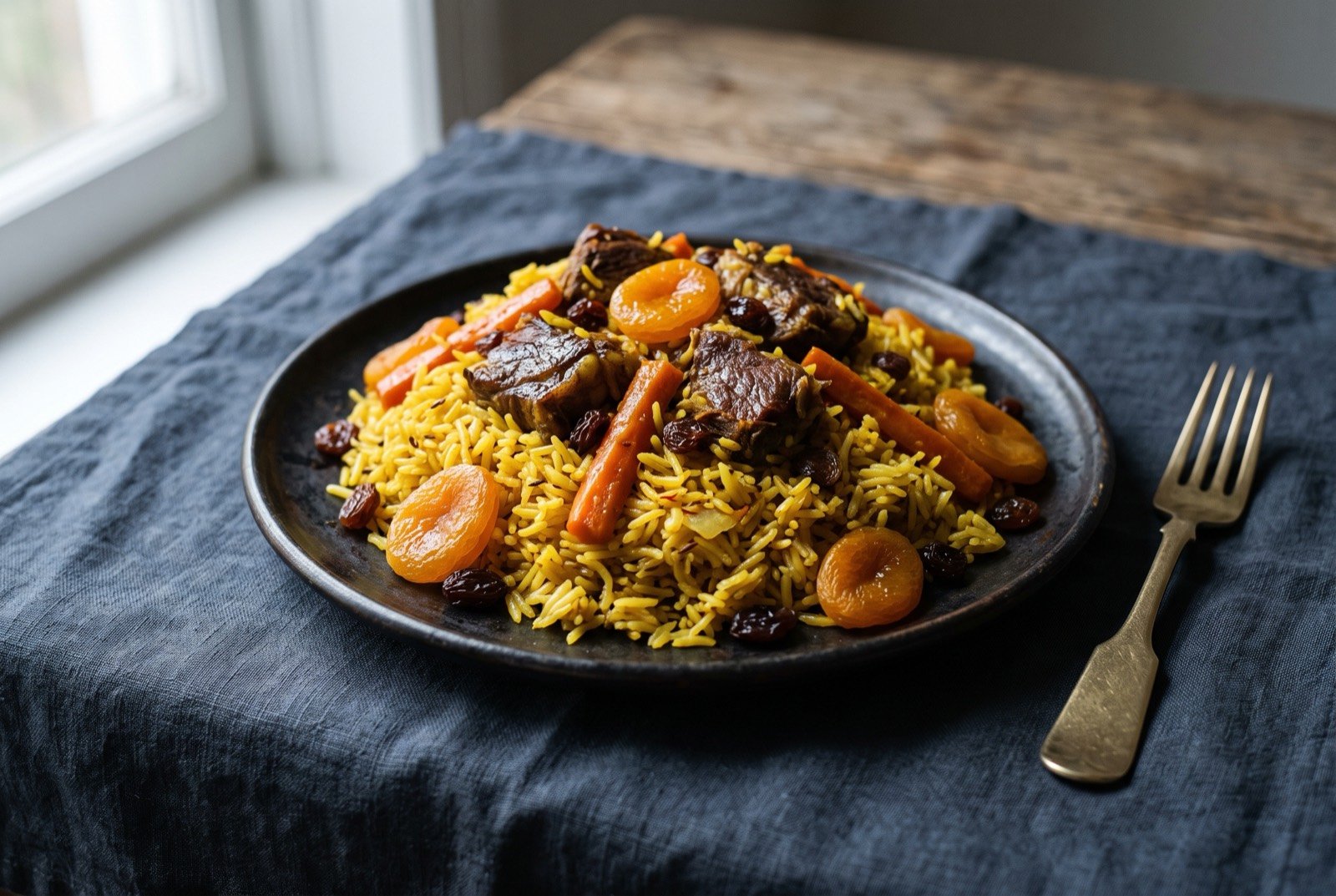
An illustration of the dish, not a photograph of it cooked.
- Time
- 2 hours
- Researched
- 42 sources cited
- Reviewed
- Not yet reviewed from inside the tradition
- Cooked
- Not yet cooked and reported
Tajik sources distinguish a saffron-coloured festive plov, oshi muzaffar, rice coloured golden with saffron and often finished with dried fruit, from the everyday oshi palav described more generally in Tajikistan. This chapter's own working research initially used a different, unverified term for this dish; that term does not appear in any source consulted, and oshi muzaffar is what the sources actually support, a correction worth stating plainly rather than quietly fixing without comment. As noted in the flavour arsenal above, the saffron in this dish should be understood as an imported, high-value spice, historically and today, not a local Tajik crop; the dish's festive status rests on the expense and colour of the spice, not on any claim to home cultivation.
As tradition built it
Serves 6. About 2 hours.
Ingredients
- 750 g long-grain rice, well rinsed
- 750 g lamb, bone-in, cut into large pieces
- 500 g carrot, cut into thick strips
- 400 g onion, sliced
- Large pinch saffron threads, steeped in 2 tbsp warm water
- 150 g dried apricot
- 100 g raisins
- 150 ml vegetable oil or rendered lamb fat
- To taste zira, salt
Method
- Fry the onion in the oil until golden, then sear the lamb hard alongside it.
- Add the carrot and cook a further few minutes, then cover with water, season with zira and salt, and simmer for 40 to 50 minutes until the meat is tender and the liquid has reduced.
- Stir in the dried apricot and raisins for the final 15 minutes of the simmer, so they plump without fully disintegrating.
- Layer the rinsed rice over the top, pour over the saffron and its soaking water evenly across the surface, then add water to the correct level.
- Cook by the same method as the plov above: open until the surface water is absorbed, vented, covered, and steamed on the lowest heat for 20 to 30 minutes, then rested before turning out, the rice a genuine, even gold rather than patched.
What a modern chef changes
Saffron in milk, and apricots at plating
Method
- The saffron is bloomed in warm milk rather than water, a technique borrowed from Persian rice cookery just across the border in spirit if not in this specific brief's sourcing, giving a rounder, less purely aqueous saffron flavour through the whole pot of rice.
- The dried apricots are rehydrated separately in a light spiced syrup and only added at plating, thickly sliced, rather than simmered into the stew, keeping their own shape and a brighter, less muddied apricot flavour than an hour in the meat stock allows.
- A portion of the reduction from the lamb stage is passed through a chinois and reduced further into a concentrated jus, plated as a pooled sauce beneath the rice rather than left entirely absorbed into the pot, giving the dish a plated, restaurant-legible base it does not have straight from the kazan.
- The rice water ratio is again set by weight, per the technique ladder, since oshi muzaffar's rice suffers the same mushiness risk as any other Central Asian pilaf cooked by the fingertip method.