Central Asia and the steppe · Volume 58, The Silk Road Oases
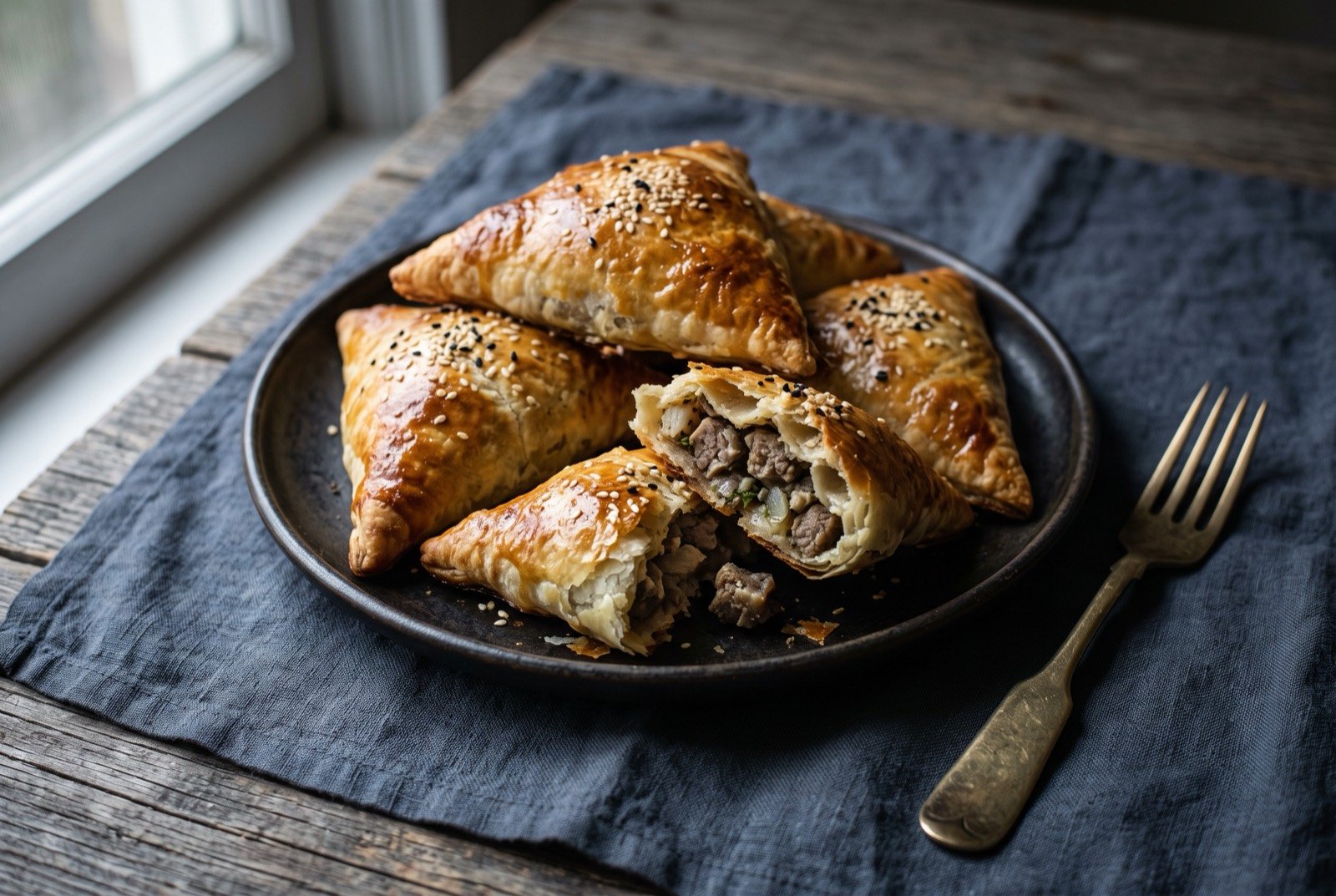
Samsa
Uzbekistan
Illustration
- Time
- 1 hour 30
- Researched
- 42 sources cited
Traditional Uzbek samsa's real technical secret is not the filling but the dough, made with boiling water and enriched specifically with rendered lamb tail fat (kurdyuk) rather than the butter a Western pastry tradition would reach for (baking-academy.ru).
As tradition built it
Makes 12. About 1.5 hours.
Ingredients
- 500 g strong white flour
- 200 ml boiling water
- 100 g rendered lamb tail fat (kurdyuk), melted, or substitute clarified butter
- 1 tsp salt
- 500 g lamb shoulder, hand-diced small (not minced)
- 300 g onion, finely diced
- To taste zira, black pepper, salt
- 1 egg, beaten, for glaze
- A scatter sesame seed, to finish
Method
- Pour the boiling water over the flour and salt, mix to a rough dough, then work in the melted tail fat once cool enough to handle, kneading until smooth and elastic.
- Rest, covered, for 30 minutes.
- Mix the diced lamb, onion, zira, pepper and salt by hand; the filling stays raw until baking, and dicing rather than mincing is what gives finished samsa its distinct, juicy bite rather than a uniform mince texture.
- Roll the dough thin, cut into squares or circles, fill generously, and fold into the traditional triangular or square parcel, sealing the edges firmly.
- Brush with beaten egg, scatter with sesame, and bake in a tandoor or, in a domestic kitchen, at 220°C for 25 to 30 minutes until deeply golden and the pastry is fully set through.
What a modern chef changes
Clarified tail fat and a laminated dough
Rung 1
Method
- The tail fat is rendered and clarified through a chinois before use (bridging Rung 1's discipline of trusting rendered fat to a pastry application), removing all solid impurities so the dough carries pure fat flavour without the slightly grainy texture unclarified rendered fat leaves behind.
- The filling's onion is confited separately in tail fat at a low, controlled temperature for 45 minutes before being folded raw lamb through it, rather than left entirely raw as tradition dictates; this trades some of the parcel's traditional steam-driven onion sweetness for a deeper, more concentrated allium note, a genuine change worth naming rather than passing off as more authentic.
- The pastry is laminated in three folds with additional tail fat, closer to a rough puff technique, producing a flakier, more visibly layered crust than the plain, dense traditional dough.
- Bakes on a Big Green Egg fitted with a pizza stone at 280°C for 12 to 15 minutes, replicating the tandoor's high, dry, radiant heat far more closely than a conventional domestic oven's convection.