Central Asia and the steppe · Volume 58, The Silk Road Oases
Manti
Uzbekistan and Tajikistan, shared
Illustration
- Time
- 1 hour 30
- Researched
- 42 sources cited
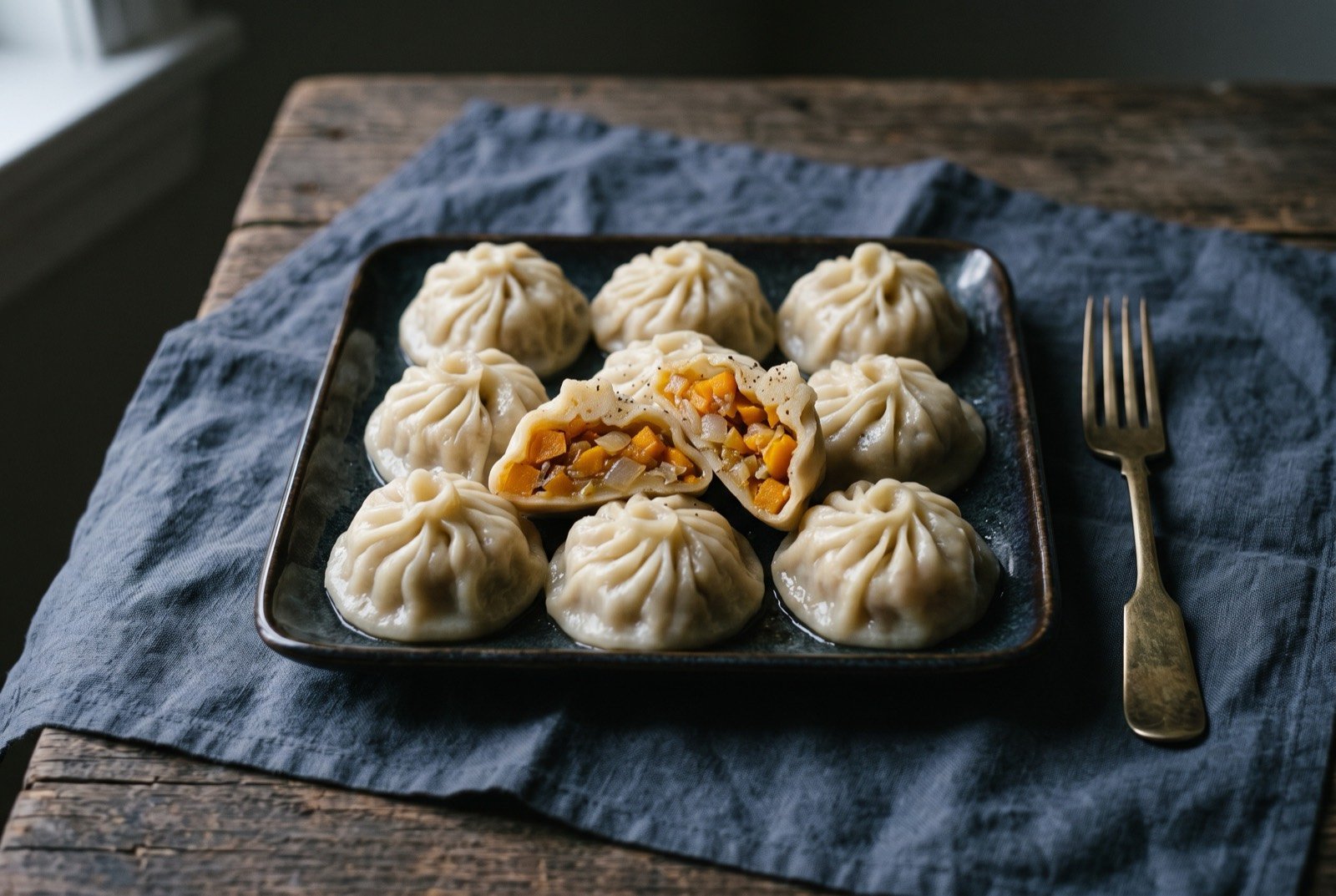
What defines manti as manti, across every source consulted, is the steaming, not the filling: a boiled or fried version of the same dumpling shape belongs to a different named dish, pelmeni. Manti are steamed in a stacked, perforated mantovarka, several tiers of dumplings above one pot of simmering water. The Tajik style filling given here, pumpkin, onion and diced (not minced) lamb tail fat, is treated across sources as essential to an authentic result rather than optional (cookingman.ru).
As tradition built it
Makes around 20. About 1.5 hours.
Ingredients
- 500 g strong white flour
- 1 egg
- 200 ml water
- 1 tsp salt
- 400 g pumpkin, diced small
- 150 g onion, diced small
- 100 g lamb tail fat (or substitute lamb fat trimmings), diced small
- To taste zira, black pepper, salt
Method
- Mix the flour, egg, water and salt into a firm dough, knead until smooth and elastic, and rest, covered, for 30 minutes.
- Mix the diced pumpkin, onion and tail fat with the zira, black pepper and salt; keep everything diced rather than minced, since the point of the filling is small, distinct pieces of vegetable and fat rendering together as they steam, not a uniform paste.
- Roll the dough thin and cut into squares roughly 8cm across.
- Place a spoonful of filling in the centre of each, then pinch the corners together into a small pouch, leaving a tiny vent at the top so trapped steam can escape rather than bursting the dumpling or cooking it unevenly.
- Arrange in the oiled tiers of a mantovarka, without the dumplings touching, and steam over simmering water for 30 to 40 minutes, until the dough is fully translucent and the filling tender.
What a modern chef changes
Roasted pumpkin and a clarified fat
Method
- The pumpkin is roasted at 200°C for 25 minutes before dicing, concentrating its natural sugars through Maillard browning before it ever meets the steamer, where the traditional raw-filling method relies on steam alone to soften and sweeten it.
- The tail fat is rendered and clarified through a chinois, then reintroduced to the raw filling as a liquid rather than left as diced solid fat, giving more even fat distribution through each dumpling than the traditional dice, which can leave some parcels notably fattier than others.
- The dough is rolled on a pasta machine to an even, consistent thinness rather than by hand with a rolling pin, producing a more uniformly translucent finished wrapper.
- A dipping sauce of suzma (or labneh) whisked with a little of the tail-fat cooking liquid and fresh dill is served alongside, a genuine addition rather than a traditional element, but one built entirely from ingredients already native to this chapter's own pantry.