Central Asia and the steppe · Volume 58, The Silk Road Oases
Qurutob
Tajikistan's national dish, eaten by hand from one shared bowl
Illustration
- Time
- 1 hour
- Researched
- 42 sources cited
Qurutob is repeatedly described in Tajik and Russian-language reference material as one of the most famous and oldest dishes in Tajik cuisine (Wikipedia, Курутоб), and Tajikistan's own state gastronomic-tourism material names it among the dishes it puts forward internationally (Khovar.tj). No source found gives it a formally state-designated "national dish" title in the way Denmark's 2014 public vote designated fårikål; its status rests on repeated cultural framing and prominence rather than one dated act, and this chapter keeps that distinction honest. Independent Tajik outlet Asia-Plus specifically credits Kulob, in Khatlon province, with the dish's best-known regional form (Asia-Plus). This is also the single most thinly sourced dish in the whole chapter, and that gap is stated here rather than smoothed over: no Tajik-authored English-language source on qurutob's technique was found anywhere in this research, only Western enthusiast food bloggers, one of whom was directly and publicly corrected by Tajik readers in his own comments section for omitting meat from his version (foodperestroika.com).
As tradition built it
Serves 4 to 6. About 1 hour, plus qurut preparation if made from scratch.
Ingredients
- 500 g flour, for the fatir
- 250 ml water
- 1 tsp salt
- As needed oil, for laminating and for frying the onion
- 300 g qurut (dried salted yoghurt balls) or suzma, reconstituted with warm water into a pourable sauce
- 2 onions, sliced and fried until golden
- 3 tomatoes, chopped
- 1 cucumber, diced
- A handful fresh herbs, chopped
- Optional thin-sliced fried lamb or beef
Method
- For the fatir: mix flour, water and salt into a stiff dough, rest for 20 minutes, then roll thin, brush generously with oil, and fold repeatedly to build laminated layers before rolling out again to a flattish disc.
- Bake, starting low in the oven and moving it higher after 5 to 7 minutes for a further 15 minutes, until crisp outside and cooked through but deliberately dry rather than moist; the dryness is a design feature, since the bread's job is to soak up the sauce, not to be enjoyable eaten plain.
- Let the fatir cool, then tear it, by hand, into rough pieces directly into a large, shared communal bowl.
- If using dried qurut, break the hardened balls and dissolve them in warm water with a little salt to recreate a tangy, salty, pourable sauce; if using suzma, thin it the same way.
- Pour the sauce over the torn bread so it softens and soaks through.
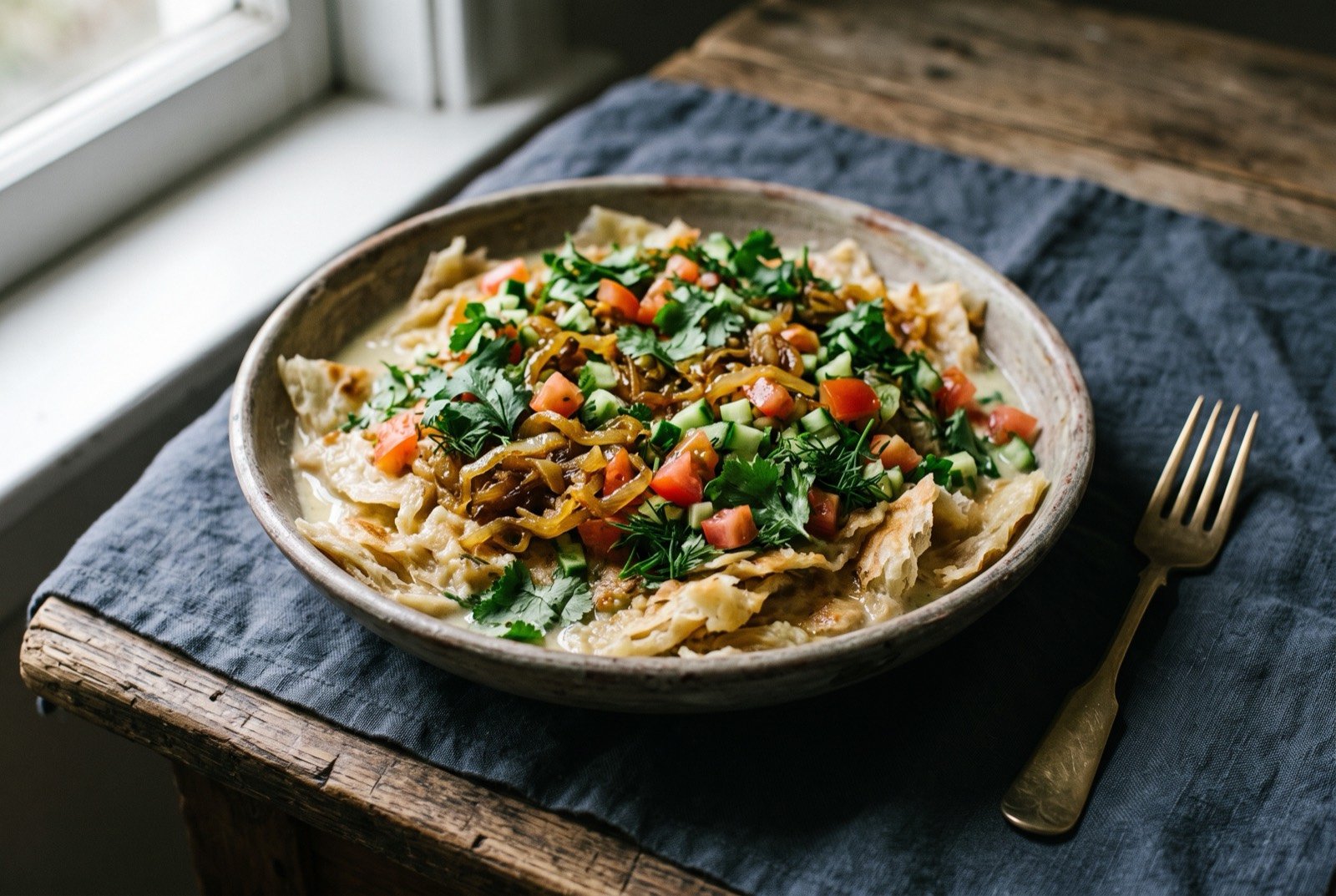
- Pile the fried onion, still hot from the pan with its oil poured over, then the chopped tomato, cucumber and herbs on top, in that order, with sliced meat if using.
- Serve immediately, from the one shared bowl, eaten by hand, mixing bread and topping together as you eat rather than tossing it in the kitchen beforehand; every source consulted treats this communal, cutlery-free eating as central to the dish's social function, not an eccentricity.
What a modern chef changes
Dehydrator qurut, and a composed plate
Method
- The qurut is made in-house using a dehydrator rather than sun-drying, following the same low-temperature protocol given in the technique ladder above (40 to 45°C for 8 to 15 hours), giving a controllable, repeatable version of a process that traditionally depends on unpredictable weather.
- The fatir is laminated with a pasta machine through successively finer settings, in place of hand-rolling and folding, producing a more even, more distinctly flaky layer structure than hand lamination reliably achieves.
- The vegetables are cut into a small, uniform brunoise and lightly dressed with a little of the qurut sauce before piling, rather than left in the larger rustic dice tradition specifies, a genuine plating change that trades some of the dish's rough, communal character for a more composed appearance; this chapter names it as exactly that trade-off, not an improvement in an absolute sense.
- The optional meat is cooked sous vide (lamb shoulder, 62°C, 18 hours) and finished with a hard sear before slicing thin over the top, rather than pan-fried directly, for the same tenderness reasoning used elsewhere in this chapter.