Central Asia and the steppe · Volume 57, The Nomad Steppe
Ishlekli
Turkmenistan
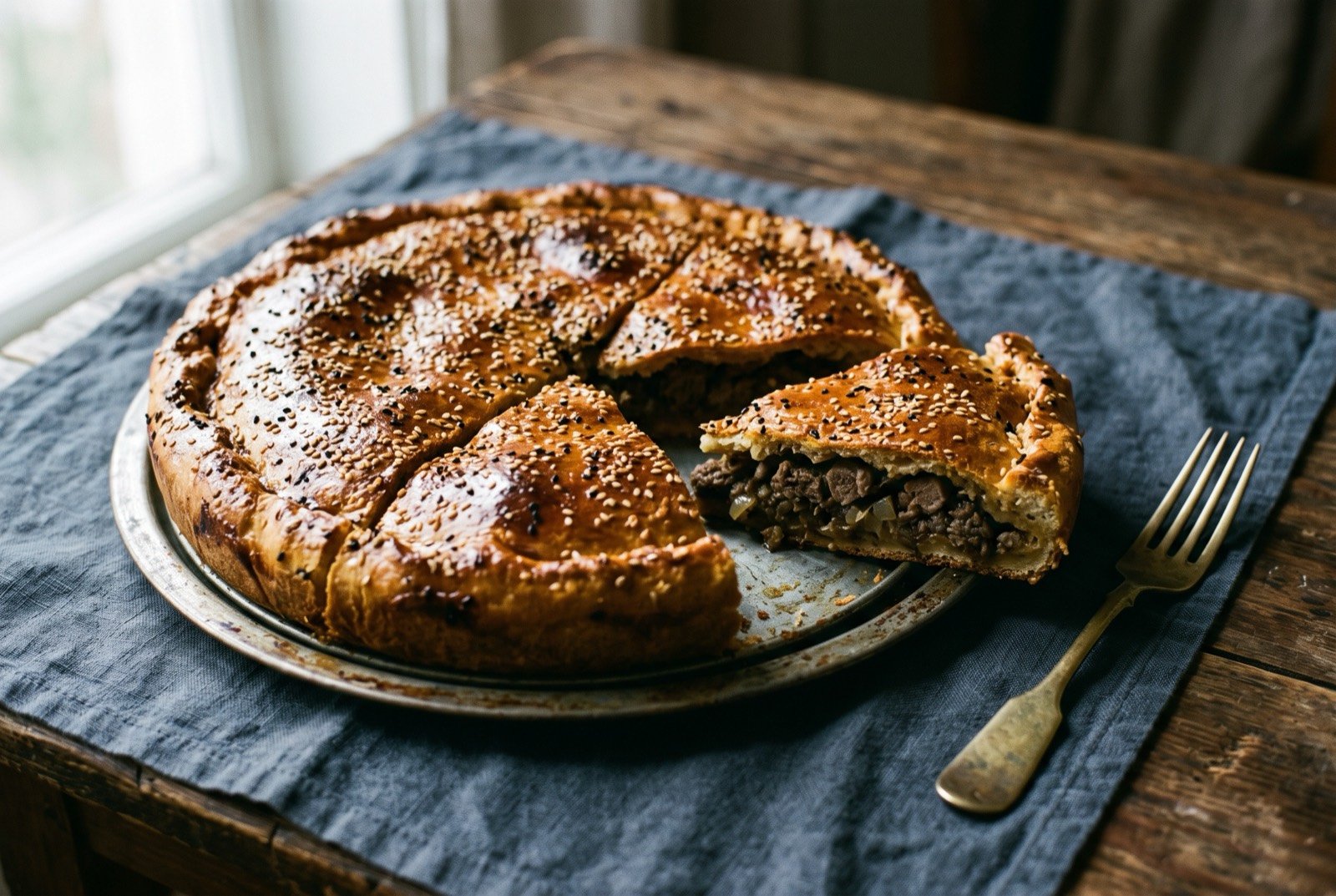
An illustration of the dish, not a photograph of it cooked.
- Time
- 30 minutes
- Reviewed
- Not yet reviewed from inside the tradition
- Cooked
- Not yet cooked and reported
Ishlekli is hospitality food specifically, a dish for honoured guests rather than an everyday meal, and its whole identity is the cooking method: a sealed dough parcel, raw filling inside, cooked by trapped, even, radiant heat rather than direct contact with a hot surface. The tradition itself has already modernised, most Turkmen kitchens today sandwiching the pie between two heavy pans buried in hot tandyr ash rather than the desert sand of its origin.
As tradition built it
Serves 6. 30 minutes rest, about 40 minutes to bake.
Ingredients
- 500 g plain flour
- 300 ml warm water
- 50 g butter, melted
- 1 tsp salt
- 600 g minced mutton or lamb
- 2 onions, finely chopped
- 1 tbsp black pepper
- 1 egg, beaten, for glazing
- 1 tbsp sesame seeds
Method
- Mix the flour, warm water, melted butter and salt to a smooth, soft dough. Rest, covered, for 30 minutes.
- Mix the raw minced meat with the chopped onion, black pepper and salt. Do not pre-cook the filling; it cooks entirely inside the sealed dough.
- Divide the dough in two and roll each half into a round about 30 cm across.
- Spread the raw filling over one round, leaving a border, then lay the second round on top and press and crimp the edges firmly to seal.
- Brush the top with beaten egg, cut a small steam hole in the centre, and scatter with sesame seeds.
- Bake at 200°C for about 40 minutes, until deeply golden, then rest 5 minutes before cutting into wedges.
What a modern chef changes
Real buried heat, not an oven's substitute for it
Rung 5
Method
- Bury it in the Big Green Egg's coals. Set the Egg for long, indirect heat, then nestle the assembled pie, wrapped in a double layer of foil, directly into a bed of hot lump charcoal ash rather than baking on a stone above it, reproducing the sealed, radiant-from-every-side heat the sand burial method actually relies on, closer to the tradition's own physics than a domestic oven manages.
- A precise internal temperature check in place of a fixed time. Since a buried cook varies more than an oven, use a probe thermometer through the steam hole to confirm the filling has reached 75°C at the centre before unwrapping, rather than trusting time alone.