Central Asia and the steppe · Volume 57, The Nomad Steppe
Etli nan
Turkmenistan
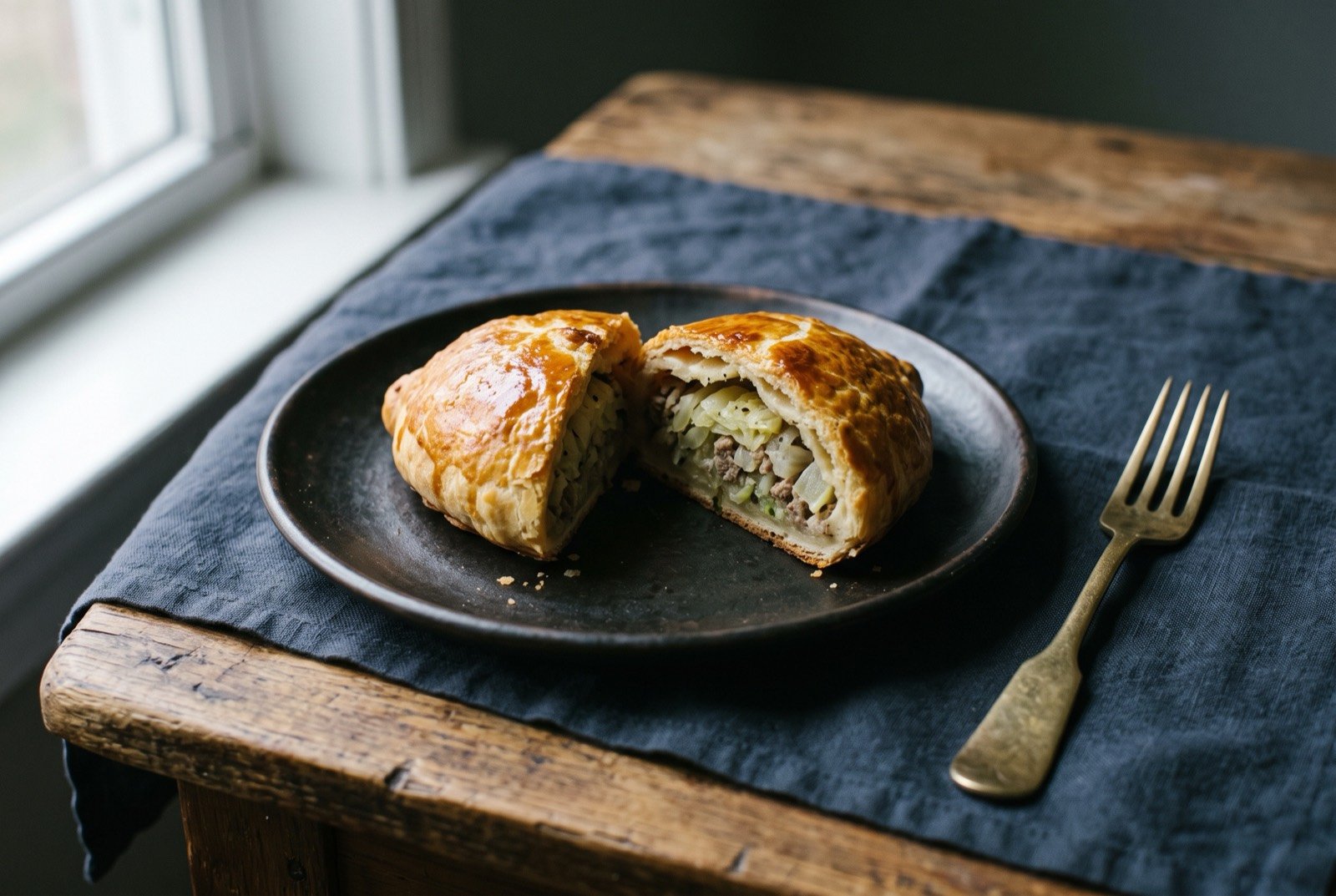
An illustration of the dish, not a photograph of it cooked.
- Time
- 35 minutes
- Reviewed
- Not yet reviewed from inside the tradition
- Cooked
- Not yet cooked and reported
Etli nan is baked rather than fried, its cabbage filling added raw and left to steam inside the sealed pastry as it cooks, a smaller cousin of the same trapped-steam logic ishlekli relies on. A related name, etli çörek, appears in some sources for what may be the same dish or a genuinely separate one; this chapter could not resolve that ambiguity and states it here rather than picking a side without evidence.
As tradition built it
Makes 6. About 35 minutes.
Ingredients
- 100 g plain flour, per unit, so 600 g total
- 150 g minced lamb, per unit, so 900 g total
- 60 g onion, finely chopped, per unit
- 70 g fresh cabbage, finely shredded, per unit
- To taste salt and black pepper
- 1 egg, beaten, for glazing
Method
- Make a simple, firm dough from the flour and enough water to bring it together, with a pinch of salt. Rest 20 minutes.
- Mix the raw minced lamb with the chopped onion, shredded cabbage, salt and pepper.
- Divide the dough into 6 pieces, roll each thin, and place a portion of the raw filling on one half of each.
- Fold over and seal the edges firmly, so no steam can escape as the raw cabbage releases its moisture inside during baking.
- Brush with beaten egg and bake at 200°C for about 25 minutes, until deeply golden.
What a modern chef changes
Making the steam mechanism work harder, deliberately
Rung 5
Method
- A double seal for a wetter, more tender filling. Crimp the edge twice, folding it back on itself a second time, to hold in more of the moisture the raw cabbage releases as it cooks, giving a noticeably softer, more self basting filling than a single seal manages, since any small gap lets that steam escape as dry heat instead.
- Rest before cutting, properly. Let the baked parcels rest a full 5 minutes before cutting, since the filling is still finishing its internal steam cook in residual heat immediately out of the oven, and cutting too soon loses that moisture onto the board instead of into the meat.