Central Asia and the steppe · Volume 57, The Nomad Steppe
Jent
Kazakhstan
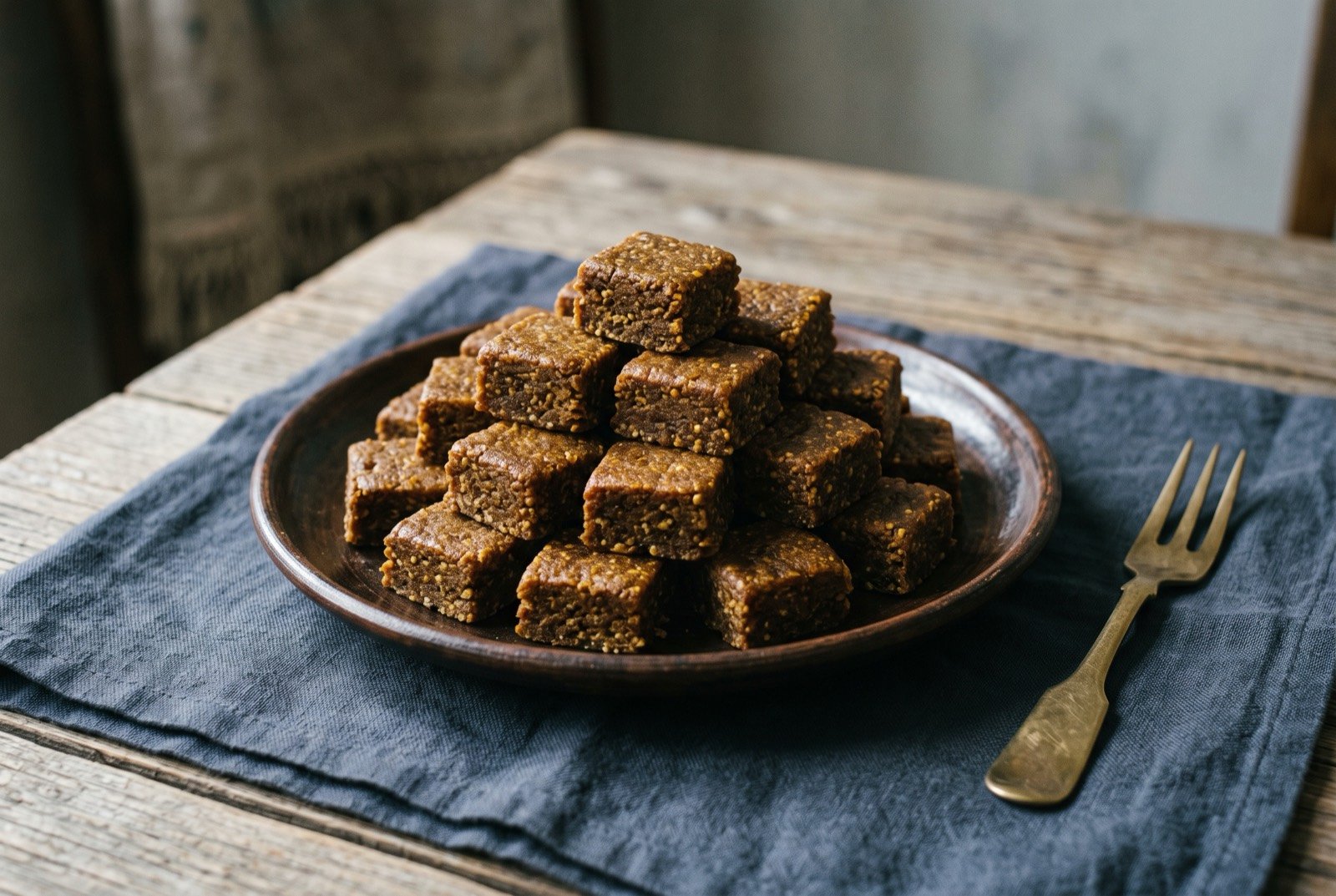
An illustration of the dish, not a photograph of it cooked.
- Time
- 20 minutes
- Reviewed
- Not yet reviewed from inside the tradition
- Cooked
- Not yet cooked and reported
Not on the atlas's own original scoping list for this volume, jent turned up repeatedly and well documented enough in research to earn its place: a genuinely old steppe confection, traditionally just three ingredients, talkan, sugar or honey, and butter, before modern versions started adding dried fruit and nuts.
As tradition built it
Makes about 20 pieces. About 20 minutes.
Ingredients
- 300 g talkan, roasted grain flour
- 150 g butter, softened
- 150 g honey
Method
- If the talkan is not already deeply roasted, toast it dry in a heavy pan over low heat, stirring constantly, until it smells nutty and darkens slightly, a few minutes.
- Warm the honey and butter together gently until loosened and combined, not boiling.
- Work the talkan into the butter and honey mixture until it comes together into a firm, dense paste.
- Press into a lined tin, chill until firm, and cut into small pieces.
What a modern chef changes
A UK grain substitute, and a cleaner set
Rung 1
Method
- Toast barley in a dry qazan or wok as an honest talkan substitute. True talkan is not reliably UK stocked; dry roast pearl barley or rolled oats in a dry, heavy pan over medium heat, stirring constantly, until deeply toasted and fragrant, then grind fine in a spice grinder, naming this openly as a substitute rather than the genuine article, in the same spirit as Tibetan tsampa standing in for it in UK shops.
- Emulsify in a high power blender for a firmer set. Blend the warm honey, butter and toasted grain together properly rather than folding by hand, which breaks the fat down more evenly through the mixture and gives a cleaner, less crumbly set once chilled.