Central Asia and the steppe · Volume 57, The Nomad Steppe
Beshbarmak
Kazakhstan and Kyrgyzstan
Illustration
- Time
- 3 hours 30
- Researched
- Researched from 137 sources in the brief
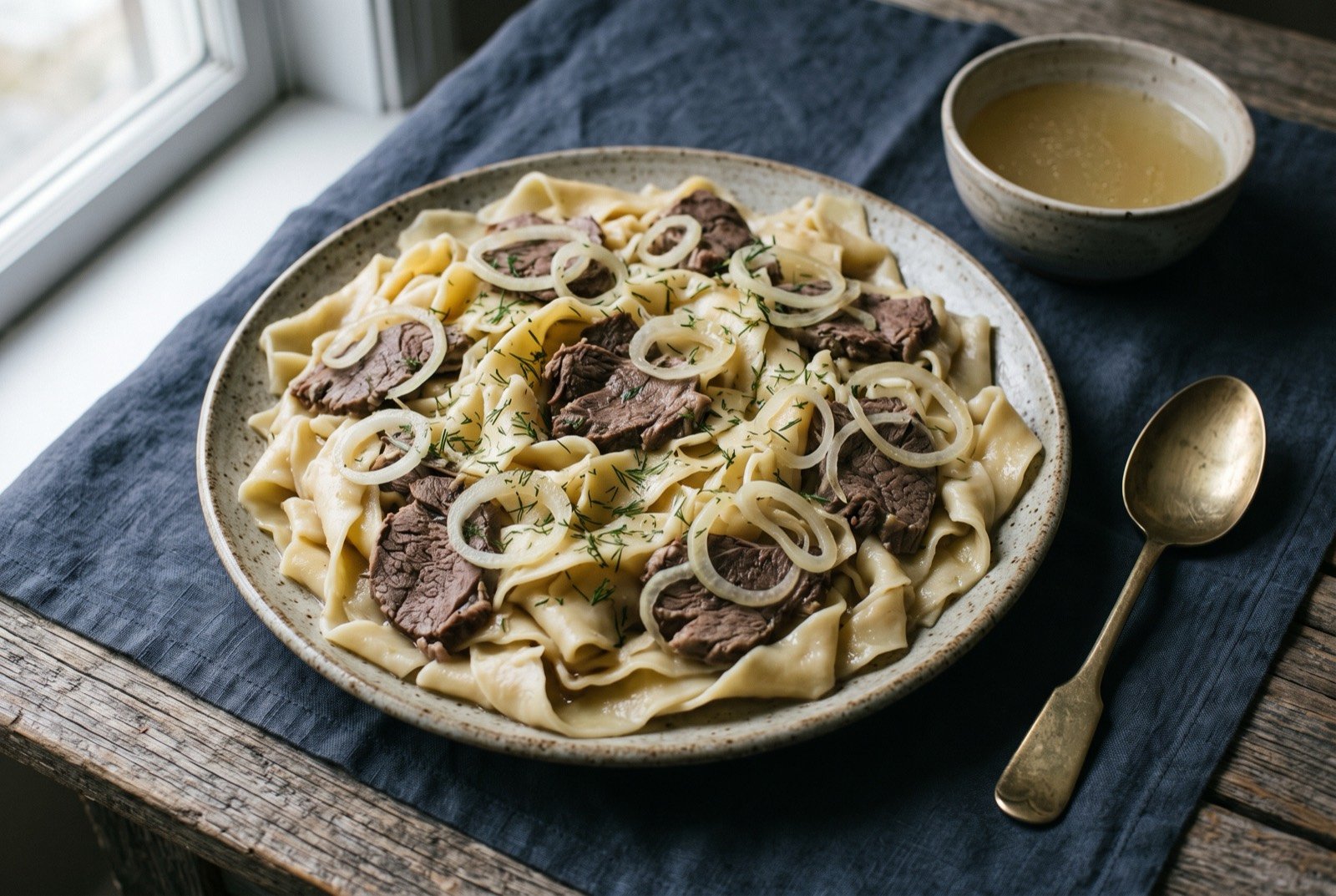
Beshbarmak means five fingers, for how it is eaten, and it is less a recipe than a ceremony with food attached. The meat, traditionally mutton, beef or horse, or a mix, is boiled for hours in salted water; the resulting broth is tossed with hand cut noodles and a simple hot onion sauce, and the whole dish is served from one shared platter rather than plated individually. Where an honoured guest is present, the animal's head is brought to the table and that guest carves and redistributes specific cuts to specific people by age and status, a real social ritual rather than a garnish. A Kazakh source argues the dish's older name may have been et asu or tabak tartu, a broader ritual meat presentation practice, with "beshbarmak" itself a comparatively recent label for something older; this chapter reports that claim as a serious lead rather than settled fact, since the book behind it could not be independently obtained.
As tradition built it
Serves 6 to 8. About 3.5 hours.
Ingredients
- 1.5 kg mutton, beef or horsemeat on the bone, or a mix
- 3 L water
- 2 onions, one whole, one thinly sliced
- to taste salt
- 1 tsp black pepper
- 400 g plain flour
- 1 egg
- 150 ml water, for the dough
Method
- Put the meat and the whole onion into a large pot, cover with the water and bring to a bare simmer. Cook 2.5 to 4 hours, uncovered, skimming as needed, until the meat is fully tender and falling from the bone.
- Add salt roughly 2 hours in, once the meat has given up enough moisture that early salting would toughen it. Add the black pepper in the final 30 minutes.
- While the meat cooks, make the dough: mix the flour, egg, a pinch of salt and the water to a firm, smooth dough. Rest it, covered, for 30 minutes, then roll thin and cut into wide, flat noodle sheets.
- Lift the meat out and keep warm. Boil the noodles directly in the strained broth until just cooked, a few minutes, then lift out.
- Make the chyk: cook the sliced onion briefly in a ladleful of the hot broth until just softened, not browned.
- To serve, lay the noodles on a large shared platter, top with sliced meat, spoon the onion sauce over, and serve the remaining broth alongside in bowls.
What a modern chef changes
Fixing the blandness a missing kurdyuk causes
Rungs 2, 1 and 4
Method
- A gelatin rich short broth, extended with kurdyuk. Reduce the initial simmer to 90 minutes for body rather than full tenderness, then render 100 g of kurdyuk separately in the qazan or a heavy pan until it renders clear, and emulsify the rendered fat into the strained broth with a hand blender before finishing the noodles in it. This restores the fat carried flavour a lean, kurdyuk free version loses entirely.
- Sous vide the reserved meat. Rather than serving straight from the long simmer, portion the cooked meat and finish it sous vide at 62°C for 45 minutes before serving, which holds the fibres at a gentler temperature than a rolling boil and keeps them from the dry, stringy texture long boiling alone can produce.
- Wild garlic through the noodle dough. Blanch and finely chop 30 g of UK foraged wild garlic and work it through the noodle dough before rolling, a genuine local aromatic standing in for the wild onion and garlic this cuisine forages where it can, rather than a borrowed flavour with no real connection to the dish's own logic.