The Indian subcontinent · Volume 20, The Merchant’s Thali, the Konkan Tide and a Kitchen from Persia
Undhiyu
Gujarat, South Gujarat especially
Illustration
- Time
- 2 hours
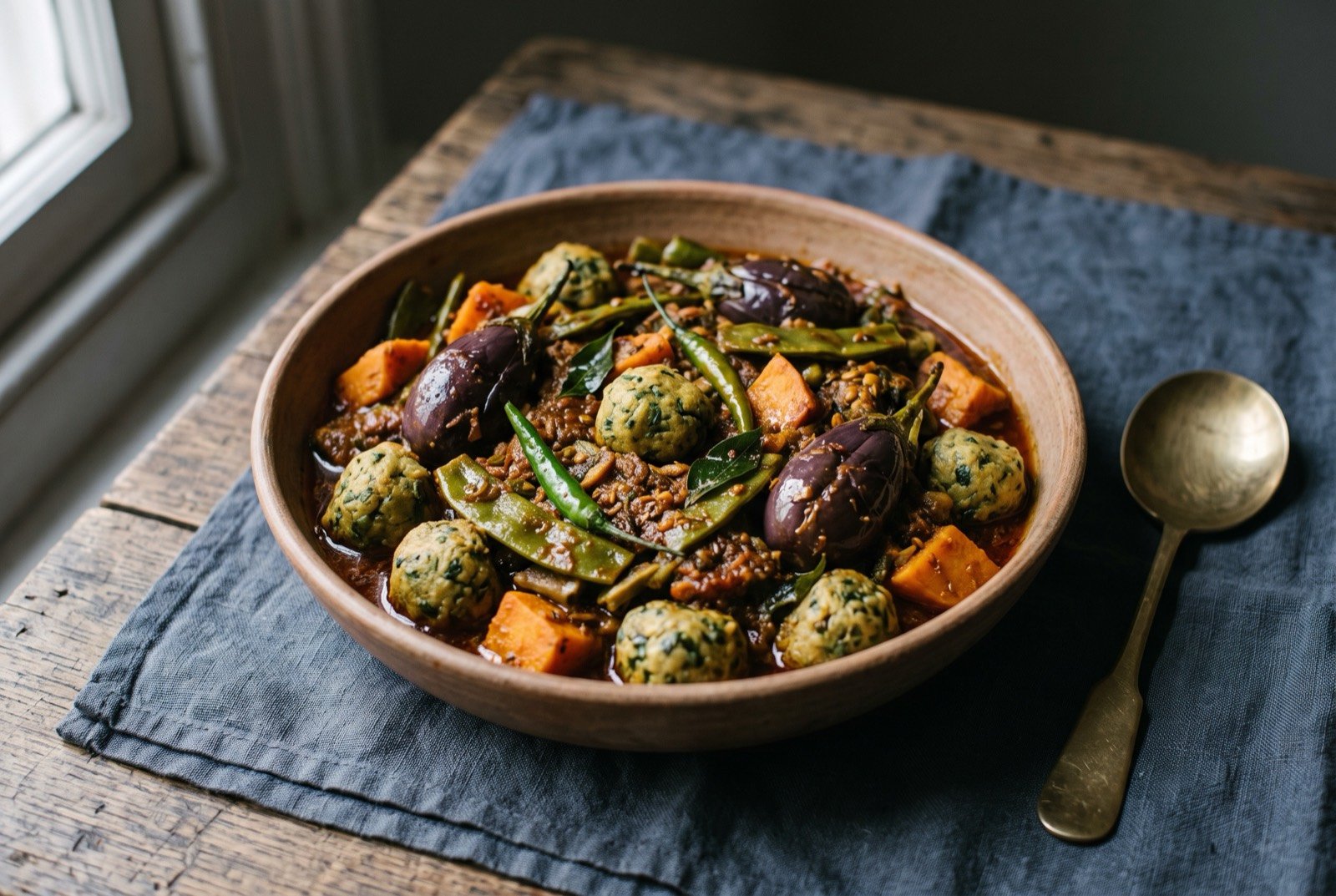
Small aubergine, surti papdi, fresh pigeon pea, potato, sweet potato and unripe banana are coated in a fresh coriander-garlic-ginger-green chilli-sugar paste alongside spiced muthia dumplings, and traditionally cooked in an inverted earthenware pot buried in a fire pit, no added water, minimal oil, the dish's own name, undhu, meaning upside down. Two named regional variants, attributed rather than adjudicated: Surti undhiyu, milder, built on a red-lentil-based sauce and served with puri at weddings, and Kathiyawadi undhiyu, deep red, far spicier, made with fried vegetables and served with roti or bajri rotla.
As tradition built it
Serves 6. About 2 hours, plus preparing the muthia.
Ingredients
- 200g small aubergine, quartered but held together at the stem
- 150g surti papdi (flat beans)
- 150g fresh pigeon pea (tuvar lilva)
- 200g small potatoes
- 150g sweet potato, cubed
- 1 raw banana, cubed
Muthia
- 100g besan
- 2 tbsp fenugreek leaves, chopped
- 1 tsp turmeric
- 1 tsp chilli powder
- 2 tbsp oil
Spice-herb paste
- 50g fresh coriander
- 6 cloves garlic
- 2cm ginger
- 3 green chillies
- 2 tbsp sugar
- as needed oil, for sealing the pot
Method
- Make the muthia: combine besan, fenugreek leaves, turmeric, chilli powder and oil with a little water into a stiff dough, shape into small logs, and steam 15 minutes.
- Grind the fresh coriander, garlic, ginger, green chillies and sugar to a coarse paste.
- Toss the small aubergine, surti papdi (flat beans), fresh pigeon pea (tuvar lilva), small potatoes, sweet potato and raw banana in most of the paste, reserving a little.
- Layer the vegetables and muthia in a heavy, well-sealing pot, oil rubbed generously around the rim, the remaining paste spooned over the top.
- Seal tightly and cook, low, 1 to 1.5 hours, until the vegetables are tender and the aromatics have fully permeated, checking only by aroma and by the vegetables' give, not by a fixed clock.
Notes
No source consulted gave a reliable cook time for the traditional buried-pot method, only the mechanism; the timing below is this chapter's own indicative adaptation for a sealed pot on the hob or in the oven, not a verified traditional figure.
What a modern chef changes
The pit's own logic, replicated honestly
Rung 2
Method
- Cook in a Dutch oven with a damp cloth pressed under the lid before sealing, replicating the buried pot's trapped-steam, self-basting mechanism without a garden pit.
- Finish, off the heat, with a handful of curry leaves briefly bloomed in hot ghee and poured over, a fragrant close this chapter's research found no traditional precedent for specifically, offered as this atlas's own honest elevation rather than sourced practice.
- Judge doneness by opening and smelling, not by the timer: undhiyu is ready when the aromatics have genuinely permeated every vegetable, exactly the standard the kalhar-leaf tradition itself sets.