The Indian subcontinent · Volume 20, The Merchant’s Thali, the Konkan Tide and a Kitchen from Persia
Dhansak
Bombay, Parsi
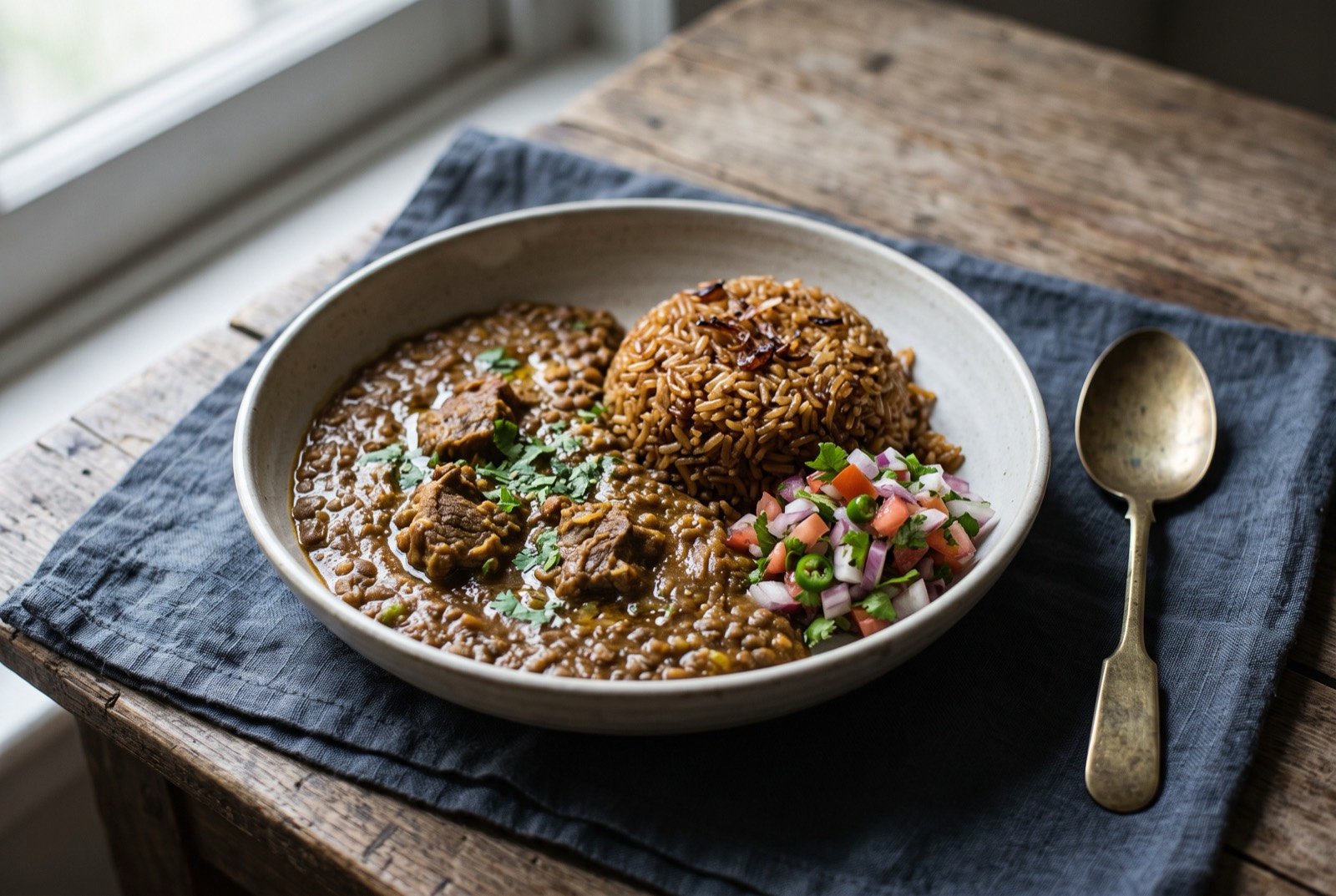
An illustration of the dish, not a photograph of it cooked.
- Time
- 2 hours
- Researched
- No outside sources linked
- Reviewed
- Not yet reviewed from inside the tradition
- Cooked
- Not yet cooked and reported
A thick stew of four lentils, most commonly toor dal as the base with masoor and chana dal, cooked down with vegetables, bottle gourd, aubergine, pumpkin and fenugreek leaves, pureed into the lentil base rather than left in pieces, combined with mutton, and seasoned with a roasted dhansak masala, cumin, coriander, fenugreek, cinnamon, cardamom, black pepper and dried chilli. Traditionally served over rice caramelised with browned sugar and onion, alongside a raw onion-tomato kachumber. The rule against serving dhansak at happy occasions genuinely holds, and for a specific, plausible reason, not just a taboo. It is eaten on the fourth day after a death, breaking a period of vegetarian mourning abstinence, and is explicitly avoided at weddings, birthdays and Navroze; a detailed community account gives a practical rationale, mourners travelling from outlying villages needing one hearty, meat-and-lentil meal pooled from neighbours' resources before their journey home, the meat itself marking the formal end of the fast.
As tradition built it
Serves 6. About 2 hours.
Ingredients
- 700g mutton, on the bone, cubed
- 100g toor dal
- 2 tbsp masoor dal
- 2 tbsp chana dal
Vegetables
- 100g bottle gourd, chopped
- 1 small aubergine, chopped
- 100g pumpkin, chopped
- 30g fenugreek leaves
- 1 tomato, chopped
Dhansak masala
- 1 tbsp cumin seed
- 1 tbsp coriander seed
- 1 tsp fenugreek seed
- 1 cinnamon stick
- 4 cardamom pods
- 1 tsp black peppercorns
- 2 dried red chillies
To build and serve
- 2 onions, sliced
- 2 tbsp ghee
- to serve brown (caramelised) rice, to serve
- to serve kachumber (raw onion-tomato salad), to serve
Method
- Dry-roast the whole dhansak masala spices, the cumin seed, coriander seed, fenugreek seed, cinnamon stick, cardamom pods, black peppercorns and dried red chillies, until fragrant, then grind.
- Simmer the mutton with the three dals, toor dal, masoor dal and chana dal, and the vegetables, bottle gourd, small aubergine, pumpkin, fenugreek leaves and tomato, in enough water to cover, until the meat is tender and the dal and vegetables have fully broken down, 1 to 1.5 hours.
- Blend the whole pot to a thick, textured puree.
- Fry the onion in ghee until deeply golden, stir through the dhansak masala, then stir this into the pureed stew and simmer a further 10 minutes.
- Serve over caramelised brown rice (see the Ferment and Preserve Bench for the rice's own method), with kachumber alongside.
Notes
No archival or classic printed Parsi cookbook was directly consulted for this recipe; the ratios and method here are drawn from contemporary Parsi and diaspora recipe writers, and should be read as representative rather than a single canonical standard.
What a modern chef changes
The Persian retention treated as the point
Rung 5
Method
- Cook the mutton separately, sous vide, at a low, precise temperature until tender, then shred it back into the finished, blended lentil base, a genuine departure from the traditional single-pot method, offered as this atlas's own elevation rather than sourced Parsi practice, and one that lets the lentil puree be seasoned and reduced to full depth on its own terms first.
- Finish the sauce with a spoon of Parsi vinegar and a little extra jaggery, tasted and adjusted at the very end, exactly the tikhu-khatu-mithu discipline Rung 5 names, rather than trusting the masala alone to carry the balance.
- Caramelise the rice's sugar and onion further than instinct suggests, closer to a deep amber than a pale gold, for a rice course that reads as a genuine counterpart to the stew rather than a plain background starch.