The Indian subcontinent · Volume 20, The Merchant’s Thali, the Konkan Tide and a Kitchen from Persia
Kolhapuri Mutton: Tambda Rassa
Maharashtra, the Deccan, Kolhapur
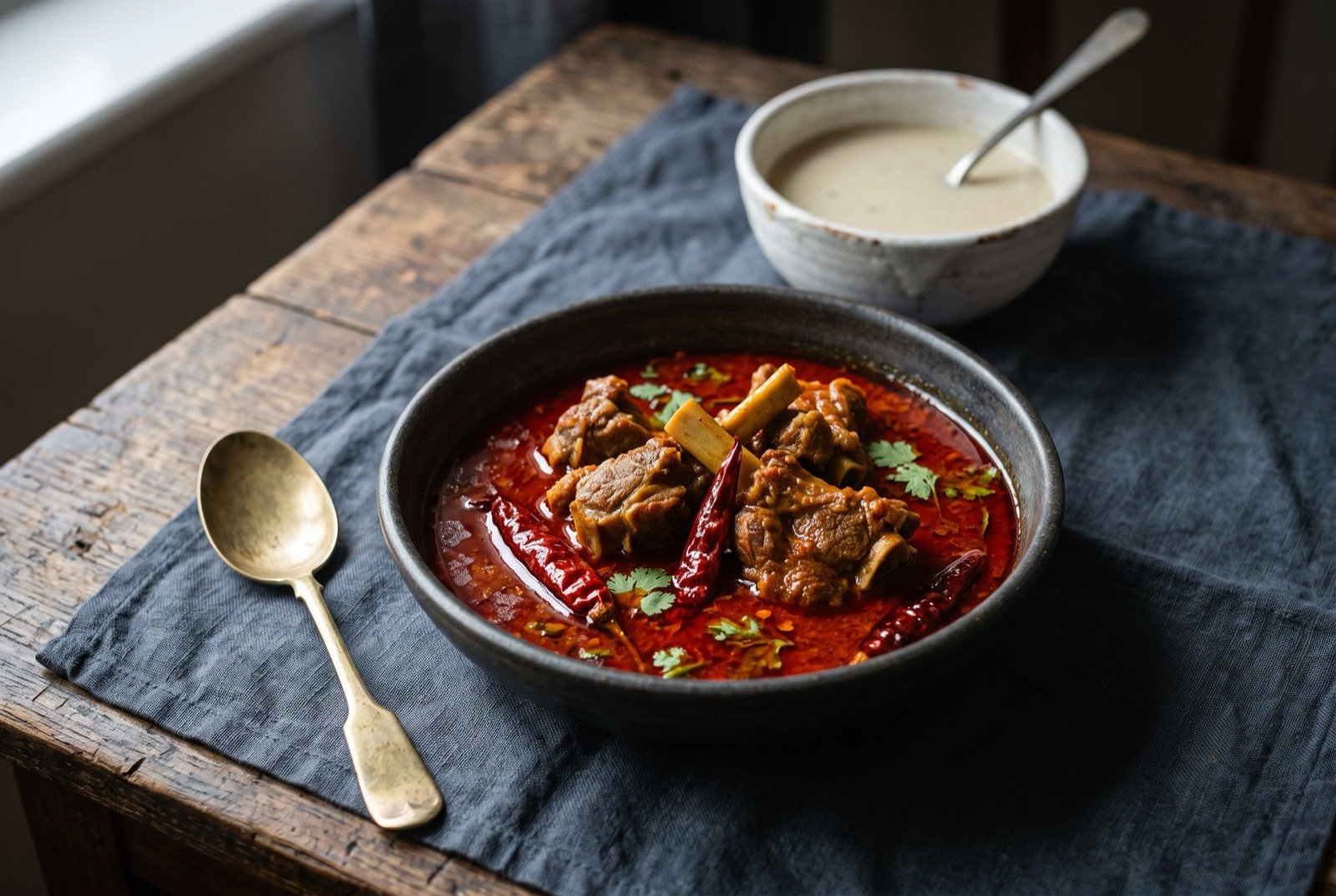
An illustration of the dish, not a photograph of it cooked.
- Time
- 1 hour 30
- Researched
- No outside sources linked
- Reviewed
- Not yet reviewed from inside the tradition
- Cooked
- Not yet cooked and reported
Kolhapur's real signature is a pair, not one dish: tambda, red, rassa, a fiery, thin gravy, and pandhra, white, rassa, milder, built on coconut milk, sesame, poppy seed and cashew. This chapter treats the red gravy in full, and names the white as its genuine, equally traditional counterpart.
As tradition built it
Serves 4. About 1.5 hours, plus marinating.
Ingredients
- 700g mutton, on the bone, cubed
- 1 tsp turmeric
- to taste salt
- 3 tbsp ghee or oil
- 2 onions, finely chopped
- 2 tbsp ginger-garlic paste
- 3 tbsp Kolhapuri masala (or a Kashmiri chilli and lavangi/bird's eye chilli blend)
- 2 tomatoes, chopped
- 500ml water or stock
Method
- Marinate the mutton in turmeric and salt, 30 minutes.
- Heat the ghee, brown the mutton in batches, and set aside.
- In the same pot, cook the onion until deeply golden, add the ginger-garlic paste, then the Kolhapuri masala, frying briefly to bloom.
- Add the tomato, cooking down to a thick base.
- Return the mutton, add the water or stock, bring to a simmer, cover, and cook 1 to 1.5 hours, until the meat is tender and the gravy has taken on its full deep red colour.
What a modern chef changes
The masala roasted properly, and the fire respected rather than smoothed over
Rung 4
Method
- Roast the whole-spice components of the Kolhapuri masala fresh, in a dedicated spice grinder, to a genuinely dark colour immediately before use, rather than relying on a pre-ground jar that has already lost its top notes.
- Braise at a stable 140°C in a covered pot in the oven rather than on the hob, for even, hands-off tenderising.
- Serve the red and white rassa side by side, in small bowls, as Kolhapur itself does, letting the reader taste the deliberate contrast this chapter names in the introduction above, rather than serving the red alone.