North America · Volume 38, The Curd, the Cure and the Sugar Bush
Montreal bagel
Montreal, Quebec, Canada
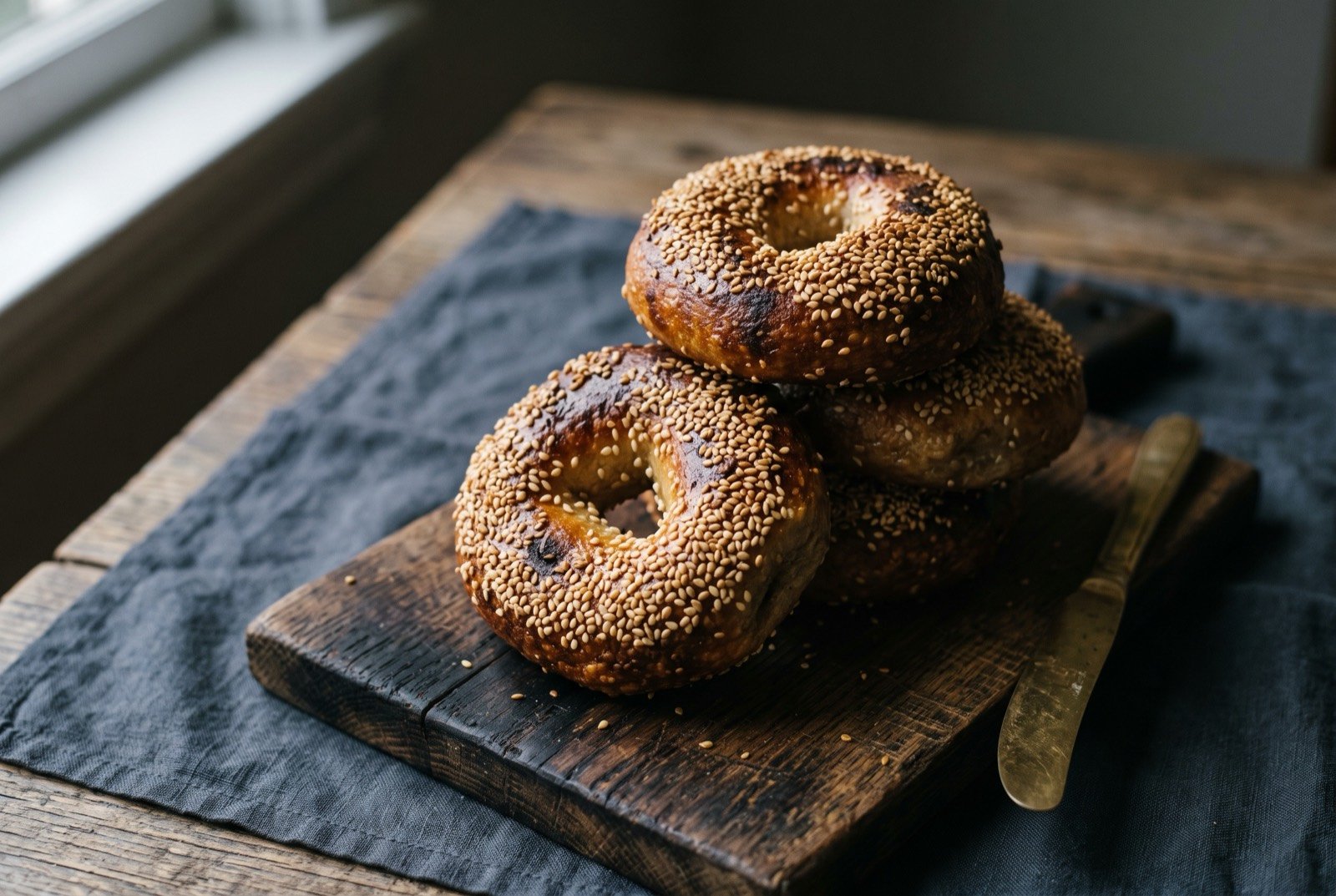
An illustration of the dish, not a photograph of it cooked.
- Time
- Not statedNo source states a time and the atlas has too few comparable dishes to estimate one.
- Reviewed
- Not yet reviewed from inside the tradition
- Cooked
- Not yet cooked and reported
As tradition built it
Montreal bagel
About 10 minutes kneading, a 1 to 2 minute poach and 18 to 23 minutes baking.
Ingredients
- roughly 350 g flour
- 1 tsp instant yeast
- 4 tsp salt
- 2 tbsp liquid honey
- around 300 ml water
- roughly 40 ml per litre honey, for the poaching water
Method
- Mix a dough of roughly 350 g flour, 1 tsp instant yeast, 4 tsp salt, 2 tbsp liquid honey and around 300 ml water and knead, by hand or on a low mixer speed, for about ten minutes.
- Shape by hand into rings, distinctly denser and less puffy than a New York bagel dough.
- Poach the rings in a large pot of water sweetened with honey, roughly 40 ml honey to every litre, for one to two minutes, flipping once, until they just begin to rise back to the surface.
- Lift out and bake at around 220°C (425°F) for eighteen to twenty-three minutes until deeply browned, traditionally in a wood-fired oven that Fairmount and St-Viateur both still run, at least in part, today.
What a modern chef changes
Concentrated poaching honey, applewood for aroma not heat, freshly ground seed
Method
- Dehydrate a portion of the poaching honey down to a thin syrup in the dehydrator before the poach itself, then fold it back into the poaching water, concentrating the same sweetness the tradition already relies on rather than adding a new flavour.
- Bake on a Big Green Egg set up for indirect, high heat with a small chunk of applewood added purely for aroma rather than for heat, mirroring the genuine finding behind St-Viateur's own modern oven, that the wood's job is flavour, not primary heat.
- Finish with a light pass of toasted sesame or poppy seed ground briefly in the spice grinder rather than left whole, releasing more of their own oil onto the crust in the last few minutes of baking than a whole seed ever gives up on its own.