North America · Volume 38, The Curd, the Cure and the Sugar Bush
Fèves au lard
Quebec, Canada
Illustration
- Time
- 4 hours
- Researched
- Researched from 80 sources in the brief
As tradition built it
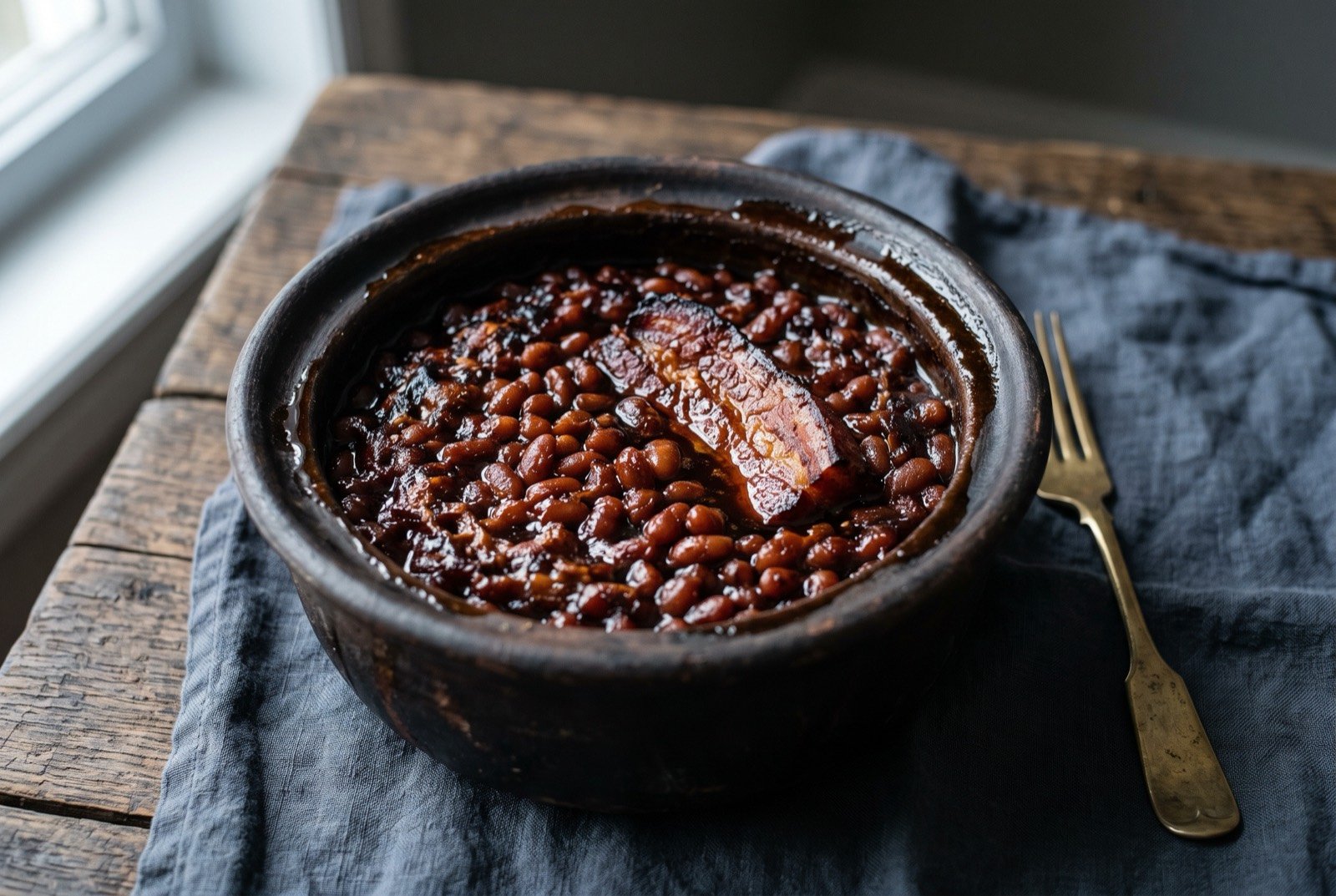
Fèves au lard
Serves 8. Prep 15 minutes, cook about 4 hours.
Ingredients
- 3 cups dry navy beans, soaked overnight
- 4 oz maple-smoked bacon or Black Forest ham, in one piece
- 2 onions, chopped
- 1 garlic clove, minced
- 1 tbsp vegetable oil
- 1/2 cup maple syrup
- 1 tbsp Dijon mustard
- 1 tbsp dry mustard
- to taste salt and pepper
Method
- Soak 3 cups dry navy beans overnight.
- Brown 4 oz maple-smoked bacon or Black Forest ham in one piece with 2 chopped onions and 1 minced garlic clove in 1 tbsp vegetable oil.
- Add 1/2 cup maple syrup, 1 tbsp Dijon mustard, 1 tbsp dry mustard, salt and pepper.
- Cover the beans with cold water to 5 cm above their surface, bring to the boil, then bake at 150°C (300°F) for about four hours until tender, topping up water as needed. Serves eight.
Notes
Several sources trace the dish to Boston baked beans, reportedly carried north by American lumber-camp cooks around 1830, with the slow, molasses-sweetened oven technique adopted wholesale; what Quebec cooks made their own is the frequent substitution of maple syrup for some or all of that molasses, though no named historian was found dating or quantifying exactly when that substitution took hold.
What a modern chef changes
Sous vide-rendered fat, reduced maple glaze, Big Green Egg caramelised top
Method
- Render the smoked bacon or ham separately sous vide first at a low, steady temperature, for a cleaner fat with none of the risk of scorching a long oven bake against the pot's own base can cause, then fold that rendered fat back through the beans at the final stage.
- Reduce the maple syrup and mustard glaze on its own in a wide pan to a genuine syrup consistency before it ever meets the beans, treating it exactly as this chapter's own technique ladder treats maple's controlled crystallisation.
- Finish the dish uncovered under the Big Green Egg's direct heat for the final twenty minutes, for a caramelised, blistered top surface the slow covered bake alone never achieves.