North America · Volume 38, The Curd, the Cure and the Sugar Bush
Métis bannock (galette)
Métis Nation, Canada
Illustration
- Time
- 30 minutes
- Researched
- Researched from 80 sources in the brief
As tradition built it
Métis bannock (galette)
20 to 30 minutes baking.
Ingredients
- 4 1/2 cups flour
- 2 tsp baking powder
- 1 tsp salt
- 2 cups tepid water
- 1 cup melted lard
Method
- Combine 4 1/2 cups flour, 2 tsp baking powder and 1 tsp salt with a well in the centre.
- Add 2 cups tepid water and 1 cup melted lard and work in from the centre outward.
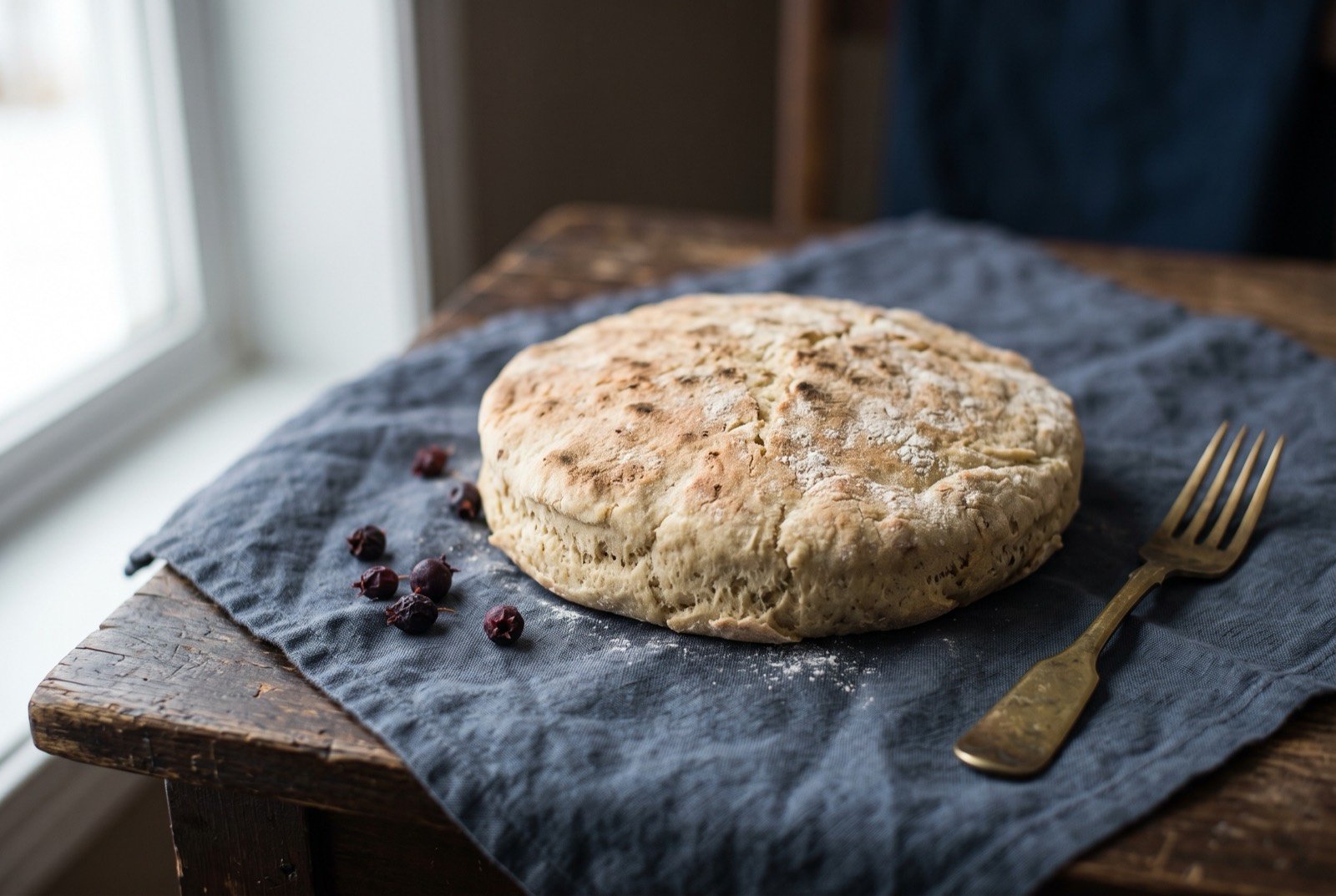
- Knead the dough about ten times, no more, then flatten into a round and dock it, perforating it with a fork or spoon so it cooks through evenly.
- Bake in a lightly greased, ideally cast-iron pan at 232°C (450°F) for twenty to thirty minutes until golden and firm.
Notes
This recipe, published by Otipemisiwak Métis Government, the Métis Nation of Alberta, drawing on the Rupertsland Institute's own Métis Culture Cards, is a genuine in-tradition source, not a settler retelling: bannock, or galette in Michif, needed no yeast and kept its ingredients well, which is exactly why it became the staple travelling bread of voyageurs, fur traders, railway workers, loggers and Métis households generally, whether baked in a pan, on a griddle or wrapped around a stick over an open fire.
What a modern chef changes
Clarified lard, Big Green Egg plancha bake, dehydrated wild berries
Method
- Render the lard separately and clarify it through the chinois before it ever meets the dough, for a cleaner-tasting fat with none of the sediment a whole block of lard can carry, and use it at a precise, consistent temperature rather than however warm it happens to be from melting.
- Cook the dough on the Big Green Egg's plancha side over direct heat first, for a genuine griddle-baked version alongside the traditional pan bake, since bannock's own tradition already spans multiple cooking methods and this is simply choosing one deliberately rather than by circumstance.
- Dehydrate a portion of wild berries, blueberries or saskatoon where available, and fold them coarsely through the dough before baking, a real, sourced Métis addition to bannock in some regional versions rather than an invented flourish.