North America · Volume 30, The Three Sisters, the Bison and the Piki Stone
Pemmican
Great Plains, United States and Canada
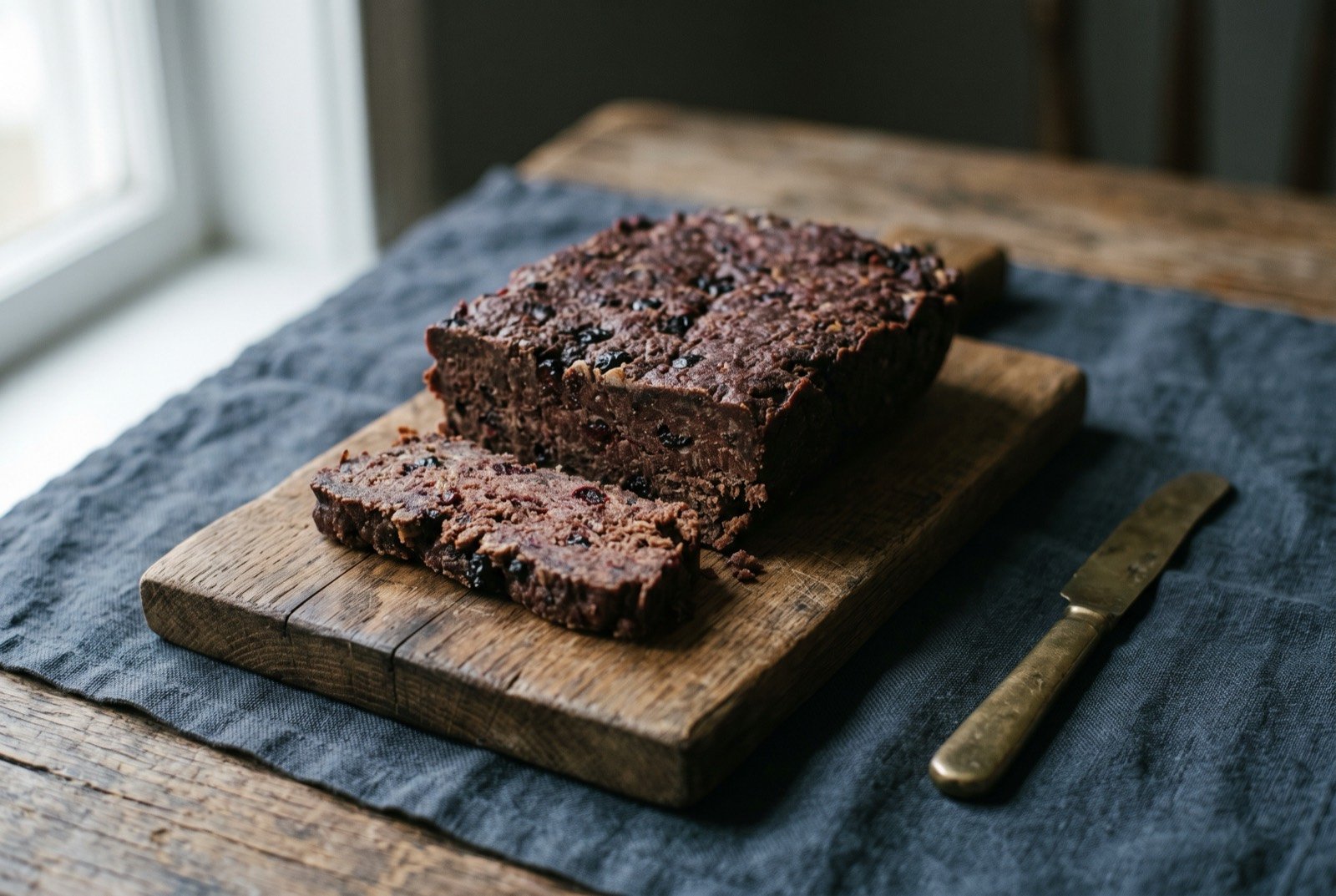
Illustration
As tradition built it
Pemmican
Corroborated Plains technique, not a single named-nation recipe. Keeps for months to years without refrigeration.
Ingredients
- 2 cups dried meat, bison, elk or deer, dried over fire or sun then pounded to a fine powder
- ½ cup rendered fat, tallow
- ½ cup dried, pounded berries, chokecherries, saskatoon berries, cranberries or blueberries depending on nation and region
Method
- Dry the meat over fire or sun, then pound it to a fine powder.
- Combine the pounded meat with the rendered fat at roughly a one-to-one ratio by weight.
- Add the dried, pounded berries, for flavour and an acidity that helps inhibit spoilage.
- Press the mixture firm, traditionally into a rawhide bag, a parfleche; it can keep for months to years without refrigeration.
Notes
This chapter states plainly that no single named-nation source was found giving the fat-to-meat ratio down to an exact modern measurement; treat the one-to-one figure as a well-corroborated convergent estimate, not a settled, single-sourced recipe.
Sean Sherman publishes a "Duck and Wild Rice Pemmican," Magáksica na Psín Wasná, in The Sioux Chef's Indigenous Kitchen, whose exact published quantities sit behind the physical book rather than open sources.
What a modern chef changes
Precision drying, clarified fat, fresh-ground acidity
Rung 04
Method
- Dry the meat in a dehydrator at a low, controlled temperature rather than over open fire or full sun, a genuine extension of the traditional method's own air-drying logic, giving a more even result across a whole batch.
- Render the fat sous vide at a precise, low temperature to keep it clean and free of any scorched note a hard pan render can introduce.
- Pass the rendered fat through a chinois for real clarity before it meets the pounded meat.
- Grind the dried berries fresh in the spice grinder immediately before combining, rather than using pre-crushed fruit, for a brighter, less oxidised acidity doing the same preservative work tradition already relies on.