North America · Volume 30, The Three Sisters, the Bison and the Piki Stone
Piki Bread
Hopi Nation, Arizona
Illustration
As tradition built it
Piki Bread
Hopi, Penn Museum's Expedition magazine, corroborated by the Slow Food Foundation's Ark of Taste. Cooks in seconds.
Ingredients
The method as the tradition gives it, with the ingredients named. Quantities follow as we verify them, lead dishes first.
- blue cornmeal
- boiling water, strained through fine ash, traditionally juniper or greasewood, added until the batter turns deep blue, corresponding to roughly pH 8
- historically up to 5lb, gathered and dried a season roasted, ground watermelon or sunflower seeds, for seasoning the stone; horse fat or deer brain fat are named alternatives
Method
- Mix blue cornmeal with boiling water strained through fine ash, traditionally juniper or greasewood, adding ash-water until the batter turns deep blue, corresponding to roughly pH 8, judged by colour rather than measurement.
- Heat the piki stone, a hand-smoothed, polished rectangular sandstone slab on four legs, to around 700°F over a juniper or cedar fire.
- Season the stone between sessions with roasted, ground watermelon or sunflower seeds, or horse fat or deer brain fat.
- Test readiness by dropping seeds on the stone and watching them pop.
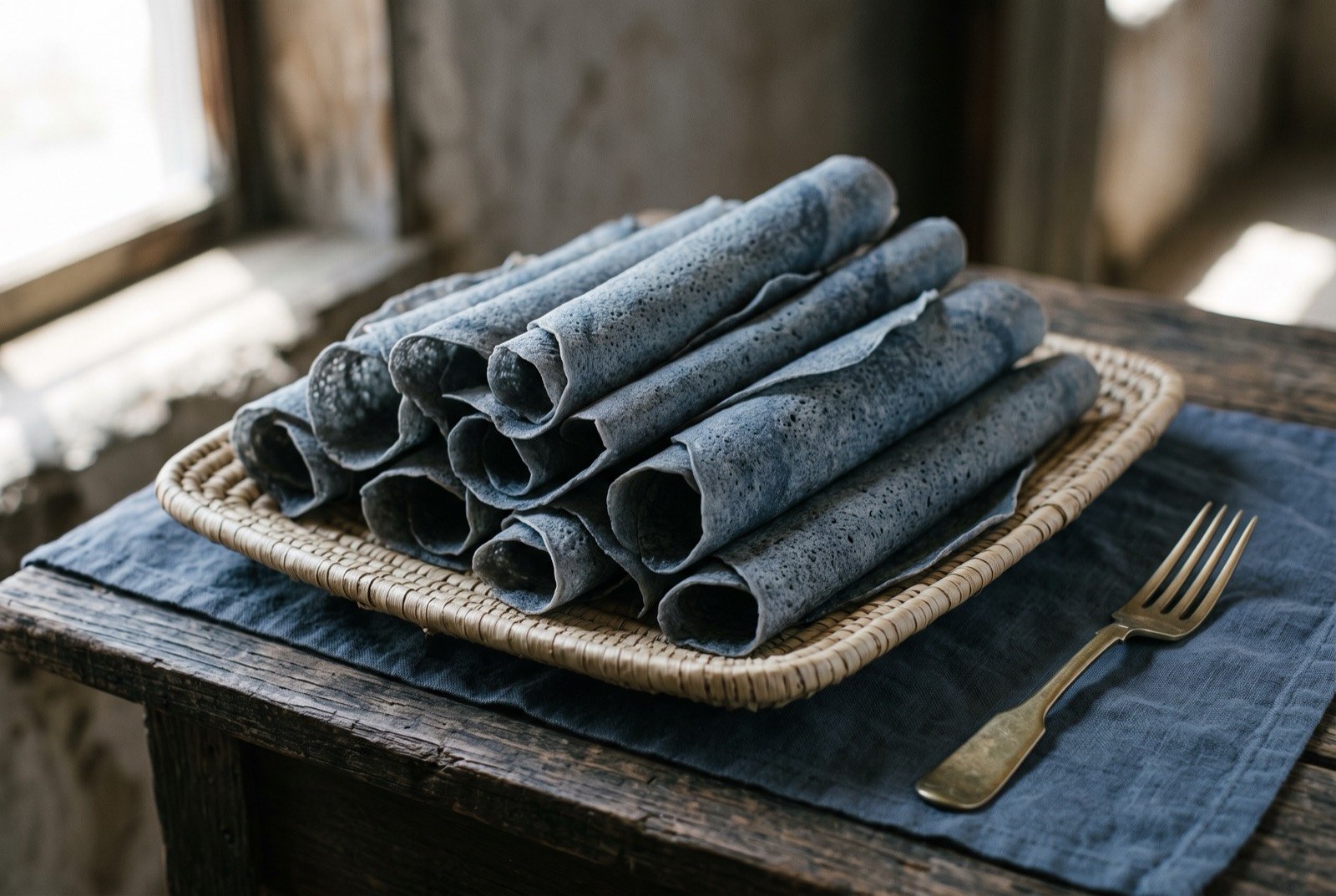
- Spread the batter by bare hand in a single continuous stroke; it cooks in seconds and peels off translucently thin, behaving like blue crepe paper that shatters like a cornflake.
- Serve alongside corn soup and mutton stew.
Notes
There is genuinely no fixed cup-and-quart ratio in the sourcing available for this dish; that is a real fact about how piki is made, not a gap in this chapter's research.
Piki-making is a skill passed among Hopi women over years, carrying real ceremonial roles at weddings, baby-naming, initiations and work-party meals, and, folded four sheets to a square, as part of a deceased person's last meal for their journey.
What a modern chef changes
Restraint, not addition
Rungs 01, 06
Method
- Heat a domestic griddle as close to 700°F as it will safely go, and lightly oil a well-seasoned crepe pan with ground sunflower seed rather than butter, the nearest a British kitchen gets to a piki stone, while stating plainly it will not be the same thing: the stone itself, seasoned over years, is doing real work no single session replicates.
- Dry a batch of the blue cornmeal gently in a dehydrator after grinding, for a marginally finer, more even batter than a shop-bought bag.
- Grind the seasoning seeds fresh in the spice grinder rather than pre-ground, for a cleaner aroma when they hit the hot surface.
- Beyond that, follow Hopi practice rather than adding to it: judge the batter by eye, by colour, exactly as tradition instructs, because that instruction is already the technique.