Central Europe · Volume 21, Rye, Smoke and the Kitchen Beside It
Bigos
Poland-wide
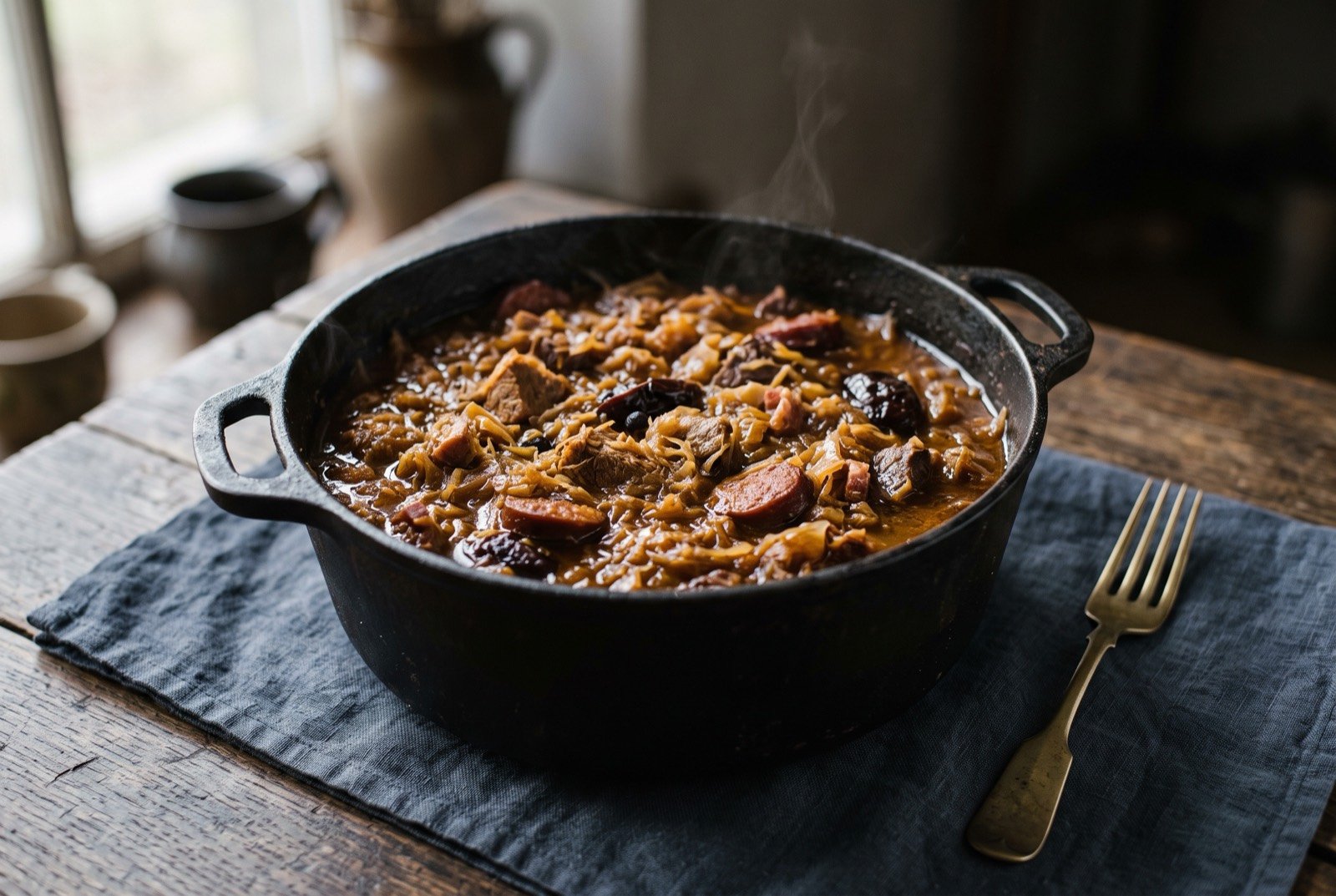
An illustration of the dish, not a photograph of it cooked.
- Time
- 3 hours
- Researched
- 10 sources cited
- Reviewed
- Not yet reviewed from inside the tradition
- Cooked
- Not yet cooked and reported
Poland-wide. Best on its second, third or even fourth day, not its first.
As tradition built it
Serves 6 to 8. At least 2 to 3 hours, longer if possible, over several days.
Ingredients
- 1 kg sauerkraut, drained, liquid reserved
- 500 g fresh white cabbage, shredded
- 500 g mixed pork (shoulder, belly)
- 300 g kiełbasa wiejska, sliced
- 100 g smoked bacon, diced
- 200 g dried plums, chopped
- 20 g dried forest mushrooms, soaked (soaking liquid reserved)
- 2 onions, chopped
- to taste bay leaf, allspice, juniper, marjoram
Method
- Brown the pork and bacon. Set aside.
- Soften the onion in the rendered fat.
- Combine everything, including the kiełbasa, dried plums, bay leaf, allspice, juniper, marjoram and the mushroom soaking liquid, in a heavy pot. Add sauerkraut liquid to loosen if needed.
- Simmer, covered, at least 2 to 3 hours, stirring occasionally. Taste the cabbage balance before adding more sauerkraut; too high a ratio of very sour cabbage to meat is a named, common fault.
- Cool and refrigerate. Reheat slowly from the fridge, never from frozen and never in a microwave, over at least two further days before serving. This is not optional garnish advice: bigos genuinely improves with age and repeated slow reheating, and a bigos eaten on its first day is an unfinished dish.
What a modern chef changes
A separated build that respects the two-week fermentation window this chapter's own ferment bench argues for
Rungs 2 and 6
Method
- Ferment your own sauerkraut for the full two weeks specified in rung 2, rather than using a shortcut jarred product, and taste it on day 10, 12 and 14 to judge the sourness you actually want in the finished stew, since a properly live sauerkraut's character varies meaningfully across that window in a way a pasteurised jar never will.
- Confit the pork shoulder separately, in schmaltz or rendered pork fat at 85°C for 3 hours, before it ever meets the pot, rather than simply browning and simmering it in with everything else. This gives a fully tender base that the subsequent long simmer then only needs to flavour, not to cook through, protecting the meat from the toughening a rushed bigos suffers.
- Build the dish across its full three-day arc deliberately, tasting and adjusting the balance of sour cabbage to sweet plum at each reheat, treating what tradition already knows as a slow-built dish as an actual technique to manage rather than an inconvenience to rush past.