Central Europe · Volume 21, Rye, Smoke and the Kitchen Beside It
Chopped liver
Ashkenazi, pre-1939 Poland
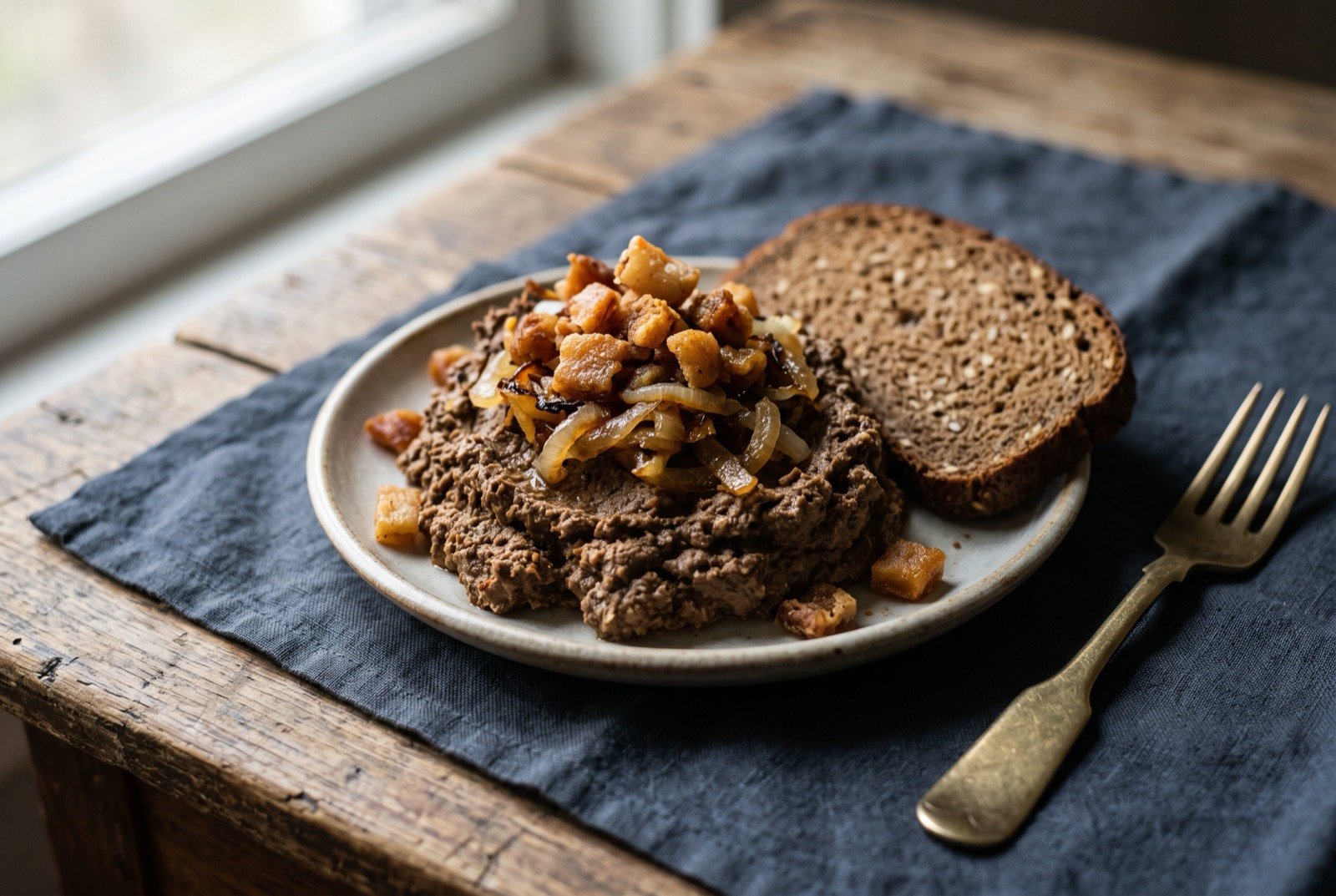
An illustration of the dish, not a photograph of it cooked.
- Time
- 30 minutes
- Researched
- 10 sources cited
- Reviewed
- Not yet reviewed from inside the tradition
- Cooked
- Not yet cooked and reported
Ashkenazi, pre-1939 Poland. Built on schmaltz and gribenes, not butter.
As tradition built it
Serves 6 as a starter. 30 minutes.
Ingredients
- 400 g chicken or beef liver, trimmed
- 100 g schmaltz
- 100 g gribenes (schmaltz cracklings), plus onion fried in the render
- 2 onions, sliced
- 2 hard-boiled eggs
- to taste salt, pepper
Method
- Render schmaltz slowly from chicken skin and fat, reserving the crisp gribenes and softened onion that result.
- Fry the sliced onion in a little of the schmaltz until deep golden. Sear the liver in the same pan until just cooked through, still faintly pink at the centre.
- Grind the liver, fried onion and hard-boiled egg together, traditionally in a meat grinder rather than a food processor, which gives a coarser, better texture than the near-paste a processor produces.
- Bind with schmaltz, salt and pepper to a soft, spreadable consistency. Fold most of the gribenes through, scattering the rest on top to serve.
What a modern chef changes
Precision searing against the liver's own narrow window, and the gribenes treated as the dish's actual technique, not its garnish
Rung 4
Method
- Sear the liver hard and fast over high heat, no more than 90 seconds a side, and rest it before grinding, rather than cooking it through in the pan, protecting the mineral, iron-rich flavour from the flat, chalky note overcooked liver develops, a fault this dish shares with kotlet schabowy's own timing failure in rung 6.
- Render the schmaltz separately at a controlled low temperature specifically to maximise gribenes' crispness, treating the render as its own dish rather than a byproduct of making fat, since a rushed, too-hot render gives soft, greasy cracklings rather than the genuinely crisp texture the finished liver depends on.
- Grind the components separately and fold rather than grinding everything together at once, giving a more textured, less uniform result closer to what a traditional hand-cranked meat grinder actually produces than a single food-processor pulse.