Central Europe · Volume 21, Rye, Smoke and the Kitchen Beside It
Challah
Ashkenazi, pre-1939 Poland
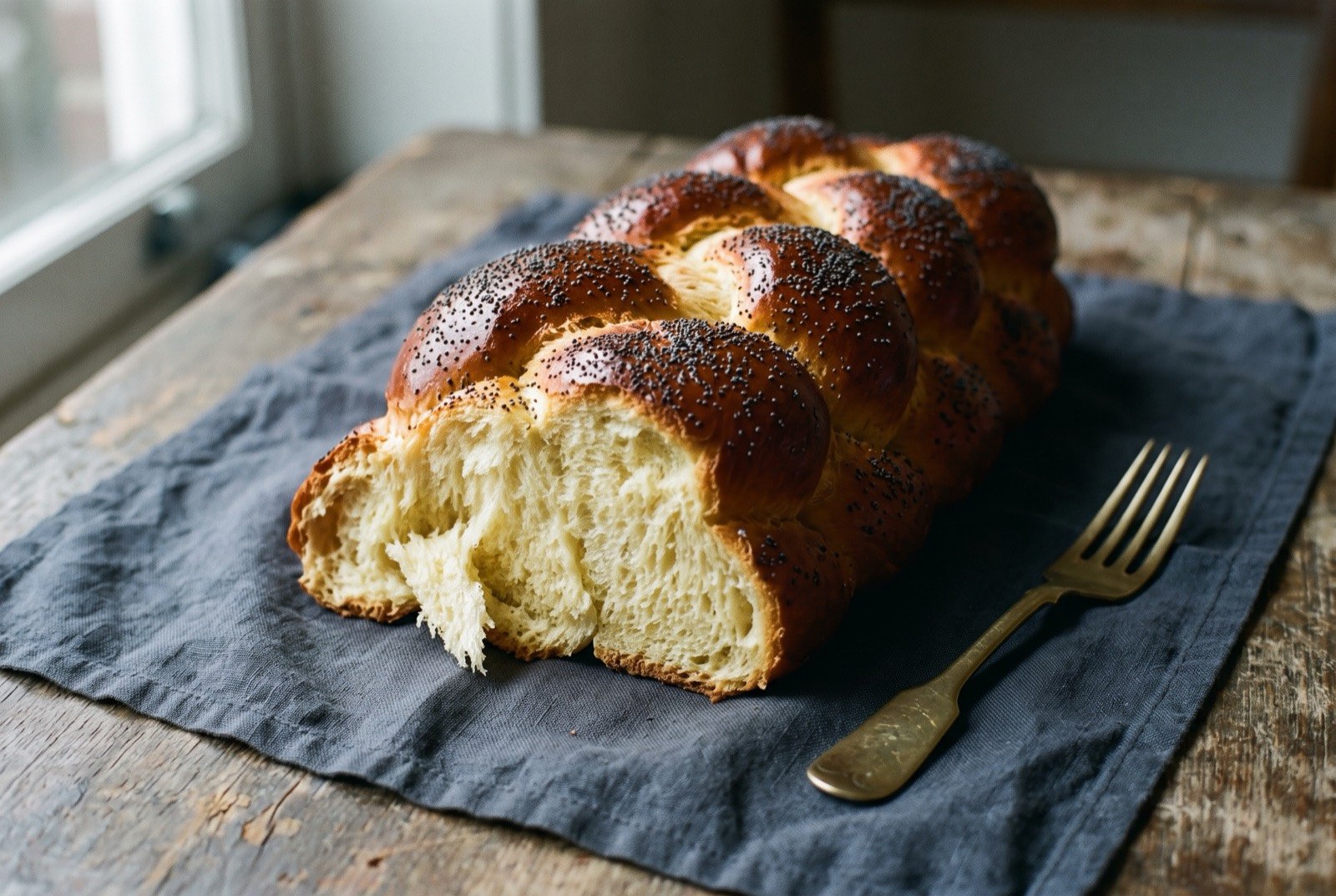
An illustration of the dish, not a photograph of it cooked.
- Time
- 4 hours
- Researched
- 10 sources cited
- Reviewed
- Not yet reviewed from inside the tradition
- Cooked
- Not yet cooked and reported
Ashkenazi, pre-1939 Poland. The braided form dated to fifteenth-century Austria and southern Germany, adopted from non-Jewish neighbours who braided their own Sunday loaves.
As tradition built it
Makes 1 large loaf. About 4 hours including proving.
Ingredients
- 500 g strong white flour
- 7 g dried yeast
- 60 g sugar
- 2 eggs, plus 1 for glaze
- 60 ml oil
- 250 ml warm water
- 1.5 tsp (10 g) salt
Method
- Combine flour, yeast, sugar and salt. Add the eggs, oil and warm water, and knead to a smooth, elastic dough, 10 minutes.
- Prove, covered, until doubled, roughly 1.5 hours.
- Before shaping, separate a small piece of dough for hafrashat challah, the traditional ritual acknowledgement of the offering this practice descends from, if the baker wishes to observe it; the dough is traditionally burned rather than baked.
- Divide the remaining dough into strands and braid. Prove again, 45 minutes.
- Glaze with beaten egg. Bake at 190°C, 25 to 30 minutes, until deep golden and hollow-sounding when tapped.
What a modern chef changes
A slower, cooler prove for a more open, more flavourful crumb
Method
- Retard the first prove overnight in the fridge rather than pushing it through in ninety minutes at room temperature, giving the yeast far longer to develop real flavour, a technique borrowed directly from modern bread baking generally and entirely compatible with the dough's own traditional enrichment.
- Enrich with a small proportion of schmaltz alongside the traditional oil, a genuine, honestly-flagged crossover choice this chapter offers rather than asserts as traditional, giving a savoury undertone against the loaf's sweetness that some bakers within the tradition itself already use.
- Braid a six-strand loaf rather than the simpler three, for a taller, more defined crumb structure and a more dramatic crust surface for the glaze to catch on, a purely technical, honestly-named departure from the plainer form, offered as a variation rather than a correction.