Central Europe · Volume 21, Rye, Smoke and the Kitchen Beside It
Pierogi ruskie
Poland-wide, most identified with the eastern kresy
Illustration
- Time
- 1 hour 30
- Researched
- 10 sources cited
Poland-wide, most identified with the eastern kresy. "Ruskie" means of Ruthenia, Red Rus, not of Russia, a distinction most Polish speakers today have lost.
As tradition built it
Makes about 40. 1.5 hours, plus resting.
Ingredients
- 500 g plain flour (typ 450)
- 250 ml warm water
- 50 g butter, softened
- 2 egg yolks
- 500 g potato, boiled and mashed
- 250 g twaróg (curd cheese), or quark
- 1 onion, finely diced and fried in butter until deep gold
- to taste salt
- to taste pepper
Method
- Work the flour, water, butter and egg yolks into a smooth, elastic dough. Rest, covered, 30 minutes.
- Beat the mashed potato and twaróg together with most of the fried onion, salt and pepper.
- Roll the dough thin and cut rounds. Fill, fold and pinch the edge firmly closed, leaving no gap for water to enter.
- Boil in batches, not overcrowded, until they float, then a further 2 minutes, no longer.
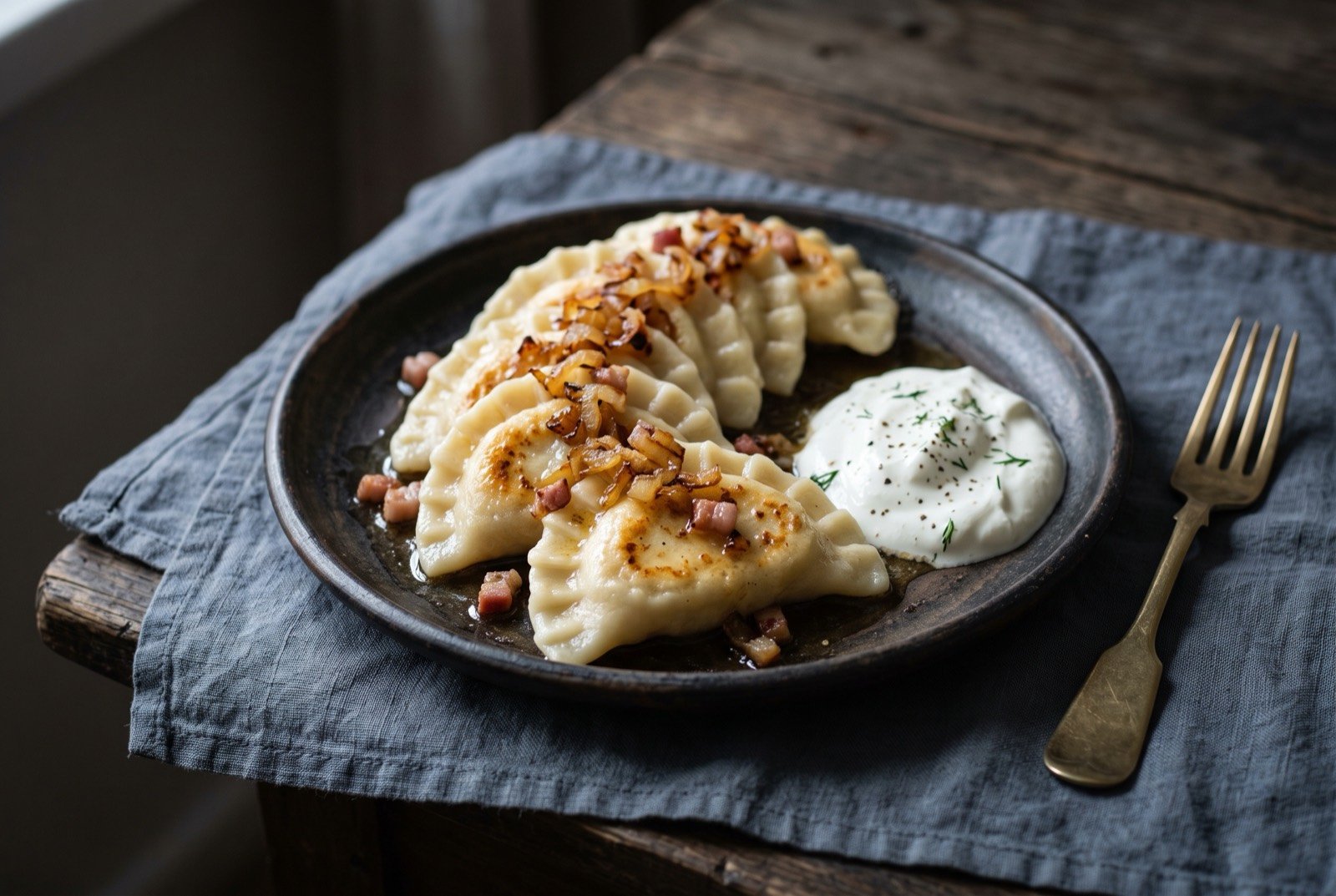
- Serve with the remaining fried onion and a generous spoon of soured cream.
Notes
No single deposited official recipe exists for pierogi ruskie; the ratios above reflect consistent convergent Polish household and recipe-site practice, not one authenticated standard.
What a modern chef changes
A tighter seal and a batch discipline against the diaspora's two commonest failures
Rungs 2 and 3
Method
- Rest the dough a full hour, not the traditional thirty minutes, and avoid adding extra flour to make it easier to handle. Overworked, over-floured dough is the named, specific cause of the tough, chewy pierogi a bad diaspora kitchen serves; a wetter, better-rested dough rolls thinner without tearing.
- Crimp with a mechanical press rather than by hand, ensuring a genuinely even, sealed edge across every piece, since a rushed hand-pinch leaving even a small gap is the other named, specific cause of splitting in the pot.
- Finish the fried onion in rendered schmaltz rather than butter for a small batch, a deliberate, honest crossover between this chapter's two tables rather than a claim that this is how either tradition actually made it, offered as a genuine improvement worth trying once the two techniques are understood separately.