The Indian subcontinent · Volume 13, The Tandoor Wall, the Wagah Line and a Contested Butter Chicken
Amritsari kulcha
Amritsar
Illustration
- Time
- 1 hour 30
- Researched
- Researched from 83 sources in the brief
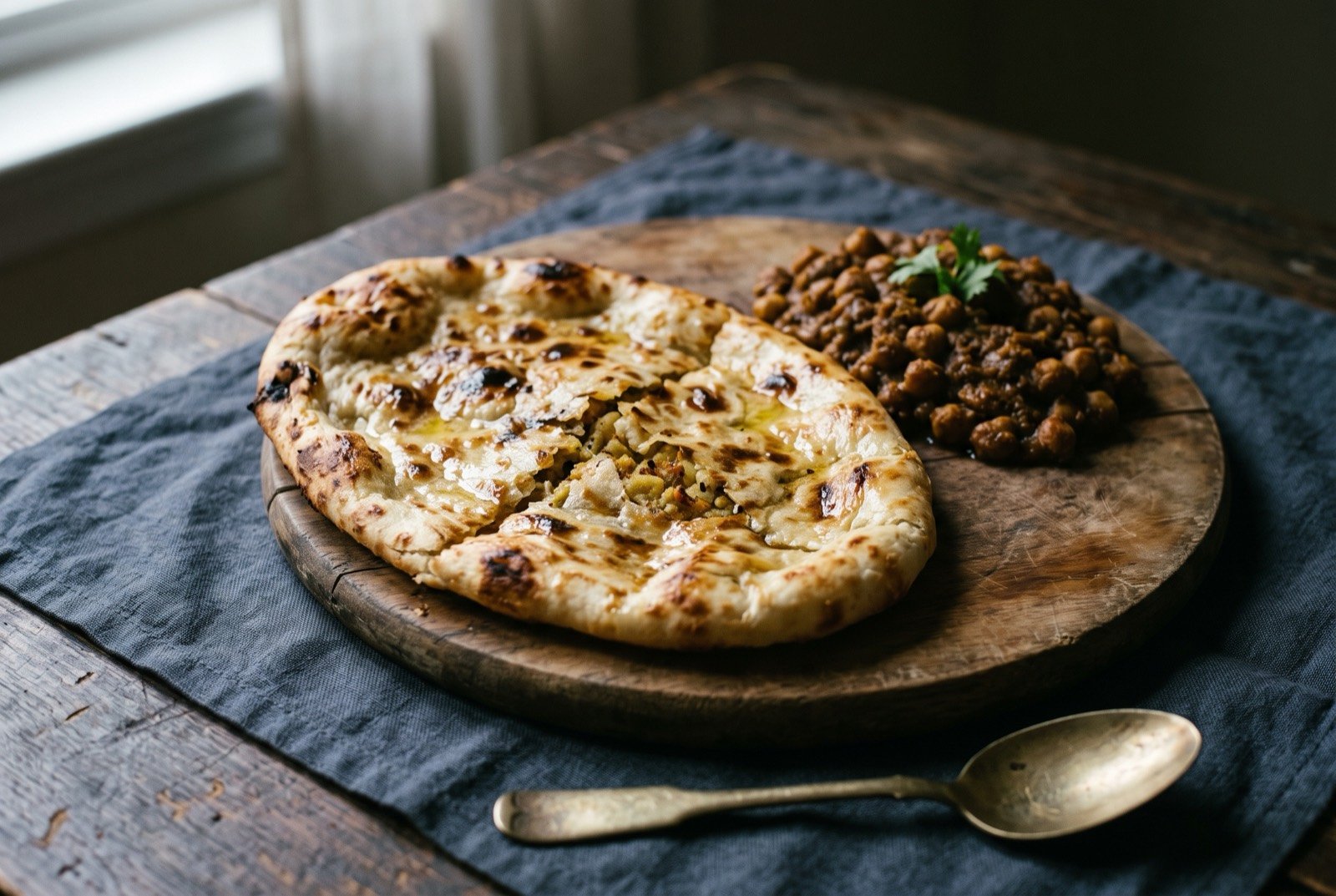
A flaky, tandoor-baked leavened flatbread stuffed with spiced mashed potato, traditionally served with chana masala and butter. The Tribune's own Amritsar edition frames it as a roughly two-hundred-year local adaptation of Peshawari khameeri roti, a leavened sourdough-style flatbread, with likely Mughal-court influence behind the idea of stuffing bread at all, refined by Amritsar's own dhaba culture as the city grew as a Silk Route-era trading hub; Punjab's own Department of Food Processing is reportedly pursuing a Geographical Indication tag for it.
As tradition built it
Makes 6. About 1.5 hours, including resting.
Ingredients
- 400g maida (fine white flour)
- 3 tbsp curd
- 0.5 tsp baking soda or powder
- 1 tbsp sugar, 0.5 tsp salt sugar, salt
- 1 tsp ajwain or cumin seed
- as needed water, as needed
For the filling
- 300g (about 4) potatoes, boiled and mashed
- 1 onion, 2 tbsp coriander, 0.5 tsp ginger paste, 2 green chillies, 1 tsp amchoor, 0.5 tsp coriander powder onion, coriander, ginger, green chilli, amchoor, coriander powder
Method
- Knead the flour, curd, baking soda or powder, sugar, salt and ajwain with water into a soft dough. Rest, covered, at least 1 hour; some versions fold the dough a further three times partway through resting for extra flakiness.
- Combine the mashed potato with the onion, coriander, ginger, chilli and spices for the filling.
- Divide the dough, roll each portion, place a generous spoonful of filling in the centre, and seal, then gently flatten and shape into a rough oval.
- Bake in a tandoor, ideally a dedicated tandoor kept separate from the one used for plain roti, until crisp and golden, brushing with butter to finish.
What a modern chef changes
A second tandoor rung, this time for a laminated dough.
Rung 1
Method
- Wet the underside of the shaped kulcha lightly before it meets the tandoor wall, exactly as for plain naan, so the same steam-driven adhesion mechanism holds a heavier, filled bread in place through the same physics.
- Keep the filling drier than instinct suggests, since a wet potato filling is the single most common reason a kulcha's underside stays pale rather than developing real char before the bread falls or is pulled.
- Serve with a butter that has itself been finished properly, per Rung 6, rather than a plain cold pat, since the bread's own richness is meant to be met by the butter's, not diluted by a bland one.