The Gulf and Arabia · Volume 09, The Terrace, the Wadi and a Kitchen Carried Out
Saltah
The highlands
Illustration
- Time
- 1 hour
- Researched
- Researched from 91 sources in the brief
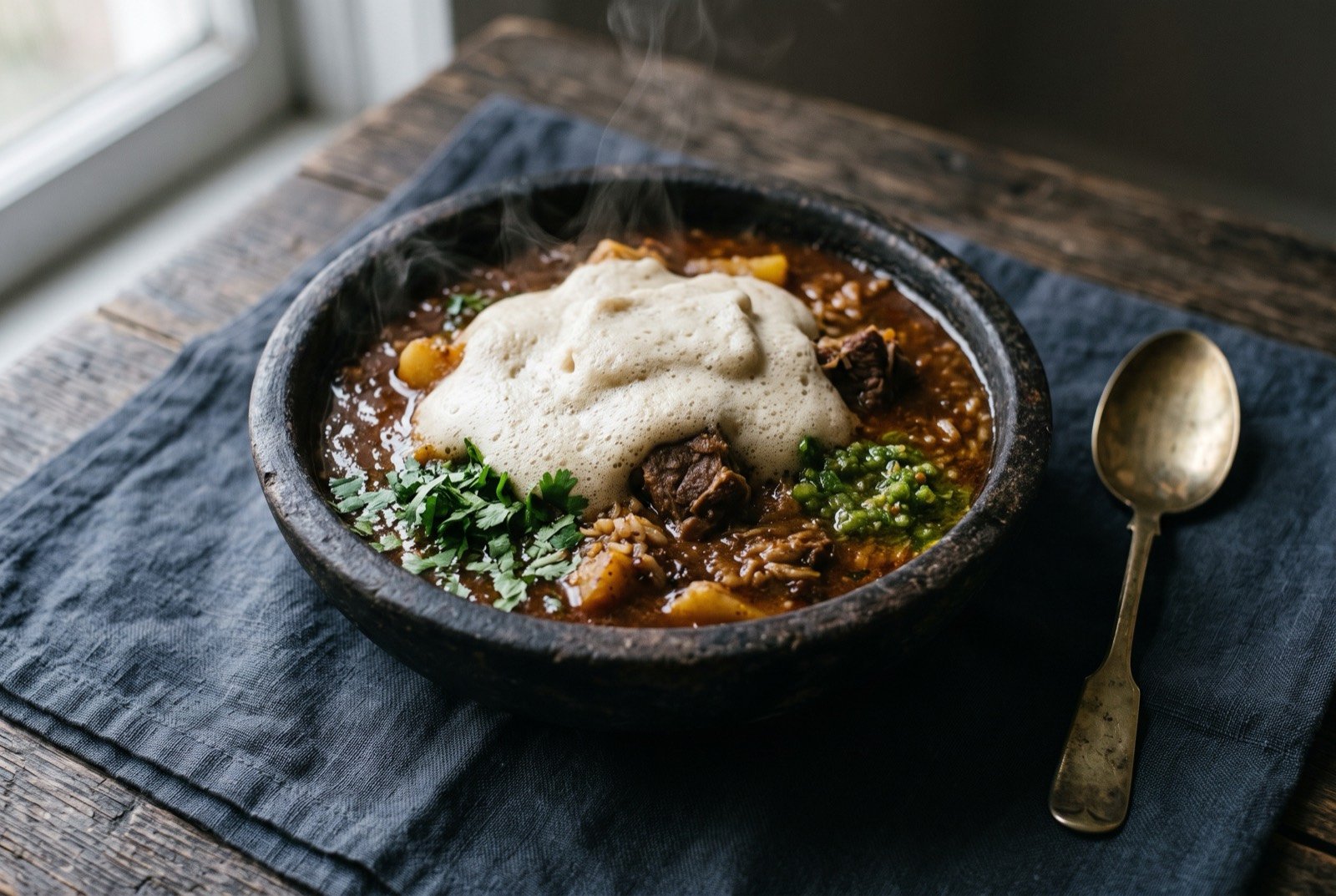
Saltah is eaten mainly at lunch across the northern highlands: a base of maraq, a brown meat or vegetable stew, stirred with sahawiq, a raw, blended chilli-tomato-garlic-herb relish, and topped with a generous dollop of whipped hilbeh. It is served bubbling hot in a stone bowl that holds its heat, and eaten with torn flatbread as the only utensil. An often-repeated claim that it was formally adopted as Yemen's national dish after 1990's unification traces to exactly one source, itself citing only a Western food blog, and this chapter does not repeat it as settled fact.
As tradition built it
Serves 4. About 1 hour, plus soaking.
Ingredients
- 250g lamb, cubed
- 1 onion, minced
- 3 cloves garlic, minced
- 2 tbsp vegetable oil
- 2 tomatoes, peeled and chopped
- 240ml tomato sauce
- 2 potatoes, cubed
- 1 green chilli
- 2 tbsp rice
- 1.5 cups spring onion, chopped
- 3 stalks leek, sliced
- 1 litre water
- 1 tsp ground cumin
- 1 tsp turmeric
- 0.5 tsp ground coriander
- to taste salt and pepper
For the hilbeh
- 2 to 3 tbsp ground fenugreek
- 1 clove garlic
- 0.5 bunch chives or leek
- 2 green chillies, deseeded
- 0.5 tsp salt
- 0.25 tsp ground cumin
- a splash ice water
For the sahawiq
- 2 cloves garlic
- 1 green chilli
- 60ml fresh coriander
- 60ml leek, chopped
- to taste salt, 60ml water
Method
- Brown the onion in oil, add garlic then lamb, browning 5 minutes.
- Stir in the ground cumin, turmeric, ground coriander, salt and pepper, then add the tomatoes, tomato sauce, chilli and leek.
- Add the water and simmer, or pressure-cook, 30 minutes, until the meat is tender.
- Add the potatoes, rice and spring onion, and simmer uncovered a further 20 minutes, until the potatoes and rice are cooked through.
- For the hilbeh, soak the fenugreek in cold water at least 1 hour, then strain and blend with the garlic, chives, chillies, salt and cumin. Whisk vigorously with ice water for 5 to 10 minutes until pale and frothy.
- For the sahawiq, blend the garlic, chilli, coriander, leek and salted water smooth.
- Heat a stone or heavy bowl, pour in the hot saltah, top generously with the hilbeh froth, garnish with the sahawiq, spring onion and coriander, and serve immediately.
Notes
No source this chapter's research reached gave district-by-district variation between Sana'a, Taiz and Ibb saltah, a real gap rather than an invented consistency.
What a modern chef changes
The froth judged by touch, not by eye alone
Rung 1
Method
- Whip the hilbeh in a stand mixer, whisk attachment, on medium-high for 5 minutes or until it has genuinely doubled in volume and turned pale, rather than stopping once it merely looks combined.
- Build the maraq a day ahead and reheat gently; a rested stew's flavour is markedly rounder, and it means the froth, made fresh, is the only element under time pressure at the table.
- Serve the hilbeh in its own small dish alongside, for the diner to spoon on themselves, rather than pre-topping the bowl, so a second and third guest still gets a properly aerated dollop rather than the last, collapsing remnant.