The Levant and Anatolia · Volume 05, The Kibbutz, the Camp and the Contested Table
Kubaneh
Yemen
Illustration
- Time
- Hands on 20 minutes · Waiting 8 hours
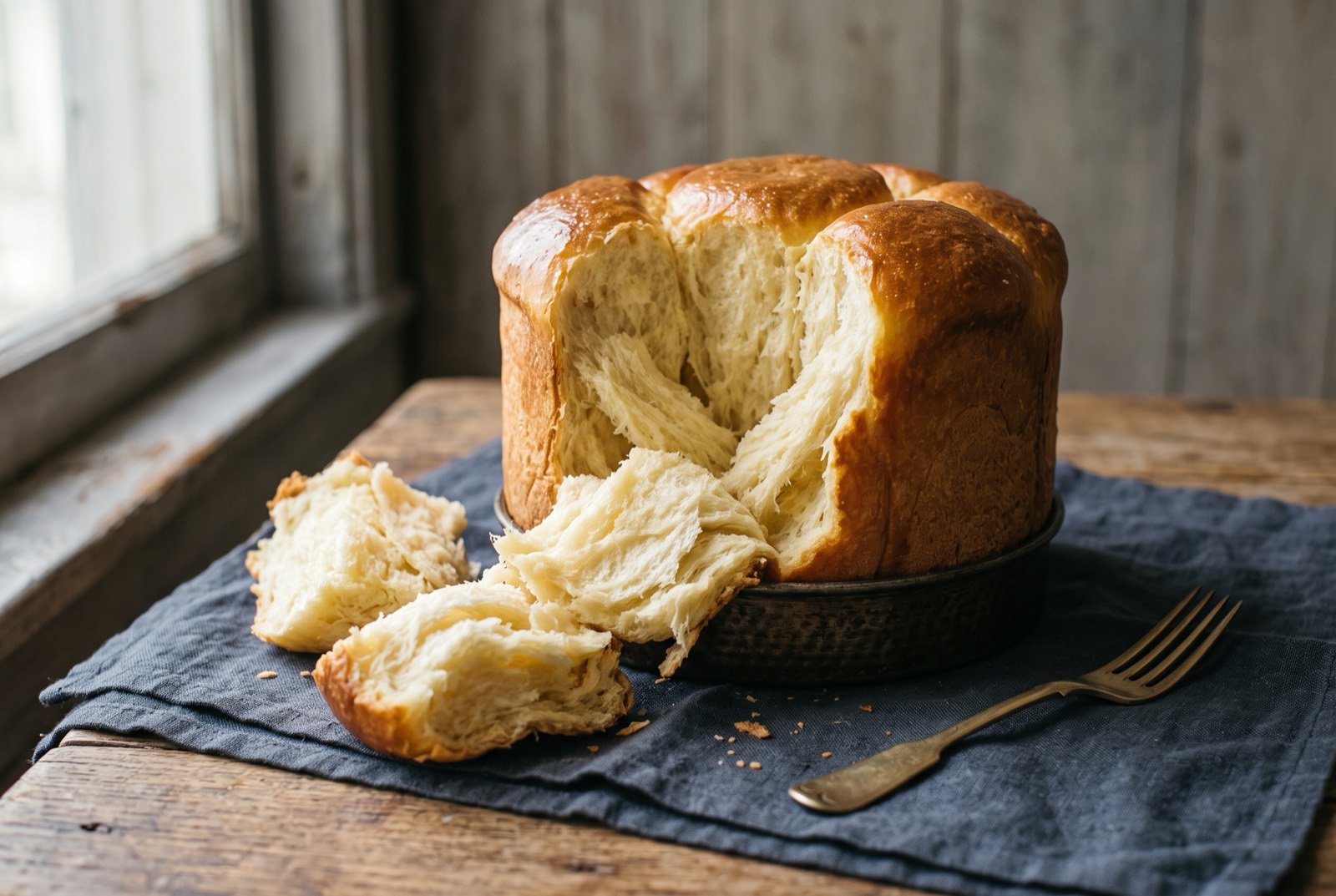
Kubaneh is prepared Friday evening, traditionally sealed in a greased, lidded metal tin, and left in a very low oven overnight, cooking in its own vapour, so that by Shabbat morning the dough has puffed, browned and pulled apart into soft, buttery layers without anyone lighting a fire on the Sabbath itself. Timing varies genuinely by household rather than converging on one number: a classic slow method at 100°C for 10 to 12 hours overnight; a combined method for baking through Friday night specifically, one hour at 200°C then lowered to 100°C until morning; a faster slow-bake variant at 100 to 110°C for six hours, checked at that point against drying out. Traditionally eaten alongside eggs, grated tomato and schug or hilbeh, the same Shabbat-morning table as jachnun.
As tradition built it
Serves 6 to 8. 20 minutes active, plus overnight proving and baking.
Ingredients
- 500g strong white flour
- 2 tsp instant yeast
- 1 tbsp sugar
- 1 tsp salt
- 300ml warm water
- 150g unsalted butter, very soft, plus extra for the tin
Method
- Mix flour, yeast, sugar, salt and water to a soft dough; knead 8 minutes until smooth and elastic. Prove 1 hour, covered, until doubled.
- Divide into 8 pieces. Working one at a time, stretch each piece by hand as thin as it will go, spread generously with soft butter, and roll into a loose cylinder.
- Butter a deep, lidded ovenproof pot generously. Coil the cylinders into the pot in a spiral, packing them together, and pour any remaining butter over the top.
- Cover tightly (a layer of foil under the lid helps seal it) and bake at 100°C for 10 to 12 hours, or overnight.
- Turn out onto a board while still warm and pull apart to serve.
What a modern chef changes
Temperature stability over the long bake, and butter browned before it goes in
Rung 5
Method
- The single most useful modern intervention is temperature stability, not flavour: a domestic oven's thermostat cycles several degrees either side of its set point over a long bake, which is fine for kubaneh's forgiving dough but worth controlling properly if the reader owns the kit to do it.
- A Big Green Egg with the convEGGtor holds a steadier low dome temperature over 10-plus hours than most domestic ovens, and is the better tool here for exactly the reason it is the wrong tool for jachnun's much shorter first stage in this chapter's other recipes, consistency over many hours rather than a fast, hot burst.
- Brown butter before working it into the dough, rather than using it soft and pale, for a genuinely deeper, nuttier finished flavour that plain softened butter cannot give; let it cool back to spreadable before use so it still laminates rather than simply soaking in.