The Levant and Anatolia · Volume 05, The Kibbutz, the Camp and the Contested Table
Babka
Ashkenazi Eastern Europe, reinvented in Tel Aviv and New York
Illustration
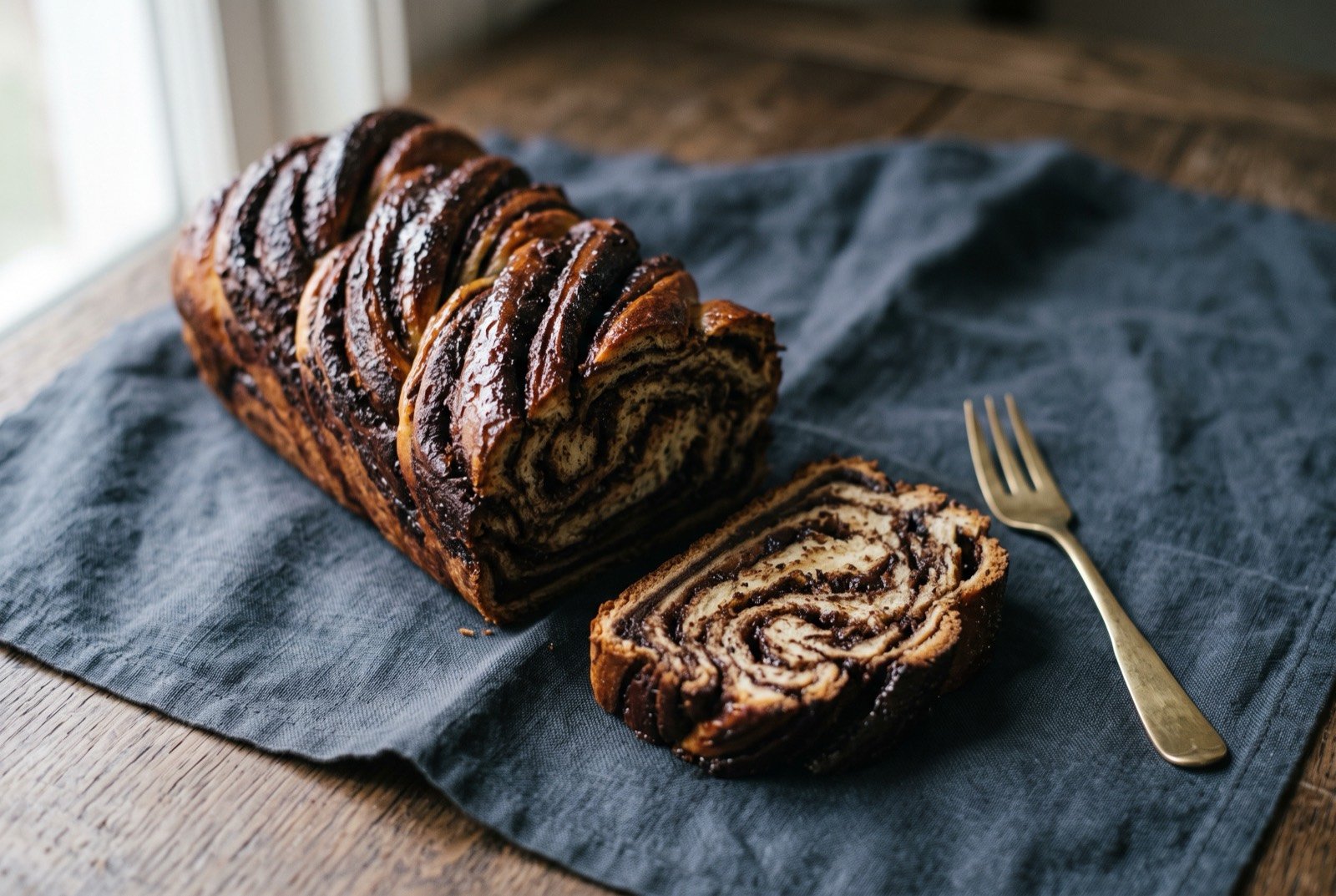
Modern babka's defining innovation belongs to a named baker, Uri Scheft, of Lehamim in Tel Aviv and Breads Bakery in New York, and the innovation is structural rather than a new flavour: building the dough as laminated and butter-enriched, the same repeated folding and turning used for croissants, rather than a plain enriched yeast dough, which is what gives modern babka its flaky, croissant-like layers instead of a single dense, brioche-like crumb. His second, equally deliberate move is how the filling is distributed: rather than roll the filled dough into one log and coil it, which leaves some slices bare of filling, he slices the rolled log lengthwise into two ropes with the filling exposed, then twists the two ropes together, so filling sits at every cross-section of the finished loaf.
As tradition built it
Makes 2 loaves. A genuine two-day project.
Ingredients
- 500g strong white flour
- 10g instant yeast
- 80g caster sugar
- 2 eggs
- 200ml warm milk
- 250g cold unsalted butter, for laminating
- 200g For the filling: 200g dark chocolate, melted, 100g chocolate hazelnut spread, 50g chopped toasted hazelnuts
Method
- Mix the flour, yeast, sugar, eggs and milk to a smooth dough; knead 8 minutes. Chill 1 hour.
- Roll the dough to a rectangle, lay the cold butter over two thirds of it, and fold in three, as for a croissant. Chill 30 minutes. Repeat this roll-fold-chill sequence three more times.
- Roll the laminated dough into a large rectangle and spread with the melted chocolate, hazelnut spread and chopped hazelnuts.
- Roll into a tight log, then slice lengthwise into two ropes, keeping the filling exposed. Twist the two ropes together and fit into a loaf tin.
- Prove until visibly puffed, 1 to 2 hours in a warm spot, then bake at 180°C for 35 to 40 minutes until deep golden.
What a modern chef changes
Brown butter through the lamination, and the prove controlled precisely
Rung 6
Method
- Laminate with brown butter, cooled back to a workable, still-solid state before use, for a deeper, nuttier flavour running through every layer rather than sitting only in the filling.
- Control the prove precisely rather than by eye or by the clock: a warm drawer or an oven held at a genuinely low, stable temperature with the door cracked matters more here than in an ordinary enriched dough, since an over-proved laminated dough loses its distinct layers on baking, collapsing into something closer to a regular loaf.
- Finish with a hot sugar syrup brushed on the moment the loaves come out of the oven, which seals in moisture and gives the shine bakery versions are known for.