Central Europe · Volume 17, The Herring Fleet and the Sausage Stand
Fischbrötchen mit Matjes
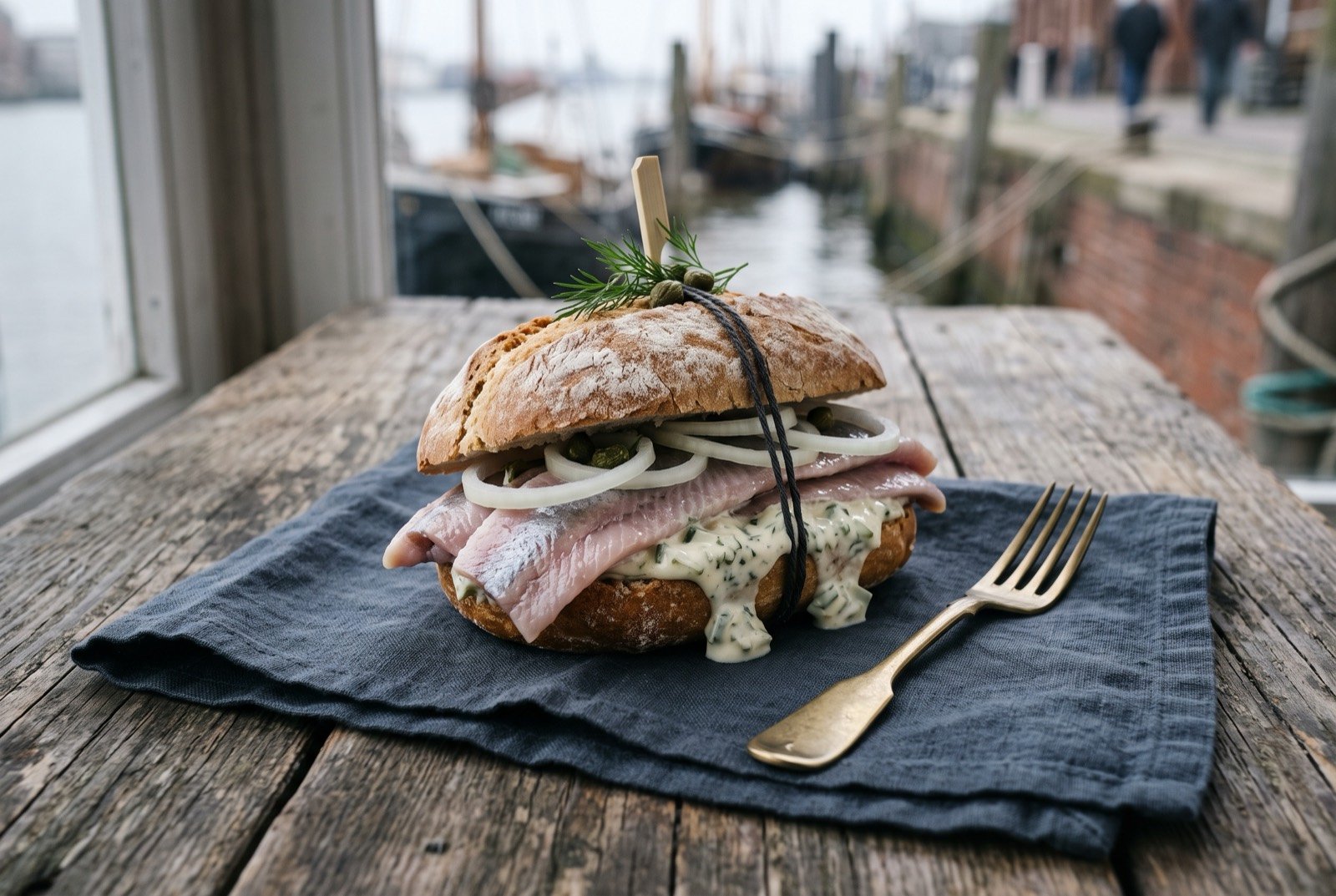
An illustration of the dish, not a photograph of it cooked.
- Time
- 10 minutes
- Reviewed
- Not yet reviewed from inside the tradition
- Cooked
- Not yet cooked and reported
The dockside fish sandwich, traced to the 19th century as a practical, filling meal for fishermen and dockworkers selling fresh catch directly at the harbourside, sandwiched simply between bread; this origin story rests on tourism and lifestyle writing rather than rigorous food history, and this chapter presents it as plausible tradition rather than settled fact.
As tradition built it
Serves 1. About 10 minutes to build.
Ingredients
- 1 proper bread roll, not a soft supermarket bap, split and lightly buttered
- 2 to 3 Matjes fillets, correctly cured (see the ferment bench)
- to taste thinly sliced raw onion
- 2 tbsp a remoulade of mayonnaise, chopped gherkin, capers and a touch of mustard
- to taste a scattering of cress or dill
Method
- Spread the roll with the remoulade, then layer the Matjes fillets and onion, building it high rather than flat.
- Finish with a scattering of cress or dill, and eat it standing up, the way it was designed to be eaten.
What a modern chef changes
Rye brioche, blender remoulade and quick-pickled onion
Method
- The roll is replaced with a rye-flour brioche, laminated lightly with butter for a softer crumb than a plain rye loaf while keeping the grain's flavour (a graft from the Paris volume's technique onto this coast's own grain).
- The remoulade is built in a high-power blender with a proper egg-yolk emulsion base rather than shop mayonnaise, and finished with a chinois-strained dill oil rather than chopped dill stirred through.
- The onion is pickled quickly in a 50/50 vinegar and sugar solution for 20 minutes rather than used raw, taking the harsh edge off without losing its bite.
- The single most important change is the fish itself: home-cured Matjes from the ferment bench, correctly enzyme-ripened rather than an industrial fillet, which is the entire argument of this dish's technique ladder made edible in one bite.