Central Europe · Volume 17, The Herring Fleet and the Sausage Stand
Lübecker Marzipan
Lübeck
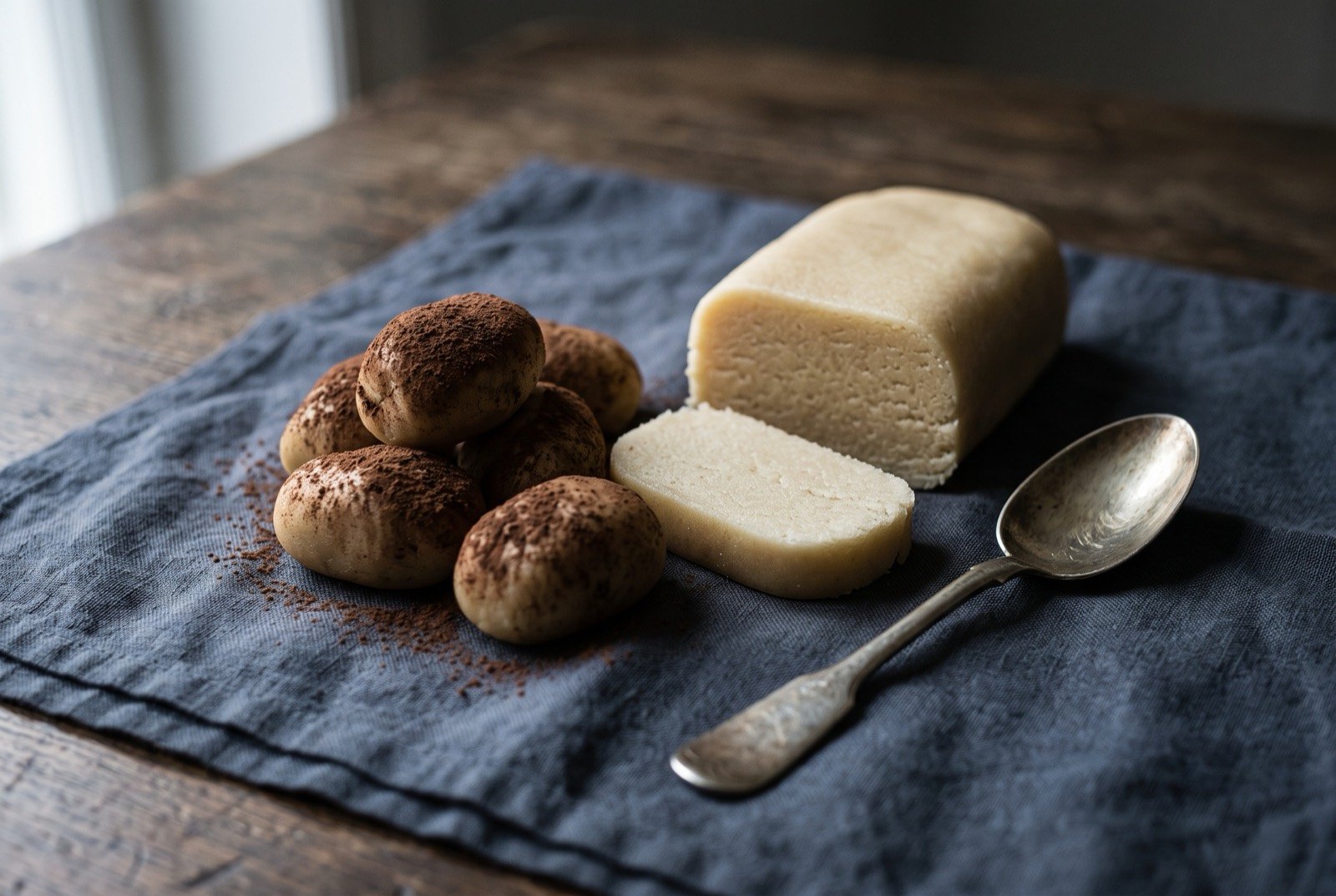
An illustration of the dish, not a photograph of it cooked.
- Time
- 1 hour
- Reviewed
- Not yet reviewed from inside the tradition
- Cooked
- Not yet cooked and reported
The city's own confectionery, and its quality marker is the one genuinely precise, citable technical fact in this entire volume: standard Lübecker Marzipan runs 70 parts almond raw paste to 30 parts sugar, while the finest grade, Lübecker Edelmarzipan, runs 90 parts almond paste to only 10 parts sugar, both figures legally tied to an EU-protected geographical indication restricted to Lübeck and its two adjoining towns since 1996.
As tradition built it
For a home batch, then at least 1 hour resting before shaping.
Ingredients
- 500g blanched almonds, ground as finely as possible in a high-power blender, ideally to a near-paste
- 150g caster sugar for a standard-grade result, or as little as 55g for something closer to Edelmarzipan
- 1 tbsp glucose syrup or liquid glucose, in place of some of the sugar, to help prevent crystallisation
- a few drops a few drops of rosewater, traditional though optional
Method
- Work the ground almonds and sugar together in a food processor until the mixture comes together into a smooth, pliable paste, adding the glucose syrup gradually to help it bind without turning grainy, with a few drops of rosewater if using.
- Rest, wrapped, for at least an hour before shaping into the traditional Marzipankartoffeln, small potato-shaped balls rolled in cocoa powder, or a simple loaf to slice.
What a modern chef changes
Roasted, twice-ground almonds, rolled thin as a tart shell with ganache and Bremen plum
Method
- The almonds are blanched and lightly roasted at 130°C for 12 minutes before grinding, rather than used raw, a genuine flavour deepening this classic recipe rarely bothers with, since Niederegger's own commercial process roasts its raw paste at a similar temperature for around an hour as a matter of course.
- The paste is ground twice, once coarse and once fine, through the high-power blender, matching the two-stage rolling Niederegger's own two-hundred-year process still uses, rather than a single grind, giving a smoother, more even final texture.
- Rather than shaping into potatoes, the paste is rolled thin, cut into discs, and used to line a small tart shell, filled with a thin layer of dark chocolate ganache and a poached Bremen plum, tying Lübeck's confectionery tradition to Bremen's own fruit trade in a single plated dessert rather than the two staying in separate volumes' worth of geography.
- The finished tart is finished with a few flakes of Maldon salt, a small, deliberate modern addition that sharpens the almond's own flavour against the sugar rather than letting sweetness run unchecked, exactly the kind of controlled contrast this chapter's technique ladder has argued for throughout.