Central Europe · Volume 17, The Herring Fleet and the Sausage Stand
Rote Grütze
North Germany, specifically Schleswig-Holstein (contested with Scandinavia)
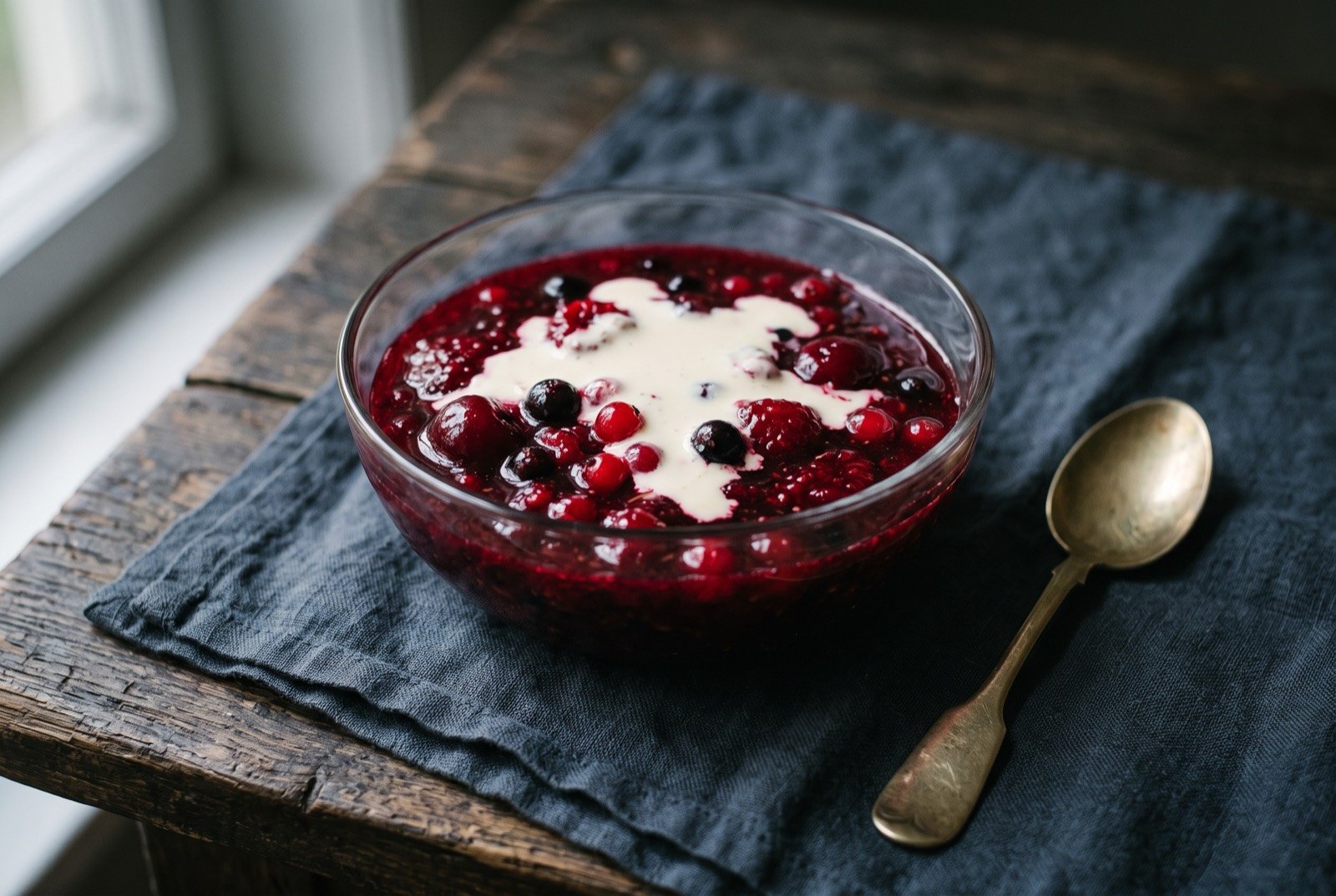
An illustration of the dish, not a photograph of it cooked.
- Time
- 15 minutes
- Reviewed
- Not yet reviewed from inside the tradition
- Cooked
- Not yet cooked and reported
This dessert's origin is genuinely contested between North Germany and Scandinavia, most often attributed to Danish or Swedish cuisine but just as widely treated within Germany itself as a North German, specifically Schleswig-Holstein, speciality; this chapter does not resolve that question, because the sources it consulted do not resolve it either. The name, from West Germanic "grutjo", simply means coarsely ground grain, referring originally to the thickening groat rather than the fruit, worth knowing since the fruit is what a British reader would assume the name describes.
As tradition built it
Serves 4. About 15 minutes to cook, then chilled until set.
Ingredients
- 600g mixed red and dark berries and stone fruit, redcurrants, raspberries, cherries, blackcurrants, whichever combination the season gives
- 100g sugar, adjusted to the fruit's own sweetness
- 400ml water or the fruit's own juice
- 3 tbsp cornflour or, more traditionally, fine semolina, slaked in a little cold water
- to serve cream, milk or vanilla sauce, to serve
Method
- Simmer the fruit gently with the sugar and water until it softens and releases its juice, around 10 minutes, then strain if a smoother result is wanted, or leave whole for a more rustic dessert.
- Return to a simmer, stir in the slaked cornflour or semolina, and cook for a further 3 to 4 minutes, stirring, until glossy and thickened enough to coat a spoon.
- Chill until just set, and serve cold with cream, milk or vanilla sauce.
What a modern chef changes
Fruit cooked in two stages, set with agar, plated with a fruit-leather garnish and buttermilk sorbet
Method
- The fruit is not simmered as one mixture but cooked in two separate stages by variety, softer berries barely warmed to keep their fresh flavour, firmer stone fruit cooked longer to soften properly, then combined only at the end, giving a more layered fruit flavour than a single simmer produces.
- The thickener is replaced with a small quantity of agar, dissolved and set at a precise, low concentration, giving a cleaner, more sliceable set than cornflour's slightly starchy cloudiness allows, unmoulded rather than spooned from a bowl.
- A separate quenelle of the same fruit, macerated raw in a little sugar and lemon, is dehydrated at 55°C for six hours into a thin, chewy fruit leather and used as a garnish, giving a textural contrast the traditional single-texture dessert does not have.
- It is plated with a buttermilk sorbet, churned to order, rather than plain cream, echoing the region's own dairy tradition while lightening the whole dish considerably.