The Nordics and the Baltic · Volume 23, The North Atlantic under the Danish Crown
Æbleskiver
Denmark
Illustration
- Time
- 30 minutes
- Researched
- 5 sources cited
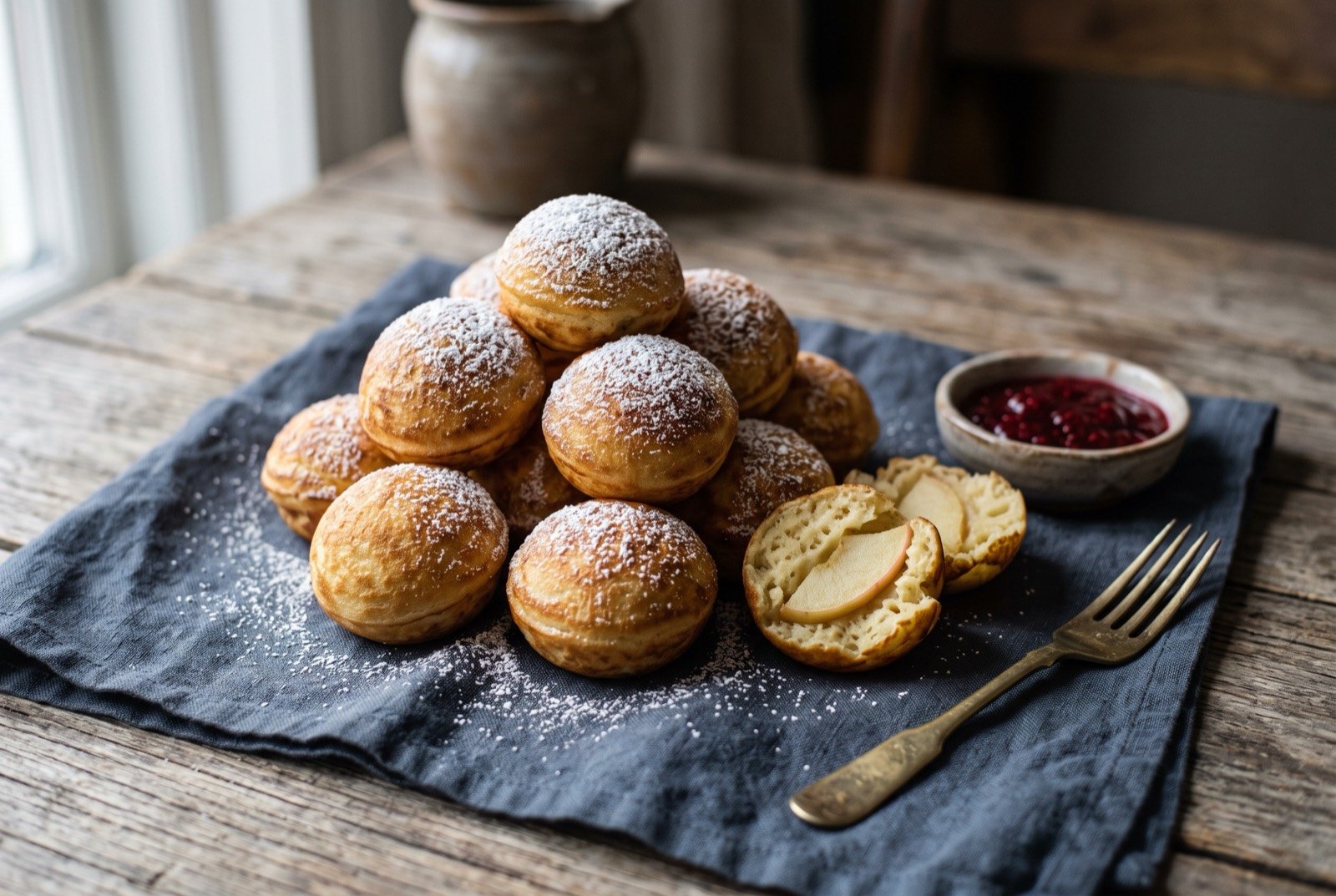
The earliest documented form dates to the 1600s, and eighteenth-century Danish cookbooks describe "udbagte æbleskiver," cored apple sliced thin, dipped in batter and fried, where the fruit was the entire point rather than an occasional inclusion. The round-ball shape now considered definitive is a nineteenth-century development, arriving with the spread of cast-iron kitchen stoves, which gave the controlled, even heat a dedicated dimpled pan needs; batter was turned partway through cooking with a knitting needle as it set at the base.
As tradition built it
Makes about 25. About 30 minutes, plus resting.
Ingredients
- 250 g plain flour
- 1 tsp baking soda
- 0.5 tsp salt
- 1 tsp ground cardamom
- 1 lemon finely grated zest of 1 lemon
- 500 ml buttermilk
- 3 eggs, separated
- 2 tbsp sugar
- as needed butter, for the pan
- to serve icing sugar and jam, to serve
Method
- Whisk the flour, baking soda, salt, cardamom and lemon zest together.
- Whisk in the buttermilk and egg yolks to a smooth batter, and rest 15 to 20 minutes.
- Whisk the egg whites with the sugar to soft peaks, and fold gently through the batter.
- Heat an æbleskivepan and butter each dimple well.
- Fill each dimple three-quarters full, and cook 1 to 2 minutes, until set at the edges, then turn a quarter with a skewer or knitting needle, letting the raw batter run down to fill the gap. Repeat turning every minute or so until each ball is evenly golden all round, 6 to 8 minutes total.
- Serve hot, dusted with icing sugar, with jam alongside.
What a modern chef changes
The fruit put back at the centre, since that is genuinely where the dish began
Kit note, not tied to a numbered rung.
Method
- Core a small, tart eating apple and cut it into thin rounds, one per æbleskive, dropping a slice into each dimple before the batter, and pouring batter over and around it, restoring the eighteenth-century structure of the dish rather than inventing a new one.
- Fold the egg whites in with real care, in two additions, since the dish's lightness depends on retained air an aggressive fold destroys.
- Brown a portion of the serving butter before dusting with icing sugar, for a nuttier finish that plays against the apple's sharpness rather than simply sweetening the dish further.