The Nordics and the Baltic · Volume 23, The North Atlantic under the Danish Crown
Frikadeller
Denmark
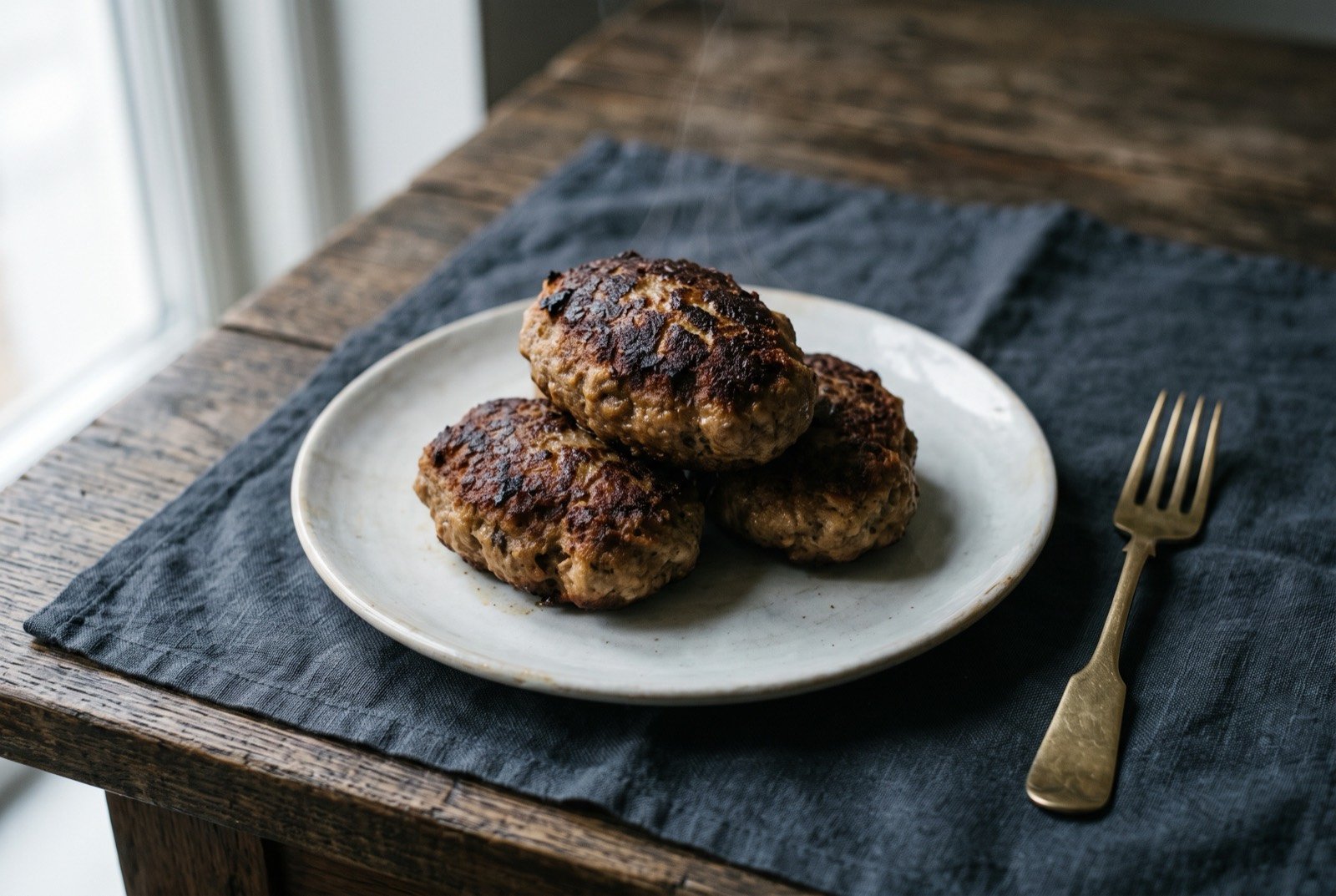
An illustration of the dish, not a photograph of it cooked.
- Time
- 30 minutes
- Researched
- 5 sources cited
- Reviewed
- Not yet reviewed from inside the tradition
- Cooked
- Not yet cooked and reported
As tradition built it
Serves 4. About 30 minutes.
Ingredients
- 500 g minced pork and veal, roughly equal parts
- a generous pinch salt
- 1 egg
- 1 onion, finely chopped
- 3 tbsp plain flour
- 2 dl milk, added gradually
- to taste black pepper
- as needed butter, for frying
Method
- Work the mince with a generous pinch of salt alone first, mixing thoroughly for a minute or two, until it feels noticeably tackier and more cohesive. This is the step that actually determines whether the finished frikadelle is light or dense.
- Once the salt has done its work, mix in the egg, onion and flour.
- Add the milk gradually, working it in fully between additions, to a soft, only just holdable mixture.
- Season with pepper, and rest in the fridge 10 to 15 minutes.
- Shape into ovals with two spoons or wet hands, and fry in butter over medium-high heat until well browned on both sides, then reduce the heat and cook through to the centre.
What a modern chef changes
The same binding science, made more reliable rather than more complicated
Rung 1.
Method
- Treat the salt-first step as non-negotiable and time it properly, mixing for a full two minutes by the clock rather than a rough few turns of a spoon, so the myosin extraction the whole dish depends on is genuinely complete before anything else goes in.
- Chill the mixture properly, not just briefly, ideally an hour rather than ten minutes, for a firmer patty that holds its shape better in the pan without needing extra flour to compensate.
- Finish the centre in a low oven rather than pushing the pan heat down, keeping the crust that formed on a hot pan while guaranteeing an evenly cooked centre, a small precision a busy Danish kitchen never needed a thermometer to achieve by feel, but which removes the single most common home failure, a browned outside and a raw middle.